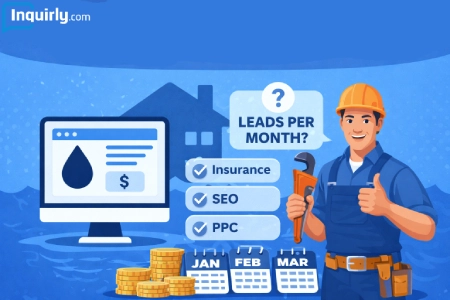
In the plumbing industry, the customer journey is compressed into minutes, not days. When a residential or commercial client faces a plumbing failure, the decision-making process is driven by three variables: proximity, perceived competence, and immediate availability.
By 2026, standard Search Engine Optimization (SEO) has become a commodity. To outperform local competitors, a plumbing firm must move beyond keyword density and focus on “operational signals” -the digital evidence that a company is active, responsive, and physically present. The following ten strategies outline how to secure a dominant market share in local search results through technical and operational integration.
1. High-Priority Management of Local Services Ads (LSA)
Google Local Services Ads (“Google Guaranteed”) are one of the most effective sources of high-intent plumbing leads, appearing above standard search results and charging per lead rather than per click.
Operational Reality:
Ranking is influenced by proximity, business hours, review quality, responsiveness, dispute history, and budget. While Google does not publish exact criteria, consistently missed or delayed responses can reduce visibility because unserved leads harm user experience.
Practical Actions:
- Keep hours and service areas accurate
- Answer calls reliably during advertised availability
- Respond quickly to message leads
- Monitor lead quality and dispute invalid charges
- Maintain strong, recent reviews
Management Perspective:
LSAs perform best when supported by strong operations. Visibility alone does not generate revenue — consistent response and booking capability do.
2. Technical Schema Markup and Search Intent
Search engines use “Schema” (structured data) to understand the specific details of a business. Without proper technical markup, a plumbing site is just a collection of words.
- LocalBusiness: By using specific code to define your service area, price range and frequently asked questions, you increase the likelihood of appearing in “Position Zero”, the featured snippet at the top of the search results.
- High-Intent Keywords: Focus content on “problem-solution” queries (e.g., “slab leak detection cost” or “emergency main shutoff repair”) rather than broad terms like “plumbing.” This attracts users who are ready to book a service immediately.
3. Performance Metrics: Core Web Vitals
Mobile performance is a non-negotiable ranking factor. A plumbing website must be optimized for “thumb-driven” navigation.
- Speed Requirements: Sites must load in under 2.5 seconds on a 4G connection. If a user in an emergency has to wait for a slow site to load, they will bounce back to the search results, which signals to Google that your site is a poor result for that query.
- Accessibility: Ensure the “Emergency Call” button is persistent and easy to find on all screen sizes.
4. Multi-Channel Authority and Brand Mentions
Local search is no longer confined to Google. “Brand signals” from other reputable platforms are now used to verify a business’s standing.
- Local Ecosystems: Presence on Nextdoor, the Better Business Bureau, and local Chamber of Commerce directories creates a “citation” network. Consistent Name, Address and Phone number (NAP) data across these sites is essential for maintaining trust with search algorithms.
- Social Validation: While Facebook may not directly drive plumbing leads, active local community engagement signals to Google that the brand is a legitimate and active local entity.
5. Exclusive Lead Generation Partnerships
Organic demand fluctuates. Exclusive lead providers help stabilize workload by supplying inquiries delivered only to one contractor, eliminating direct competition.
Platforms such as Inquirly generate pre-qualified plumbing leads through targeted campaigns. These are especially useful when entering new markets or filling seasonal gaps. Because the lead is not shared, conversion depends primarily on response speed and service quality rather than price competition.
6. Systematic Review Acquisition and Reputation Control
Online reviews function as both a ranking factor and a conversion filter. In urgent situations, customers often select the highest-rated provider among the top results with minimal comparison.
Operational Focus:
Search visibility improves when reviews accumulate steadily over time. A continuous flow of recent feedback signals active operations and reliable service, whereas long gaps may reduce perceived credibility.
Recommended Tools:
Manual review collection is inconsistent at scale. Reputation management platforms automate the process and centralize monitoring.
- NiceJob
Automates review invitations and reminders. - Podium
Sends automated text review requests and manages customer conversations from a unified inbox.
7. Service-Specific Landing Pages Built Around Real Problems
Customers search by problem, not by category. A homeowner dealing with a flooded basement will not browse a generic “plumbing services” page, they will look for the exact issue they are facing. Pages focused on specific scenarios align with this intent and rank more effectively.
Strong pages briefly explain symptoms, risks, and how the company resolves the issue, supported by real project examples and a clear call to action.
Typical high-value topics include:
- Burst or frozen pipes
- Sewer backups
- Water heater failure
- Slab leaks
- Emergency shut-off repairs
8. Geographic Depth Over Broad Coverage
Search engines favor businesses that demonstrate real activity in specific areas, not those that claim to serve an entire region without evidence. Local relevance comes from showing familiarity with neighborhoods, housing types, and infrastructure.
Effective signals include nearby project examples, recognizable locations, and consistent service-area information across platforms. Focusing on core zones often produces stronger results than spreading resources thinly across a large territory.
Tools and How to Use Them
To execute this strategy systematically, many companies rely on local SEO tracking and listing tools:
- Whitespark Local Rank Tracker — Provides highly granular local ranking data and identifies competitor presence in each area.
- Google Business Profile Insights — Shows where map searches originate, helping identify real demand hotspots.
9. Call Handling as a Revenue Function
In emergency plumbing, the phone call is the sale. Missed or poorly handled calls translate directly into lost revenue, regardless of ranking.
Effective call handling means answering promptly, gathering essential details, providing a clear arrival window, and securing the booking immediately. Analytics tools like CallRail or WhatConverts help identify missed calls, peak demand times, and channel performance, allowing staffing decisions based on real data.
10. Transparent Positioning That Reduces Risk
Customers hesitate when pricing or process is unclear. Providing structured expectations increases trust and inquiry rates, particularly for high-cost repairs.
Key trust signals include:
- Upfront pricing policies
- Licensing and insurance confirmation
- Service guarantees or warranties
- Financing options for major work
- Clear explanation of what happens after booking
Conclusion
Local search dominance comes from aligning visibility with operational strength. High rankings generate opportunities, but consistent response, credibility, and clear communication determine how many of those opportunities become jobs.
Companies that combine strong digital presence with disciplined execution capture a disproportionate share of demand, not because they use secret tactics, but because they are the easiest competent provider to hire when a problem occurs.