In plumbing, demand rarely arrives on a predictable schedule. Jobs appear when something breaks, and the contractor who responds first, while appearing credible, wins. Lead generation services promise to fill that gap, but not all of them are built for quality, consistency, or long-term growth. Choosing the right provider is less about finding the biggest platform and more about understanding how leads are sourced, filtered, priced, and converted.
This guide breaks down what actually matters when evaluating plumbing lead generation services, so you can avoid wasted budget and build a more reliable pipeline.
Understand What “Lead Generation” Really Means
Before comparing providers, clarify what you’re buying. Not all “leads” are equal, even if they’re sold under the same label.
There are three common models:
- Shared leads: Sold to multiple contractors. Lower cost, but highly competitive.
- Exclusive leads: Sent to only one contractor. Higher cost, better conversion potential.
- Pay-per-call leads: You receive inbound calls from potential customers. Often high intent, but quality varies depending on filtering.
Many platforms blend these models. The key is not the label but the intent level and source transparency. A cheap lead that goes nowhere is more expensive than a premium lead that closes.
Prioritize Lead Exclusivity (But Verify It)
Exclusive leads are often marketed as the gold standard, but exclusivity is not always absolute.
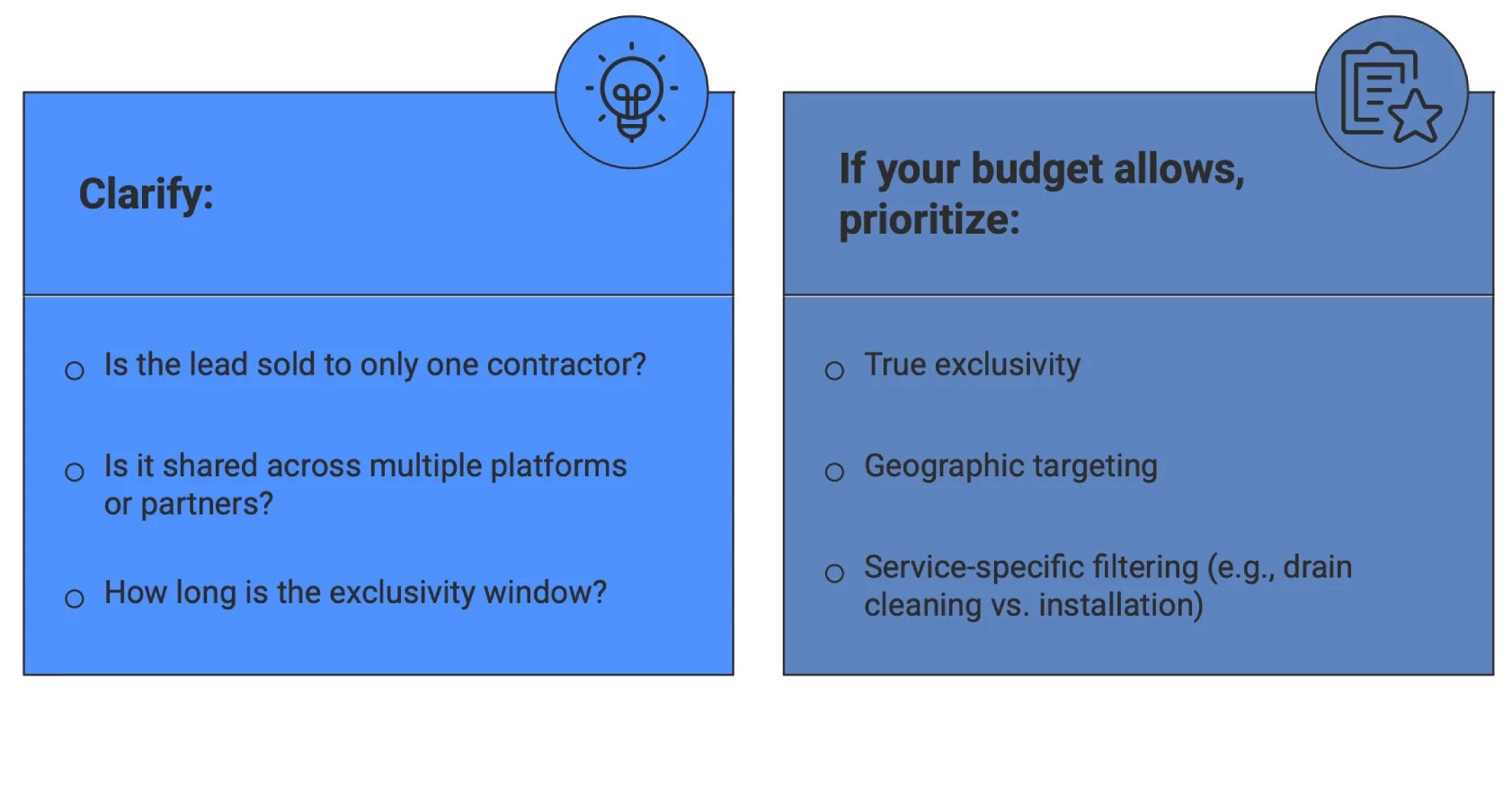
Inquirly.com offers a high-intent alternative for plumbers seeking true exclusivity by delivering leads directly to a single contractor instead of sharing them with competitors. The Inquirly model maximizes ROI through customizable location targeting and a fair, contract-free billing system designed for long-term profitability.
Look for Transparency and Reporting
In the plumbing industry, a lead source you can’t measure is a liability. Reputable providers offer full transparency, giving you direct access to the lead’s origin, conversion rates, and detailed call recordings. High-quality services prioritize these performance metrics and offer straightforward refund processes for invalid leads, ensuring you only pay for genuine opportunities.
Conversely, avoid “black box” providers that hide behind oversimplified dashboards or focus on lead volume over actual business outcomes. If a company makes it difficult to track traffic sources or dispute bad leads, it’s a major red flag. Ultimately, your goal is a partner that values data over vanity metrics, allowing you to scale with confidence rather than guesswork.
Assess Lead Qualification Criteria
A lead is only useful if it meets your service criteria. Use this quick framework to evaluate whether a lead generation service is actually delivering usable opportunities or just volume.
✔️ What Strong Lead Providers Deliver
| Criteria | What to Look For | Why It Matters |
|---|---|---|
| Location Match | Lead is within your exact service radius | Prevents wasted time on unreachable jobs |
| Job Type Fit | Request aligns with your services (e.g., repairs, installs) | Improves close rate |
| Urgency Level | Clear indication (emergency, same-day, flexible) | Helps prioritize high-value jobs |
| Customer Intent | Specific problem described (not vague browsing) | Signals higher conversion likelihood |
| Budget Signals | Some indication of willingness to spend | Filters out price shoppers |
❌ Warning Signs of Weak Leads
| Issue | What It Looks Like | Impact on Your Business |
|---|---|---|
| Incomplete Data | Missing phone, vague request (“need plumbing help”) | Hard to contact or qualify |
| Wrong Job Type | Commercial leads sent to residential plumbers (or vice versa) | Low relevance, wasted effort |
| Low Intent | Generic inquiries, multiple quotes requested | High competition, low conversion |
| Out-of-Area Requests | Leads outside your service zone | No revenue potential |
Balance Lead Services With Owned Channels
Lead generation services shouldn’t be your only growth channel. Relying entirely on third-party platforms leads to rising costs, limited control, and increasing competition.
A more effective approach is to balance them with owned channels. Use lead services for short-term demand, but build long-term stability through local SEO, paid search and customer retention.
This mix reduces risk, improves margins, and gives you more control over growth.
Conclusion
Choosing a lead generation partner is a high-stakes decision that dictates the efficiency of your dispatch and the health of your profit margins. To move beyond simply “buying phone calls,” a plumbing business must demand granularity in data and transparency in sourcing. The most effective partnerships are built on high-intent, exclusive opportunities that allow your technicians to focus on conversions rather than competing with five other companies for the same leaky faucet.
By prioritizing lead quality over sheer volume, you ensure that every dollar of marketing spend translates directly into billable hours. While third-party services provide the necessary momentum to scale quickly, the ultimate goal is a diversified ecosystem, where external leads complement your own branded digital presence. This balanced approach eliminates platform dependency and builds a more resilient, high-equity plumbing brand.