
Category Archives: Water damage

How to Rank Higher on Google Maps for Water Damage in 2025

In 2025, the majority of water damage calls originate from mobile searches tied directly to Google Maps. Homeowners with flooded basements or mold issues are tapping one of the first three results in the “local pack.” That means if you want real, ready-to-buy water damage leads, you need to show up – right there, on the map.

Knowing how to rank higher on Google Maps is critical if you expect to generate consistent call volume from local searches.

That small but powerful box of map-based listings, the local pack, shows up right above the regular search results when someone types in things like:

  • “emergency water damage repair near me”
  • “mold removal service open now”
  • “24/7 flood restoration”

Google’s Local Pack: The Only 3 Spots That Matter

In most markets, Google shows three results for local service searches. These spots get 60–70% of clicks and nearly all of the call volume. If you’re not in that trio, you’re likely just background noise.

Here are 5 highly-effective, field-tested and ethical strategies to boost your visibility and show Google you know how to rank higher on Google Maps as a water restoration service in 2025.

1. Think Like Google

Most water damage companies start with tactics before understanding how Google Maps even works. Google ranks local businesses based on:

🧭 Relevance
How closely your business matches what the user is actually searching for. This includes keywords in your Google Business Profile, categories, and services listed.

📍 Distance
How physically close your business is to the searcher at the time of the query. Google prioritizes nearby options first, especially for urgent needs like water damage.

⭐ Prominence
How well-known and trusted your business is online. This includes reviews, backlinks, business mentions and your overall presence across the web.

Everything else in this article ties back to these core ranking signals.

2. Stop Treating Your Google Business Profile Like a Set-It-and-Forget-It Listing

Your Google Business Profile (GBP) is a dynamic, trust-building asset. You’re feeding Google rich, structured data that reinforces what you do, where you do it and why you’re trusted. But somehow most water damage pros don’t go beyond basic setup. If you’re trying to understand how to rank higher on Google Maps, this is where it starts.

  • Primary Category: Set it to “Water Damage Restoration Service.” Don’t guess, the category directly influences what keywords you’ll rank for.
  • Business Description: Write a real, conversational description. Mention water extraction, mold remediation, and insurance assistance naturally.
  • Hours: Set accurate 24/7 availability if you offer it. That’s a huge differentiator.
  • Services Section: List all services individually. Google indexes these fields to match user queries like “ceiling leak cleanup” or “basement water extraction.”
  • Photos: Use real job photos, not stock. Even better, include geotagged images from different service areas.

3. Forget “Hacks”

There are no secret backlinks or review loops that beat trust. Google now uses machine learning to gauge whether people actually interact with your listing. That includes:

  • Do they click “Call”?
  • Do they tap “Directions”?
  • Do they browse your photos or reviews for a while?
  • Do they leave reviews after visiting?


This is called behavioral data and it’s the new frontier of local SEO. To optimize for it:

Make Your Google Maps Listing Stand Out

  • 📸 Real Job Photos: Upload weekly – flood cleanup, mold removal, happy clients. Avoid stock images.
  • 📅 Weekly Posts: Share job highlights, seasonal tips or service updates. Even short blurbs work.
  • 💬 Enable Chat: Turn on GBP Messaging so customers can reach you instantly via mobile.
  • 📱 Clear Call-to-Action: Use a line like: “Need help fast? Tap ‘Call’ to speak with a certified tech 24/7.”

4. Local Pages Still Dominate

Your website influences your Maps ranking more than most realize. One of the best ways to show local relevance and expertise is to create unique location or service area pages. This step plays a major role in how to rank higher on Google Maps, especially in competitive cities.

It matters because when someone in that city searches “water damage restoration,” Google connects the dots between your GBP, your site content and user behavior to determine who’s truly local and helpful.

Here’s how to do it right:

  • Write naturally about your experience working in that city.
  • Mention specific neighborhoods, landmarks, or recent jobs (anonymized for privacy).
  • Include images of your team working on-site.
  • Embed your Google Maps listing directly into the page.
  • Use internal links to and from your main service pages.

5. Reviews

In 2025, Google doesn’t just measure how many reviews you have, it looks at how often they come in, and whether that matches real-world demand. This is called review velocity and it now influences local ranking behavior.

If you suddenly get 20 reviews in a week, then nothing for a month, it looks artificial. But if your reviews arrive steadily during peak service times, like after major rainstorms, freezes or flood alerts – it signals legitimacy and relevance to Google’s algorithm.

Let’s examine what people are saying about Inquirly 👇
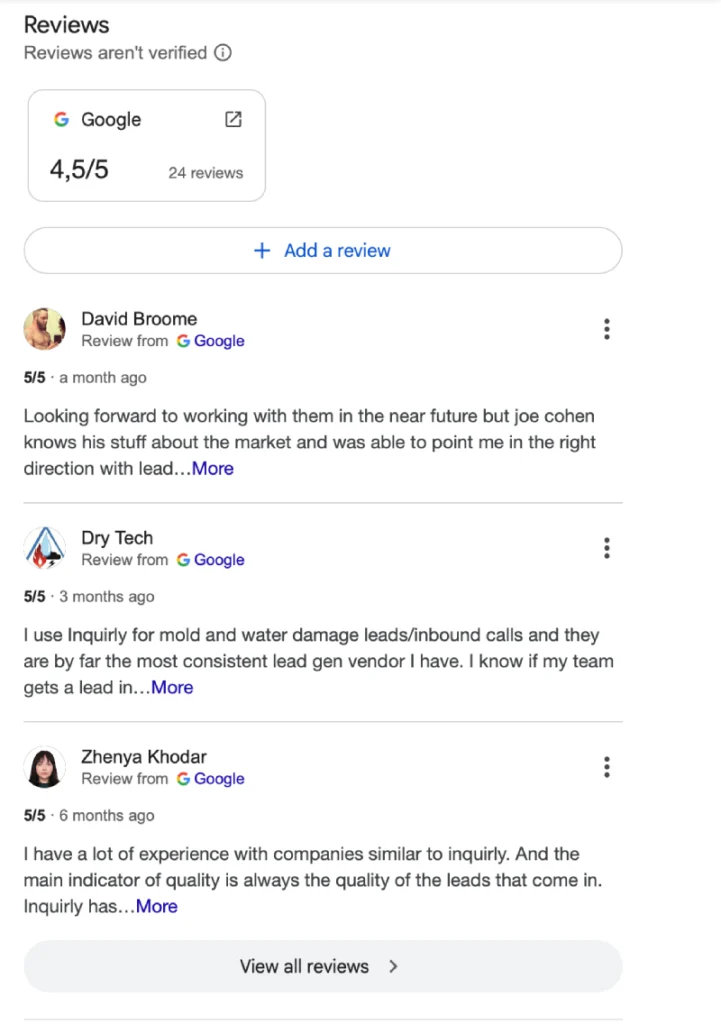
Here’s the real strategy: align your review outreach with seasonal water damage spikes. Set internal reminders after high-volume weeks. Make review requests part of your job closeout process. If you helped 12 homes after a local flood, 8 of those customers should be nudged for a review that week, not later.

By tying your review generation to real, local events, you match Google’s evolving model of “real business activity.” This improves both trust and visibility, especially during periods when your services are in highest demand.

What to Be Careful Of

If you’re serious about long-term visibility on Google Maps, you need to treat your listing like a reputation asset, not a quick lead faucet. The biggest mistake water damage companies make – often unknowingly, is trying to “outsmart” Google’s local algorithm with tactics that used to work but now trigger red flags.

Google’s spam filters have become more aggressive and precise. AI now spots fake listings, keyword-stuffed names, or sudden review surges from distant IPs. Trip these signals, and your listing can be suspended – often without warning. Appeals are slow, frustrating, and costly.

Keyword stuffing your business name – like “Water Damage Cleanup – 24/7 Emergency Response” might give you a short-term boost, but it violates Google’s guidelines. Their algorithm detects and demotes listings that abuse this. When caught, your listing may vanish from the Map Pack entirely.

Review manipulation is even riskier. Buying reviews, offering discounts for feedback, or filtering responses through private gates breaks multiple policies. Google can detect unnatural patterns. One manual review could erase years of work and worse, harm your credibility.

Duplicated content on city landing pages is another common trap. Swapping city names on near-identical pages worked years ago, but not now. Google sees it as thin content. Instead, write unique, useful pages for each area to build real SEO assets Google rewards.

FAQs

How often should I update my Google Business Profile?
At least once a week. Even small updates, like new photos, seasonal service posts, or revised descriptions, show Google that your business is active and trustworthy. Stale profiles tend to drop in rankings, which can impact how to rank higher on Google Maps consistently.

Is it worth investing in Google Ads if I’m focused on Google Maps rankings?
Yes, especially in competitive markets. Paid traffic through local service ads or water damage PPC can increase engagement on your profile (clicks, calls, direction requests) – which indirectly supports your organic Maps visibility.

Can I rank in nearby cities without opening a new office?
Not easily – not anymore. In 2025, Google prioritizes physical proximity. If you want to appear in the local pack for a neighboring city, you’ll need either a staffed location or exceptional local relevance through content, links, and engagement.

How do I know if my listing was penalized or just outperformed?
A sudden drop in calls and visibility may point to a suspension or filter. Check your Google Business Profile dashboard for warnings, and run a local rank tracker to confirm. If everything looks clean, stronger competitors may have overtaken you.

Do Google Posts still matter in 2025?
Absolutely. Google Posts are still crawled and indexed, especially when they include service-specific keywords and location context. They also keep users engaged on your profile – which helps behavioral metrics.

Should I hire a local SEO agency or do it in-house?
That depends on your resources. If you have time and a good grasp of strategy, you can manage it in-house. But if you’re in a crowded metro area or dealing with penalties, a specialized local SEO agency can accelerate results and prevent costly mistakes.


Water Damage Industry Events & Trade Shows in 2025

The restoration world doesn’t revolve around trends, it reacts to disasters, responds to pressure, and rebuilds lives. But in 2025, a shift is underway that’s not about a single flood, wildfire or legislation. It’s about how the water damage restoration industry is redefining its identity, from reactive service to proactive infrastructure.

After decades of responding to the unpredictable, top water restoration companies are aligning with something much more deliberate: smarter training, cross-industry collaboration, and data-backed forecasting. The conversations happening at this year’s trade shows aren’t just about drying technology or drying timelines, they’re about long-term resilience, workforce intelligence, and turning emergency work into strategic response systems.

More importantly, these events aren’t echo chambers. They bring contractors, insurance adjusters, environmental scientists, compliance officers and tech developers into the same space to collaborate on what’s next.

So, if you’re still looking at industry expos as places to pick up brochures or shake a few hands, 2025 will prove you wrong. This year’s events are built to sharpen your edge, rethink your operations and connect you to the people shaping restoration’s future, not just reacting to its past.

In this guide, we’ll cover both major upcoming events and recently held conferences in 2025, highlighting what you can still register for and what you may have missed, but can still learn from. From the RIA Conference to ASD Certification and the PLRB Conference, here’s what matters in 2025.

Early 2025 Highlights: Insights from Past Events

Several major conferences took place in the first half of 2025, each bringing distinct value to professionals across the restoration industry:

  • PLRB Claims Conference & Insurance Services Expo
    (Mar 30 – Apr 2 | Indianapolis, IN) 
    https://web.cvent.com
    The PLRB Conference once again proved why it remains a cornerstone for professionals intersecting insurance and property restoration. With sessions covering the latest claims technologies, litigation trends, and disaster response protocols, attendees gained practical tools to better align with insurers. For restoration companies working closely with adjusters, this event set the stage for 2025 collaborations.

  • Verisk Insurance Conference U.S. 2025
    (Apr 7 – 10 | Orlando, FL) 
    https://events.verisk.com
    With an emphasis on data-driven property analysis and risk modelling, Verisk’s annual gathering helped top restoration companies understand how to better integrate with the insurance ecosystem. From predictive analytics to fraud detection technologies, water restoration companies learned how claims data impacts their margins and timelines.

  • The Experience Conference and Exhibition
    (Apr 8 – 10 | Punta Gorda, FL) 
    https://www.randrmagonline.com
    Geared toward hands-on restoration training, this event focused on practical skill development—particularly beneficial for technicians. Workshops included live water extraction demos, moisture mapping, and a focus on mold remediation. It was also a major hub for those looking to complete or renew their ASD certification.

  • International Restoration Convention & Industry Expo
    (Apr 28 – 30 | West Palm Beach, FL) 
    https://convention.restorationindustry.org
    Hosted by the Restoration Industry Association (RIA), this flagship event combined leadership panels, advocacy updates, and technology showcases. Attendees got early previews of industry reports, networked with the top restoration companies, and explored evolving challenges in workforce development and compliance.

Upcoming Mid-Year Opportunities: Still Time to Join

If you missed the spring wave, the summer lineup is equally compelling, especially for companies looking to improve operational resilience or explore new vendor partnerships:

  • Access National Conference
    (May 5 – 7 | Orlando, FL) 
    https://www.accesseventsnow.com/home
    Access focuses on innovation at the crossroads of logistics, data, and emergency services. While not exclusive to water damage restoration, it offers key insights into document recovery, records management, and digital transformation, all of which have become increasingly relevant to property restoration firms.

  • Contractor Connection RESTORE
    (May 19 – 21 | Louisville, KY) 
    https://www.candrmagazine.com
    A must-attend for restoration companies working within insurance referral networks. RESTORE emphasizes performance metrics, customer satisfaction, and technology adoption. The 2025 theme revolves around restoring trust and resilience in high-stakes restoration projects.

  • The Future of Insurance USA 2025
    (Jun 12 – 13 | Chicago, IL) 
    https://events.reutersevents.com
    If your company wants to stay ahead of how insurance carriers are thinking about climate change, AI and customer engagement, this is the place to be. Forward-thinking water damage restoration companies can use this event to align their offerings with carrier expectations.

Fall 2025: Major Events to Close Out the Year

As budgeting and strategic planning ramp up for 2026, fall conferences help professionals reflect, recalibrate, and renew partnerships:

  • Proven 2025 – The PSA User Conference
    (Aug 3 – 5 | Austin, TX) 
    https://canamsys.com
    If your team uses PSA for job management or scheduling, this is one of the most practical conferences you can attend. It’s about getting more value out of the tools you already rely on. Attendees share what works for them and where they’re struggling, so you’re not just hearing from product reps, but also from peers who use the system in real-world scenarios.

  • Core Collective
    (Aug 6 – 8 | Austin, TX) 
    https://www.thecollectivebycore.com
    This event has a different energy. It’s about real conversations on leadership, company culture, and doing meaningful work in the restoration field. If you want to recharge your mindset and think long-term about where your company is going, it’s worth attending.

  • The Experience Convention and Trade Show
    (Sep 3 – 5 | Las Vegas, NV) 
    https://www.randrmagonline.com
    This fall edition dives even deeper into equipment, science, and processes. It’s especially useful for teams evaluating new tools or training new staff. The expo floor is packed with vendors, but what sets it apart is how much of it you can actually test, touch and try.

  • ITC Vegas
    (Oct 14 – 16 | Las Vegas, NV) 
    https://vegas.insuretechconnect.com
    Although ITC Vegas is mainly known as an insurtech event, it’s drawing more restoration professionals each year and for good reason. The tools on display, like automated claims platforms, AI-driven customer portals, and remote inspection tech, are quickly becoming part of how property restoration is managed. If you want a preview of what insurers will be expecting from restoration companies in the near future, this is the event to watch.

Certification & Learning Tracks to Watch For

Throughout the year, many of these events offer optional certification courses or continuing education tracks:

  • Look for ASD certification opportunities at both Experience events.
  • The RIA Conference and Core Collective often include workshops focused on leadership and compliance.
  • Several trade shows feature courses eligible for IICRC CE credits, which are essential for maintaining credentials in water damage restoration.


FAQ

I’m new to the industry. Where should I start? +
Do I need to register early? +
Will I really get value from insurance-focused conferences? +
Can I earn certifications at these events? +
Are international attendees welcome? +

How Much Should You Really Pay for Water Restoration Business Insurance?

If you run a water restoration business, insurance is one of the most important investments you can make. From protecting your tools and employees to shielding your business from lawsuits, the right insurance policy can mean the difference between a thriving company and financial disaster.

But how much should you really pay? What types of insurance do you need, and how can you ensure you’re getting the best coverage for your money? This article answers these questions, providing practical advice to help you make informed decisions.

Understanding Water Restoration Business Insurance

Water restoration business insurance is specifically designed to protect companies in the restoration and remediation industry. Whether you’re handling water damage repairs, mold remediation, or fire restoration, your work involves risks like property damage, employee injuries, and dissatisfied customers.

Why It’s Essential

Imagine your team accidentally damages a client’s flooring during water cleanup. Without insurance, you’d pay out of pocket for repairs—potentially thousands of dollars. Insurance shields you from these unexpected costs while demonstrating professionalism and responsibility to your clients.

For a deeper dive into starting and managing your business, read How to Start a Water Restoration Company for tips on building a strong foundation.

What Does Water Restoration Insurance Cover?

Water restoration insurance isn’t a one-size-fits-all package. It typically includes multiple types of coverage tailored to your business’s needs.

1. General Liability Insurance

General liability insurance covers third-party property damage, bodily injury, and legal expenses.

  • Example: If an employee breaks an expensive piece of furniture while moving equipment, general liability covers the cost of repair or replacement.
  • Coverage Limits: Policies often range from $1 million to $2 million per occurrence.
  • Cost: About $71 per month or $852 annually.

2. Professional Liability Insurance (Errors & Omissions)

Professional liability insurance protects your business against claims of negligence, incomplete work, or mistakes.

  • Example: A mold remediation job fails to meet industry standards, leading to additional property damage. This policy covers legal fees and settlement costs.
  • Cost: Around $90 per month or $1,080 per year.

3. Commercial Property Insurance

This policy covers physical assets like your office, tools, and equipment from risks such as theft, fire, or vandalism.

  • Example: If a fire damages your office, commercial property insurance covers repair and replacement costs.
  • Cost: Approximately $80 per month or $960 annually, with coverage limits starting at $50,000.

4. Workers’ Compensation Insurance

If your employees are injured on the job, this policy covers medical bills, rehabilitation, and lost wages.

  • Example: An employee slips on a wet surface while working and requires medical care.
  • Cost: Roughly $200 per month or $2,400 annually.

5. Tools and Equipment Insurance

This policy reimburses you if your equipment is stolen or damaged, whether at your office or a job site.

  • Example: A water extractor is stolen from your work van. Tools and equipment insurance covers the replacement cost.
  • Cost: Between $500 and $2,000 annually, depending on the value of your equipment.

6. Pollution Liability Insurance

Pollution liability covers cleanup costs and damages if your work causes environmental harm.

  • Example: If chemicals from your cleaning process accidentally seep into a nearby water source, this policy helps pay for the cleanup.

How Much Should You Pay?

The cost of water restoration insurance depends on factors such as business size, location, claims history and coverage needs. Here’s a breakdown of typical costs:

For more tips on marketing and budgeting for your business, check out 7 Marketing Ideas for Water Restoration Businesses.

How to Save Money on Insurance

  1. Bundle Policies
    Consider purchasing a Business Owner’s Policy (BOP), which combines general liability and property insurance. This often reduces premiums while simplifying management.
  2. Shop Around
    Use platforms like CoverWallet or Tivly to compare quotes from multiple insurers.
  3. Demonstrate Safety Practices
    Insurance companies reward businesses that invest in safety training and risk mitigation. By implementing OSHA-compliant protocols, you may qualify for discounts.
  4. Review Annually
    As your business grows or changes, update your policy to ensure you’re not overpaying for unnecessary coverage or leaving gaps in protection.

Common Mistakes to Avoid

  1. Underinsuring Your Business
    Opting for minimal coverage might save money initially, but it leaves you vulnerable to significant financial losses.
  2. Ignoring Professional Liability
    General liability doesn’t cover negligence claims, making professional liability essential for water restoration companies.
  3. Overlooking Policy Exclusions
    Carefully review your policy for exclusions to avoid surprises when filing a claim.
  4. Choosing Price Over Value
    Cheaper isn’t always better. Ensure the policy meets your business’s specific needs.

FAQs About Water Restoration Insurance

1. Do I Need Workers’ Compensation for Subcontractors?

If subcontractors don’t have their own coverage, you may be liable for their injuries. Check state laws and your policy details here.

2. Are Insurance Premiums Tax-Deductible?

Yes, business insurance premiums are typically considered deductible expenses. Consult a tax professional to ensure compliance with your specific business structure.

3. How Can I Find the Best Provider?

Look for insurers with experience in the restoration industry, such as The Hartford or ARMR Insurance. Compare policy options, pricing, and customer reviews to find the best fit for your needs.

4. What Happens If I Miss a Payment?

Missing a payment may lead to policy cancellation, leaving your business uninsured. To avoid lapses in coverage, set up auto-pay or reminders for your due dates.

Conclusion: Insurance Is Your Business’s Safety Net

Water restoration insurance is not just a regulatory requirement—it’s a critical layer of protection for your business, employees, and clients. By understanding the different types of coverage and their costs, you can confidently choose the policies that best suit your needs.

Protect Your Business with Confidence

Finding the right insurance doesn’t have to be overwhelming. At Inquirly, we connect water restoration businesses with trusted providers to ensure you get comprehensive, affordable coverage. 

Your Guide to Water Damage Industry Events & Conferences 2025

Running a successful restoration business is about more than just fixing water damage. It’s about staying informed, learning the latest techniques and connecting with industry leaders. Attending conferences can provide real solutions to the challenges you face every day and help you find new opportunities to grow your business.

Here’s a carefully curated list of the most valuable water damage industry events for 2025, including who should attend, what to expect and actionable tips to make the most of each experience.

1. INTRConnect 2025

Dates: January 13–15, 2025
Location: JW Marriott Los Angeles L.A., Los Angeles, CA

Who Should Attend:
Restoration professionals who frequently work with insurance claims, adjusters or carriers. Ideal for business owners looking to streamline claims processes and improve relationships with insurance partners.

What to Expect:
Focused on claims management and risk assessment, INTRConnect offers sessions that explore practical strategies for navigating insurance complexities. Workshops provide actionable advice on documenting damages effectively to avoid disputes.

Pro Tip:
Identify the claims-related challenges your team faces and attend sessions that directly address those issues. Prepare questions in advance for panel discussions to ensure you leave with concrete solutions.

2. NeXus 2025

Dates: January 14–15, 2025
Location: Paris Las Vegas, Las Vegas, NV

Who Should Attend:
Restoration businesses looking to diversify their offerings or improve efficiency. Also ideal for teams exploring new technologies and tools to enhance service delivery.

What to Expect:
NeXus is a multi-industry event showcasing restoration, abatement and cleaning solutions. With live product demonstrations and workshops, attendees can explore new equipment and techniques to address common operational challenges.

Pro Tip:
Bring specific project examples or challenges you’ve encountered. When visiting exhibitors, ask detailed questions about how their tools or services can solve those problems.

3. WWETT Show (Water & Wastewater Equipment, Treatment & Transport)

Dates: February 17–20, 2025
Location: Indiana Convention Center, Indianapolis, IN

Who Should Attend:
Restoration professionals specializing in water extraction, sewage backup remediation, or environmental cleanup.

What to Expect:
One of the largest gatherings for water management professionals, the WWETT Show offers workshops on water extraction, wastewater treatment, and flood response. Hands-on training sessions let you try tools and techniques before you invest.

Pro Tip:
Use this opportunity to compare water extraction tools side by side. Take notes during demos and workshops to ensure you choose solutions that fit your team’s capabilities and project needs.

4. International Restoration Convention & Industry Expo

Dates: April 28–30, 2025
Location: Palm Beach County Convention Center, West Palm Beach, FL

Who Should Attend:
Restoration business owners, technicians and anyone looking to stay updated on industry trends or expand their service offerings.

What to Expect:
This conference offers everything from hands-on technical training to business-focused sessions on lead management, digital tools and customer retention strategies. The expo features a wide range of restoration products and technologies.

Pro Tip:
If you’re considering expanding into mold remediation or fire restoration, attend relevant sessions to understand the certifications, equipment and training required. 

5. The Experience Conference & Exhibition

Dates: September 3–5, 2025
Location: Caesars Forum Conference Palace, Las Vegas, NV

Who Should Attend:
Restoration professionals who want hands-on training and demonstrations of the latest techniques and equipment.

What to Expect:
With a strong focus on live demonstrations, this conference covers advanced cleaning and restoration methods, including moisture detection, stain removal, and air quality improvement.

Pro Tip:
Participate actively in demos and ask detailed questions about results, timelines, and troubleshooting techniques. Take photos or videos (with permission) to reference when training your team.

6. Clean Gulf Conference & Exhibition

Dates: November 18-20, 2025
Location: Ernest N. Morial Convention Center, New Orleans, LA

Who Should Attend:
Businesses involved in large-scale disaster response, hazardous material cleanup or environmental restoration.

What to Expect:
Clean Gulf offers niche sessions on hazardous material management, disaster response strategies, and compliance with environmental regulations. It’s a great event for teams considering expansion into these areas.

Pro Tip:
Focus on breakout sessions covering specific topics like hazardous material cleanup or disaster logistics. Use networking opportunities to connect with emergency response teams and government agencies for potential partnerships.

Want to make your website more visible? Check out this article

Why Attending Industry Events is Essential for Your Business?

Attending industry conferences offers your business the chance to gain valuable insights, discover new tools and make meaningful connections. Whether you’re learning a fresh technique, finding a trusted vendor or forming new partnerships, each event provides an opportunity to strengthen your unique competitive skill.

Here are three key ways to make the most of your time and investment:

  1. Plan Ahead: Review the event agenda and prioritize the sessions or workshops that best align with your business goals.
  2. Engage Actively: Ask questions, take notes and connect with people to build relationships that last beyond the event.
  3. Implement Quickly: Share key takeaways with your team and put new ideas into action right away.

While industry conferences are a great way to expand your knowledge and network, growing your restoration business also relies on a consistent stream of qualified leads. That’s where Inquirly comes in. We specialize in exclusive lead generation tailored for restoration professionals.

Ready to take your business to the next level? Let us show you how we can help.

How a Water Damage Estimate Template Can Assist Your Business

A water damage estimate template is a helpful tool for creating detailed and accurate repair estimates. By clearly outlining costs, timelines, and materials, it makes communicating with clients easier and more professional. Having a consistent way to document these details helps you stay organized and efficient.

Creating accurate estimates can be difficult, especially when handling different types of water damage. A template simplifies this process, ensuring all important details are captured. This reduces errors and helps build trust with your clients by providing clarity and transparency.

If you’re looking to improve efficiency, a water damage estimate template is invaluable. It standardizes your proposals, making them easier for clients to understand. This clear presentation can lead to smoother communication, more approved projects, and higher customer satisfaction.

Key Cost Factors in Water Damage Restoration

Water damage restoration costs can vary based on several factors. A good template helps you document these considerations clearly:

  •  Larger areas require more labor, equipment, and time, which increases costs.
  • The type of materials affected, such as flooring, drywall, or furniture, plays a role in the final cost. A floor repair estimate template helps you accurately assess these costs.
  • Delays in beginning restoration can worsen damage, leading to higher costs. Mold growth and structural damage are common when repairs are postponed.
  • Water Damage Types:

Blackwater

Contaminated water from sewage or floodwaters; requires extensive cleanup due to health risks.

Greywater

Water from appliances or drains; may contain contaminants and needs moderate cleaning.

Clean Water

Water from pipes or rain; easier to clean as it usually lacks harmful bacteria or chemicals.

Benefits of Using a Water Damage Estimate Template

Using a water damage estimate template can improve your daily workflow in several ways:

  • Accurate Job Estimates: Provides a clear timeline and cost breakdown.
  • Efficient Documentation: Makes future estimates easier by keeping a record of past jobs.
  • Fewer Errors: Reduces the risk of missing important details or making formatting mistakes.
  • Professional Presentation: Ensures your estimates are polished and clear for clients.

Invoicing Made Easy

After the restoration work is done, providing a clear and professional invoice is essential for prompt payment. Tools like a Invoice Simple or Docef help you outline all costs clearly and also guide you in creating easy-to-read, standardized invoices.

Top 3 Water Damage Estimate Templates

1. Invoice Simple
An easy-to-use platform with customizable templates for repair costs and labor.

Website: invoicesimple.com

2. Docelf
Offers free water damage estimate templates you can personalize. Features include downloadable PDFs and the ability to email estimates directly to clients.

Website: docelf.com

3. Invoice Maker
A comprehensive platform for creating detailed water damage estimates with itemized breakdowns for materials, labor, and timelines.

Website: invoicemaker.com

Conclusion

A water damage estimate template is a tool that helps you stay organized, improve efficiency, and deliver accurate estimates. It simplifies your workflow, enhances professionalism, and ultimately supports the growth of your restoration business.

Struggling to Find Quality Water Damage Leads?

Are you spending too much time searching for clients and not enough time on actual jobs? Inquirly.com connects water damage restoration professionals with verified leads.

Stop chasing leads and start growing your business with Inquirly.

👉 Contact us Today

6 Steps to a Winning Water Damage Social Media Strategy

When disaster strikes and homes or businesses face water damage, homeowners turn to trusted professionals for quick and effective solutions. Having a strong social media presence can help water damage restoration companies stand out, build trust and generate more leads. By following this step-by-step guide, you can create a winning social media strategy that connects with your audience and grows your business

1. How to Choose the Right Social Media Platforms

The foundation of a successful social media strategy starts with selecting the platforms that matter most to your audience. Focus on platforms where homeowners, property managers and insurance professionals are active.

– Facebook

  • Ideal for reaching local homeowners and families. Share before-and-after photos, reviews, and service promotions to engage with a broad audience. Its strong targeting options make it perfect for location-specific ads.
  • Example: A post featuring “How We Restored a Flooded Basement in [City]” with a real customer testimonial.
  • Learn more about Facebook ads.
  • If you’re looking for more ways to expand your presence, explore how you can get more water damage jobs in the USA.

– Instagram

A visually driven platform to showcase dramatic restoration transformations. Use Instagram Stories or Reels to demonstrate quick, engaging videos of your process.
Example: Time-lapse videos of drying a waterlogged home can attract younger homeowners.

– YouTube

– LinkedIn

  • Connect with commercial property managers, insurance professionals, and other B2B clients. Share case studies and thought leadership pieces to establish credibility.
  • Example: “How Our Restoration Services Helped Reduce Downtime for Local Businesses.”

Research your competitors to see which platforms they use effectively, and monitor their engagement levels with tools like SEMrush or Sprout Social.

2. How to Define Social Media Goals That Drive Results

Set clear and measurable goals that align with your business objectives. Following the SMART framework ensures that your goals are specific, measurable, achievable, relevant and time-bound.

SMART Goals for Social Media:

  • Specific: Increase Instagram followers by 20% over the next three months.
  • Measurable: Generate 50 new inquiries from Facebook campaigns within a month.
  • Achievable: Post three educational videos on YouTube this quarter.
  • Relevant: Build trust among local homeowners by increasing positive reviews on social media.
  • Time-Bound: Achieve 1,000 impressions per week on paid LinkedIn ads within two months.

Tracking Progress:Tracking these goals is easier with tools like Hootsuite Analytics or HubSpot’s Social Media Dashboard.

3. How to Create Content That Engages and Converts

The key to social media success is offering content that resonates with your audience. Homeowners are looking for actionable tips, solutions and stories that resonate:

  1. Educational Posts
    Help your audience understand the importance of addressing water damage quickly by sharing facts and actionable advice. For instance, statistics from our post on the water damage industry forecast for 2025 can highlight the growing need for professional services. 
  2. Visual Content
    Share striking before-and-after photos of restoration work, infographics detailing common causes of water damage, and time-lapse videos of restoration projects. High-quality visuals can captivate your audience and establish credibility.

Community Involvement
Showcase your team participating in local events, assisting with disaster relief efforts, or collaborating with other businesses. This humanizes your brand and builds trust.

Some ideas to try out for your business today:

  • Educational Content
    • “5 Signs of Hidden Water Damage You Need to Know.”
    • “How to Prevent Basement Flooding During Storm Season.”
  • Visual Content
    • Dramatic before-and-after photos of restored spaces.
    • Infographics explaining the water damage restoration process.
  • Video Content
    • Quick tips like “What to Do When You Find a Leak.”
    • Behind-the-scenes videos showcasing your team in action.

Posting Tips:

  • Keep your posting schedule consistent. Maintain a consistent posting schedule:
    • Facebook & Instagram: 3–5 times a week.
    • LinkedIn: 1–2 times a week.
    • YouTube: 1–2 times a month.

A social media calendar tool can help you plan posts around seasonal trends or water damage awareness campaigns.

4. How to Use Paid Social Media Advertising

Organic posts are great for building relationships, but paid advertising helps you reach a wider audience quickly. Focus your ad spend on platforms that offer the best targeting options.

  • Facebook Ads
    Use location-based targeting to reach homeowners in areas recently impacted by floods or heavy rains. Boost posts featuring customer testimonials or emergency service promotions.
    Explore Facebook ad targeting.
  • Instagram Ads
    Promote eye-catching visuals or video Reels to attract a younger demographic. Highlight seasonal campaigns like “Winter Flood Prevention Tips.”
  • LinkedIn Ads
    Target commercial property managers with ads showcasing your expertise in large-scale restorations.

Start with a small budget and use A/B testing to refine your campaigns. Allocate about 30–40% of your social media budget to ads for the most efficient results.

5. How to Engage With Your Audience Effectively

Social media isn’t just about posting—it’s about building trust through meaningful interactions.

  • Respond Quickly
    Reply to comments and messages within 24 hours to show you care about your customers. Use auto-replies to acknowledge after-hours inquiries, but follow up promptly.
  • Encourage User-Generated Content (UGC)
    • Ask customers to share photos of restored spaces with your branded hashtag (e.g., #RestoredBy[YourCompany]).
    • Offer incentives like discounts for reviews or testimonials.
  • Handle Negative Feedback Professionally
    Address complaints with empathy and offer solutions publicly to demonstrate accountability and customer care. 

6. How to Measure and Improve Your Strategy

To ensure your efforts are paying off, regularly monitor your social media performance and adjust your strategy based on data.

  • Key Metrics to Track
    • Engagement rate (likes, comments, shares).
    • Conversion rate (leads generated from ads).
    • Reach and impressions (how many people see your content).
  • Tools to Use

Review your metrics monthly to identify what works and adjust your content or ad campaigns accordingly. For example, if video posts outperform static posts, shift your focus to creating more video content.

Conclusion

A well-executed social media strategy is an invaluable tool for water damage restoration businesses. By choosing the right platforms, setting clear goals, creating engaging content, leveraging paid ads, and analyzing performance, you can connect with your audience, build trust, and generate leads.

Want to take your lead generation efforts even further? Partner with Inquirly for exclusive home service leads that grow your business. Let us help you succeed in the competitive world of water damage restoration.