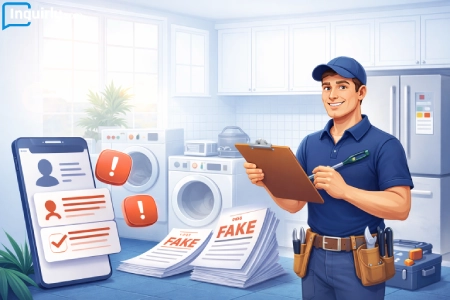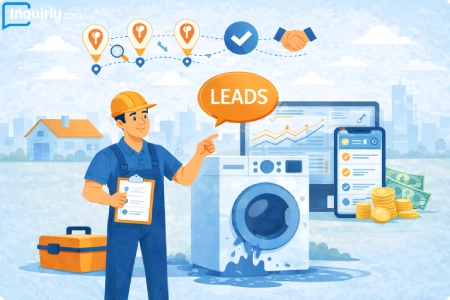
Most appliance repair companies think the problem is “not enough leads.” The real leak is paying for the wrong ones: out-of-area requests, warranty work you can’t claim, problems you don’t service, serial DIYers looking for free diagnosis or duplicate contacts already in your CRM. Every unqualified lead drags down technician utilization, increases no-shows and inflates cost per booked job.
Pre-qualification flips the funnel: you block low-value requests before they enter your budget. Done right, it also improves customer experience: people get clarity fast, you respond faster to the right jobs and your techs arrive with the parts and expectations set.
This guide shows exactly how to qualify appliance repair leads before you pay for them, whether they come from your own ads, Local Services Ads (LSA) or verified lead partners.
What “qualified” actually means in appliance repair
Everything in your pre-qualification flow should test these five conditions as early as possible:
- Serviceable – inside your ZIP coverage, within your hours, and reachable within your SLA window.
- Actionable – the appliance, brand, and symptom are specific enough to estimate time/parts.
- Commercially viable – the customer accepts a diagnostic fee/trip charge and the ballpark repair range.
- Non-conflicting – not manufacturer warranty (unless you’re authorized), not duplicate, not already solved.
- Reachable now – valid phone/email with TCPA consent, willing to confirm an appointment window.
How to qualify a lead vendor (before signing)
Lead-gen companies capture homeowner interest on search, social, and comparison sites, then pass those inquiries to contractors. The value you get depends on three things: exclusivity, verification and refund terms. Before you buy a single lead, treat the vendor like a performance partner with standards you can audit.
How good vendors operate. The best providers show you the exact capture flow (pages, ads, and consent text), validate phone numbers, block duplicates, filter out warranty-only requests (unless you want them), and deliver leads to you in real time through an API or email/SMS. They also provide clear credit rules for bad contacts. (Example: Inquirly.com focuses on exclusive, verified homeowner leads and real-time delivery, with transparent dispute policies – what you should expect from any provider.)
Contract must-haves. Spell out exactly what counts as a qualified lead, when credits are automatic, how and how fast leads are delivered, and what transparency you’re entitled to. Here’s a crisp structure that vendors can agree to – and you can audit:
Define a qualified lead
- In-area ZIP (within your service map): The inquiry address must be inside the ZIP codes you’ve approved for service.
- Non-warranty work (unless you’re authorized): The job must be out of manufacturer/store warranty unless you’re formally authorized to perform warranty repairs.
- Reachable contact (valid phone and/or email): The lead must include a working phone or email you can successfully use to reach the consumer.
- Appliance and symptom provided (brand/model when possible): The request must specify the appliance type and problem, with brand/model if available, so you can estimate and route correctly.
- TCPA consent captured (prior express written consent with timestamp, IP, capture page): The vendor must store proof the consumer consented to be contacted, including timestamp, IP, and the exact page/text shown.
Credit / refund conditions (automatic)
- Invalid or unreachable contact data: If the number/email is fake, wrong party or cannot be reached after the agreed attempt rule, the lead is non-billable.
- Out-of-area or outside agreed service hours: If the job location or requested time falls outside your coverage or operating hours, the lead is non-billable.
- Warranty-only requests (when you’re not authorized): If the consumer needs warranty service you can’t perform, the lead is non-billable.
- Duplicate within 60-90 days: If the same consumer/job was delivered within the past 60-90 days, the new submission is non-billable.
- Spam / prank / bot submissions: If the inquiry is fraudulent or automated, the lead is non-billable.
- No response after 3 contact attempts within 24 hours (e.g., 2 calls + 1 SMS/email): If the consumer doesn’t engage after documented attempts, the lead is non-billable.
Delivery & volume controls
- Real-time delivery ≤10 seconds via API/webhook (email/SMS backup): Leads must arrive in your system within 10 seconds so your team can respond immediately.
- Daily/weekly lead caps to maintain quality: You may set or change maximum leads per day/week to prevent quality drops and staffing overload.
- Exclusivity required, or explicit share count with adjusted pricing: Leads must be exclusive to you or clearly labeled as shared with transparent pricing tied to the share count.
Transparency & audit rights
- Source transparency (channels, example capture pages, copy/CTAs): The vendor will disclose where and how leads are captured, including sample pages and ad messaging.
- Access to consent logs on request (timestamp, IP, referrer URL, form snippet): You may review stored consent records for any lead to verify compliance and dispute validity.
Operate a defensible qualification workflow. Route every purchased lead through a short gate: ZIP check, appliance/brand/symptom, warranty question, fee acknowledgment (“Diagnostic visit is $89, applied to repair”) and SMS phone verification when risk signals appear. Auto-schedule qualified leads; everything else is declined or nurtured. Record calls, tag reasons (warranty/out-of-area/duplicate) and dispute quickly with timestamps and recordings. Over time, raise your acceptance threshold and lower your dispute rate, your cost per booked job will fall even if cost per lead rises.
How to qualify Google LSA and PPC calls before they become costs
Local Services Ads (LSA). You pay per lead, but not every call is valid. Quality starts in your LSA setup: select only repair job types you actually service, set service areas by ZIP (not overly broad radii), and turn off installs if you don’t do them. Keep your profile tight – brands you handle, hours you’ll answer and a review program that runs weekly. On the phone side, use a short IVR or first-line script that confirms ZIP → brand → warranty → fee acknowledgment in under 30 seconds. Record every call and tag outcomes in a tracker (CallRail/WhatConverts) so you can dispute out-of-area, wrong-category, warranty-only, and spam calls with evidence. Aim for: ≥90% answerable, ≥50% booked from answerable, ≤15% disputes with fast credit turnarounds.
Search PPC (Google Ads/Bing). You control the traffic, so pre-qualify before anyone calls. Build ad groups around high-intent repair terms (“dishwasher not draining repair,” “refrigerator not cooling repair near me”) and layer negative keywords for installs, sales, parts-only, DIY and brand terms you don’t service. Send clicks to a repair-specific landing page, not your homepage. The page should load fast on mobile and include four filters above the fold: ZIP validator, appliance/brand/symptom selectors and a one-line diagnostic fee disclosure (“$89, applied to repair”). Add a photo upload for model/serial or error code to improve first-visit fix rates. Fire GA4 events for form submits, click-to-call and SMS tap; assign values so you can pause anything that isn’t producing booked inspections at a sustainable cost.
Get exclusive, verified appliance repair leads today
Measure the only numbers that matter
- CPL-Q (Cost per Qualified Lead): ad/lead spend ÷ number of leads that meet your score threshold.
- CBI (Cost per Booked Inspection): total spend ÷ appointments on calendar.
- CJR (Close-to-Job Rate): booked inspections that convert to paid repair.
- Technician utilization: paid job hours ÷ available hours.
- True CAC: total marketing + vendor cost ÷ paid jobs.
- LTV: average margin per job × expected repeat rate (appliance owners often need multiple repairs over 3-5 years).
When you enforce pre-qualification, you’ll see CPL go up slightly, but CBI, CAC and utilization improve – exactly what you want.
Conclusion
Qualifying leads before you pay for them is simply profit protection. When you define “qualified” up front, wire those rules into vendor contracts, filter LSA/PPC traffic on your page and phone script, and track the right KPIs, two things happen: your calendar fills with jobs you can actually service, and your cost per booked inspection drops. Let CPL rise a little if it means CBI, CAC and technician utilization move in the right direction. That’s the trade that grows margin, not just volume.
If you implement only three changes this month, do these: add ZIP + brand + symptom + fee acknowledgement to intake, record and tag every call for disputes, and set written credit terms with any lead provider. From there, iterate weekly – prune sources that don’t book, raise your acceptance threshold, and keep response times under five minutes. The result is a lead engine you can trust because it pays for itself in same-week revenue.