In 2026, the home services market has moved beyond the “volume-at-all-costs” era. For appliance repair contractors, the cost of customer acquisition (CAC) is now the primary metric that determines whether a business scales or stagnates.
The following analysis explores the strategic shift toward Inquirly and why the “exclusive lead” model is replacing traditional shared-lead platforms and unmanaged PPC (Pay-Per-Click) campaigns.
1. The Economic Shift
Fixed Cost vs. Variable Risk
Most appliance repair businesses operate on tight margins where fuel, parts, and labor are constantly fluctuating. Relying on traditional Google Ads or SEO provides no guarantee of a lead-only a guarantee of a bill.
Inquirly has disrupted this by offering an Incoming Lead average of $30.
- The Problem with PPC: In many metropolitan areas, the cost-per-click (CPC) for “refrigerator repair” can exceed $15. If your website doesn’t convert at a high rate, you could spend $150 before a single person calls.
- The Inquirly Solution: By shifting the financial risk of the “click” to the lead generator, contractors move to a Fixed Cost Acquisition model. You only pay when a lead is verified and delivered, making your monthly ROI calculations predictable.
2. Technical Exclusivity and Conversion
In sales, the “Lead Response Time” is the strongest predictor of a closed job. However, on shared-lead platforms, the consumer is often bombarded by 3 to 5 contractors simultaneously. This creates a “price-shopping” environment where the contractor with the lowest bid wins, rather than the most qualified professional.
Exclusivity as a Retention Tool: Inquirly’s model is built on 100% exclusivity. When a homeowner in your targeted zone submits a request for a washing machine or oven repair, that data is routed solely to your dashboard.
- Higher Closing Ratios: Without the interference of competitors, your “Lead-to-Job” conversion rate naturally increases.
- Lower Sales Friction: The customer is expecting your call, not a barrage of calls from unknown numbers.
3. The Three-Phase Verification Protocol
The greatest drain on a technician’s time is the “junk lead” – wrong numbers, tenants with no authority to authorize repairs, or inquiries outside of the service area. Inquirly mitigates this through a structured three-step process:
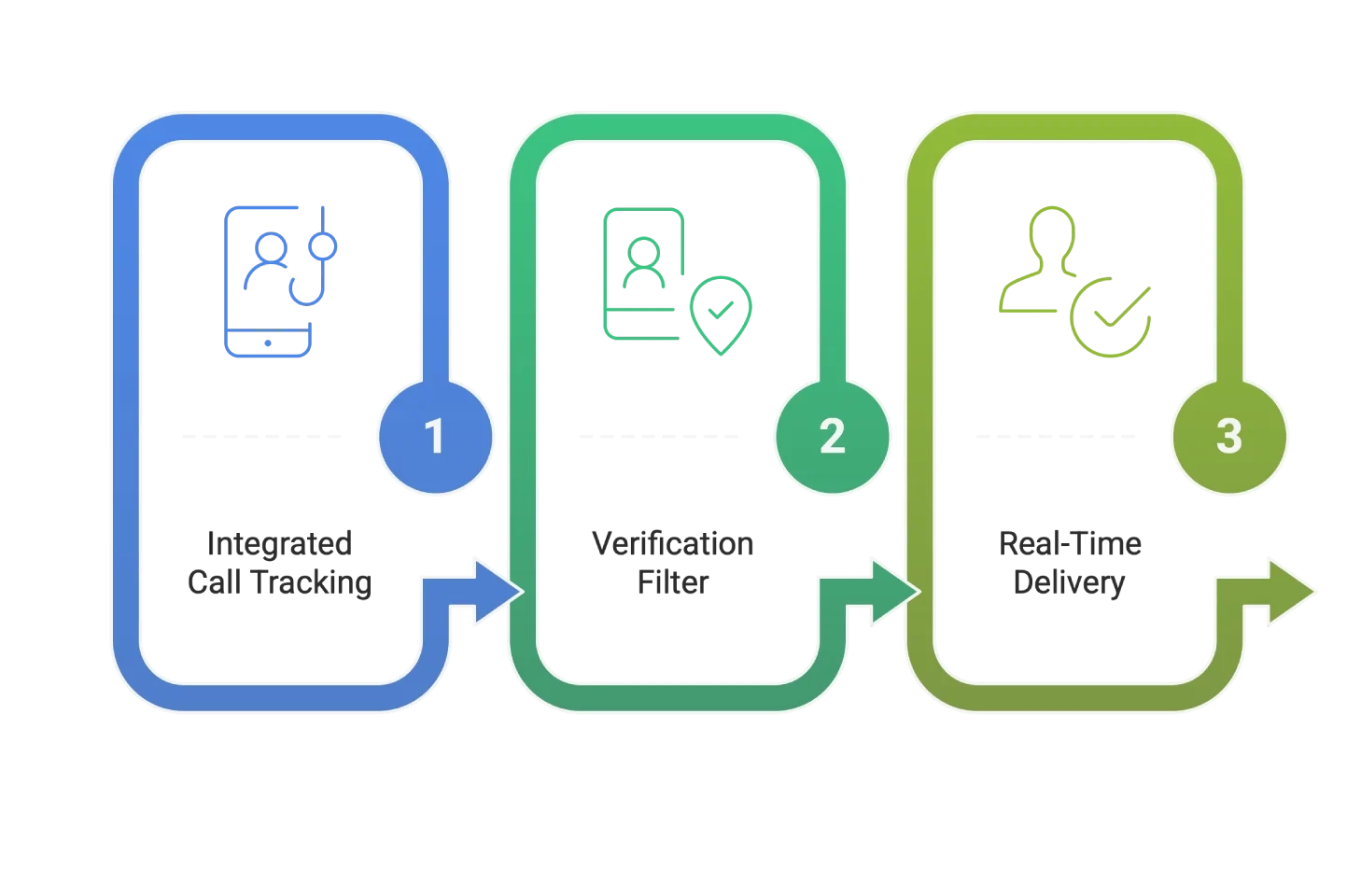
Step 1: Integrated Call Tracking
Utilizing high-level tracking, the system identifies the specific intent of the caller. This allows for data-driven adjustments to ensure leads are coming from high-value search terms (e.g., “emergency freezer repair”) rather than low-value “how-to” searches.
Step 2: Verification Filter
Before a lead is “billed,” it undergoes a verification process. This ensures that the contact information is valid and the intent matches your business profile. This prevents the “billing disputes” common with other lead aggregators.
Step 3: Real-Time Delivery
In appliance repair, “speed-to-lead” is critical, especially for emergency repairs like leaking washing machines or non-cooling freezers. Inquirly delivers leads the moment they are verified, giving you immediate access to potential opportunities.
4. Geographic Precision
Profitability in appliance repair is often won or lost on the road. High “windshield time” (time spent driving between jobs) eats into the number of billable service calls a technician can perform in a day.
Inquirly’s Customizable Location Targeting allows you to discover and contact 100% relevant leads from your specific service area.
- Route Density: By targeting leads closer to your home base or existing routes, you can increase the number of calls a technician completes in a single day.
- Local Dominance: You can choose to own specific zip codes where you know the demographics match your target ticket price.
5. Eliminating the “Contract Trap”
A major reason for the 2026 contractor migration is the demand for Fair Billing. Traditional marketing agencies often require 6-to-12-month commitments to “optimize” a campaign.
Inquirly operates on a No Monthly Commitment basis. This forces the lead provider to remain accountable for quality every single day. If the lead quality drops, the contractor has the professional freedom to pause the flow. This creates a performance-based partnership rather than a restrictive legal one.
6. Real-World Unit Economics
To understand why contractors are switching, we have to look at the unit economics of an appliance repair lead:
| Lead Type | Cost Range | Best For |
| Form Leads | $10 – $30 | Standard maintenance, non-emergency quotes |
| Live Calls | $20 – $100 | Emergency repairs (fridge, leak, HVAC cross-over) |
If your average repair ticket is $280 (labor + parts margin) and you close 50% of your $30 leads, your total marketing cost per job is $60. This leaves a healthy margin for labor and overhead, a ratio that is becoming harder to achieve through traditional “Big Tech” advertising.
7. Professional Reliability and Support
At the core of Inquirly’s value proposition is a dedicated support team. In the fast-paced world of home services, a technical issue with a lead flow can mean a quiet day for your staff. Inquirly prioritizes exceptional customer service, ensuring that your inquiries are addressed promptly so your business never misses a beat.
Conclusion
The transition to Inquirly represents a maturation of the appliance repair industry. Contractors are moving away from the “gambler’s mindset” of traditional advertising and moving toward a systematized, exclusive and verifiable lead generation model.
By prioritizing exclusivity, geographic density and fair billing, Inquirly allows repair businesses to focus on what they do best: fixing machines and serving their local communities.