By 2026, the water filtration industry is expected to undergo a radical transformation. The days of selling simple “soft water” for comfort are rapidly fading. Instead, the market is moving toward a model based on health security, infrastructure resilience, and smart-home integration.
With the implementation of strict new PFAS (forever chemicals) regulations expected in the US and EU starting in 2026, and furthermore, continued concerns regarding municipal infrastructure reliability, the consumer mindset is shifting. Homeowners will consequently no longer view water filtration as a luxury upgrade, but as a necessary protective measure for their health and property.
For water treatment business owners, this shift presents a massive opportunity, but only for those prepared to adapt. To secure high-value jobs in 2026, you must pivot from being a “service provider” to a “water intelligence partner.”
This guide outlines the specific strategies, software, and cross-industry lessons that will help you dominate the market in the coming year.
New Era of SEO: “Answer Engine Optimization”
By 2026, the way consumers find local services is expected to change significantly due to the rise of AI-driven search (like Google’s Gemini and OpenAI’s ChatGPT). Users are moving away from typing keywords like “water softener city name” and towards asking complex questions like: “What are the current PFAS levels in [City Name] and which filter removes them best?”
To capture these leads, your digital presence must evolve from “Search Engine Optimization” (SEO) to “Answer Engine Optimization” (AEO).
Hyper-Local Data Pages
A generic “About Us” page will no longer suffice. You need to become the Wikipedia of local water for your service area.
- Create “Municipal Water Report” Landing Pages: Build specific pages on your website for every town you serve. Titled “2026 Water Quality Analysis for [Town Name],” these pages should break down the local Consumer Confidence Report (CCR) into plain English.
- The “Zero-Click” Content: Google’s AI often pulls answers directly from websites without sending the user to the site. To win this “featured snippet,” structure your content in clear Q&A formats.
- Question: “Does [City] water contain chlorine or chloramines?”
- Answer: “As of 2026, [City] utilizes chloramines for disinfection. Standard carbon filters may not be effective; we recommend catalytic carbon filtration for this specific municipality.”
Tools for Execution
SurferSEO: This tool analyzes the top-ranking content and tells you exactly which terms (e.g., “TDS levels,” “reverse osmosis membrane”) you need to include to rank higher than your competitors.
BrightLocal: Essential for managing your local citations. In 2026, consistency in your Name, Address, and Phone Number (NAP) across the web is expected to remain a critical trust signal for Google’s algorithm.
Lead Generation: The “Exclusive” Model
Consequently, in 2026, the most successful home service businesses will likely move away from “shared lead”platforms, where you fight 5 other contractors for the same low-quality lead. This competitive environment typically drives down prices and compresses profit margins, turning the lead acquisition process into a race to the bottom. Instead, the focus is expected to shift toward exclusive lead generation.
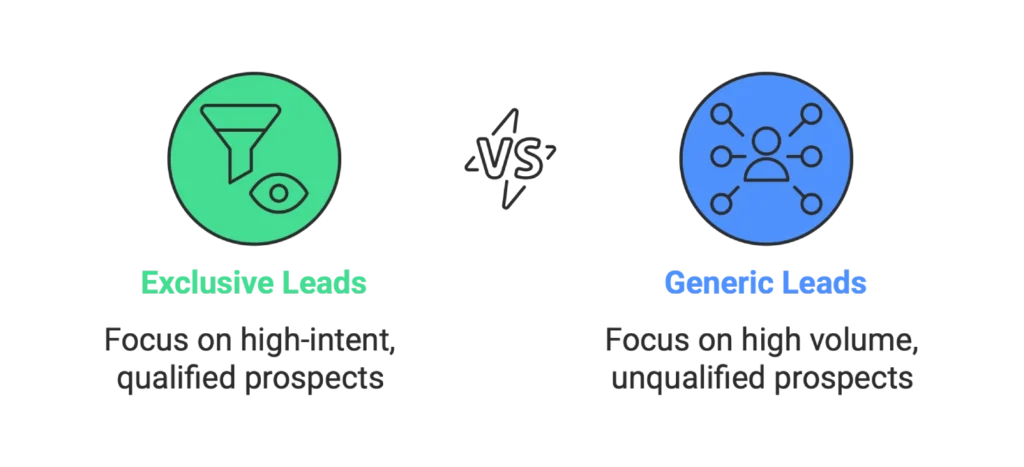
- Exclusivity Protects Profitability: When leads are exclusive, you eliminate price shopping. This shifts the conversation from cost to solution value, allowing you to position premium equipment and maintain healthier profit margins on high-ticket filtration systems.
- High Intent Lowers Acquisition Costs: Leads sourced from high-intent searches (e.g., actively searching “PFAS filter installation”) are significantly warmer than generic forms. Therefore, your sales team spends less time on unqualified prospects, drastically reducing your Customer Acquisition Cost (CAC) and improving lead velocity.
If you are evaluating exclusive lead platforms, consider reviewing the structure used by specialized contractors. For instance, the system used by lead generation companies like Inquirly emphasizes high-intent customers over high volume, a model that directly protects profitability in water treatment.
Contact us for Exclusive Water Filtration Leads
Operational Efficiency
The water filtration business is rich in Recurring Revenue (filter changes, maintenance). By 2026, manual tracking will kill growth.
The Benefit: Automation software allows you to tag equipment with replacement dates and automatically trigger service reminder texts and emails, turning a one-time install into a predictable, long-term revenue stream.
FSM Automation: You must implement specialized Field Service Management (FSM) platforms. These systems centralize dispatching and invoicing, but, more importantly, they automate the service and maintenance cycle.
Specialized Markets: The PFAS & Commercial Pivot
As mentioned, 2026 is expected to be the year of PFAS regulation. The US EPA and EU regulatory bodies are tightening standards, meaning public water reports will look “scarier” to the average citizen.
The “PFAS-Free” Package
Don’t just sell “Whole Home Filters.” Package your highest-end active carbon or reverse osmosis systems as “The Emerging Contaminant Defense Package.”
- Educational Marketing: Use your blog and social media to explain why standard fridge filters cannot remove PFAS. Position your company as the technical expert on this specific chemical family.
The Commercial “Water Audit”
While residential jobs fluctuate, commercial jobs offer stability. Coffee shops, breweries, and boutique hotels are businesses that live and die by water quality.
- The Strategy: Do not pitch them a product. Pitch them a “Water Profile Audit.”
- Linkedin Outreach: Use LinkedIn Sales Navigator to find “Facility Managers” or “Owners” of local hospitality groups. This is a blue-ocean strategy where very few water treatment dealers are competing.
Smart Water Ecosystems
By 2026, the “Internet of Things” (IoT) will be deeply integrated into home infrastructure. Homeowners will expect their water system to be as “smart” as their thermostat.
The Integration Play
To get more jobs, you should bundle “protection” with “filtration.”
- Leak Detection: Partner with brands like Moen Flo or Phyn. These smart water valves monitor usage and automatically shut off the water main if a catastrophic leak is detected.
- The Bundle: Offer a “Total Peace of Mind” package. “We don’t just make your water healthy; we ensure it never floods your basement.”
Conclusion: The 2026 Standard
Getting more water filtration jobs in 2026 will not be about who has the lowest price. It will be about who can provide the most certainty.
In an era of climate anxiety and health concerns, the winning company will be the one that:
- Educates with hyper-local data (AEO).
- Validates with digital testing (Spin Touch).
- Automates the relationship (Amplafide/ServiceTitan).
- Generates high-intent opportunities by emulating the best lead models (like the Inquirly exclusive approach).