Author Archives: Autumn Andel

The Best Lead Generation Tools for Water Damage Restoration Companies in 2025

The water damage restoration industry has always been dynamic, but 2025 has ushered in a new wave of digital disruption. The demand for emergency services is skyrocketing. However, providing top-notch restoration services alone is no longer sufficient. Success now hinges on using lead generation tools that can bring in consistent, high-quality jobs fast.

The capacity to obtain water damage leads quickly and consistently is what distinguishes growth from stagnation, regardless of whether you’re a franchise with multiple locations or a lone water repair specialist. Let’s explore the top choices that are currently accessible and how to use them efficiently.

Understanding Lead Generation Tools and How They Work

What are lead gen tools?

Lead generation tools are digital platforms or software designed to attract, capture, and convert potential customers. For water restoration companies, this could mean a chatbot capturing an inquiry during a flood, a CRM logging a quote request from your website or SEO software pulling in organic restoration leads.

These tools vary in function but work toward a single goal – growing your business pipeline. Types include:

  • Lead generation software
  • SEO lead generation software
  • B2B lead generation tools
  • Lead management software
  • Leads generator platforms


This shift means that relying solely on traditional methods can severely limit growth. Forward-thinking companies now use B2B lead generation tools, automated texting, email sequences, AI chatbots and predictive analytics to stay ahead.

Which Is the Best Lead Generation Tool in 2025?

When it comes to managing water damage leads, generic CRMs can fall short. That’s why many restoration professionals are turning to industry-specific platforms designed to handle everything from lead capture to job close-out. Here are some of the top tools tailored for the restoration world:

Tool Description
GoHighLevel Full-stack marketing suite built for local service businesses.
HubSpot CRM Ideal for larger teams with powerful custom workflows and integrations.
JobNimbus Perfect for contractor-style restoration businesses with project management features.
CallRail Advanced call tracking and recording for performance-focused ad campaigns.

Should You Use a Restoration Lead Generation Company?

Many businesses consider hiring a restoration lead generation company to ease the pressure of marketing. These companies promise to get water damage leads fast, often in real-time. But while they may offer a short-term boost, they come with downsides like shared leads, inconsistent quality and long-term dependency. Unless you don’t go for exclusive leads, just like Inquirly suggests.

You might also consider a hybrid strategy: build your own pipeline using internal tools while supplementing with lead brokers during slow seasons. This allows you to control quality, costs, and branding while reducing risk.

Local SEO Lead Generation Software

Local SEO is still one of the most affordable ways to secure steady restoration leads. SEO lead generation software like

These softwares help optimize your site for keywords like “emergency water extraction near me” or “flood cleanup in [city].”

Using mobile-friendly design, structured data, and high-quality content, you can progressively move up Google’s local pack rankings. When you rank well organically, every click is free and often more qualified.

How to Automate Conversions Using AI and CRM Integration

Many water restoration companies today are moving beyond manual lead tracking and into the world of smart automation. With B2B lead generation software and robust CRMs like JobNimbus or GoHighLevel, it’s now possible to streamline the entire sales pipeline from first click to booked inspection.

Here’s how it works: when a lead fills out a form on your lead generation website, the CRM captures the data instantly. That lead is then automatically assigned to a sales rep, who receives a real-time notification. Simultaneously, the system triggers an email or SMS follow-up sometimes within seconds.

But the real game-changer is AI. Tools such as chatbots can engage visitors the moment they land on your site. They ask pre-set qualifying questions like “Is the water source contained?” or “Do you have insurance coverage?” Based on the responses, the AI can either escalate to a live agent or book an appointment directly in your calendar. No delays, no missed opportunities.

Which AI Tool Is Best for Lead Generation in 2025?

AI in lead generation is already foundational. Tools such as ChatGPT API, Jasper and ManyChat automate content creation, chat flows and prospect segmentation.

So, which AI tool is best for lead generation in the restoration industry? For many, the winning combo is a ChatGPT-based chatbot integrated with a software like Zoho, automating everything from intake to drip sequences.

Reputation Management Tools

Your online reputation directly affects how many restoration leads you generate, especially in emergency-based services where trust is everything.

These platforms listed above allow you to track new reviews, monitor brand sentiment and respond quickly across Google, Yelp, Facebook and more.

These tools often include automated review requests via SMS or email, so you never miss the chance to turn a satisfied customer into a 5-star advocate. They also offer reputation dashboards, which allows you to analyze trends over time and identify customer service issues before they escalate.

Best B2B Lead Generation Tools for Water Restoration Companies

If you’re targeting property managers, commercial facilities or HOAs, consumer-focused tools won’t cut it. Instead, platforms like shown below give you access to accurate contact data and professional networks:

You may create customised outreach sequences, identify decision-makers, and automate follow-ups with the help of these technologies. For example, you can identify all local apartment complex managers, export their data and launch an email drip campaign with educational content about flood preparedness and response times.

SMS Drip Tools That Engage and Close Fast

Texting is one of the most responsive communication channels, with open rates above 90%. These tools let you automate personalized SMS sequences that guide leads from interest to appointment:

Let’s say a prospect submits a request at 10 PM. Instead of waiting until morning, an SMS auto-response could say, “Thanks for reaching out – help is on the way! A team member will call you shortly. Meanwhile, here’s what to do to minimize damage.”

This approach builds trust, sets expectations and speeds up the conversion process, all while your team is offline.

FAQs

What are lead gen tools?
They are software or platforms that attract, capture, and convert potential customers into actual leads.

Which is the best lead generation tool?
It depends on your goals. For most water damage companies, a combination of Google LSAs, a lead gen website, and CRM automation works best.

Which AI tool is best for lead generation?
ChatGPT-powered bots and predictive CRM systems like Salesforce Einstein are leading the pack in 2025.

How to get water damage leads without paid ads?
Focus on local SEO, review generation, email marketing, and community partnerships.

Are free water damage leads reliable?
Yes, but they often take time to build. Free leads from SEO and referrals are more sustainable long-term.

Can one tool handle everything?
GoHighLevel and HubSpot offer comprehensive toolsets, but even then, combining platforms gives you flexibility and power.

How to Rank Higher on Google Maps for Water Damage in 2025

In 2025, the majority of water damage calls originate from mobile searches tied directly to Google Maps. Homeowners with flooded basements or mold issues are tapping one of the first three results in the “local pack.” That means if you want real, ready-to-buy water damage leads, you need to show up – right there, on the map.

Knowing how to rank higher on Google Maps is critical if you expect to generate consistent call volume from local searches.

That small but powerful box of map-based listings, the local pack, shows up right above the regular search results when someone types in things like:

  • “emergency water damage repair near me”
  • “mold removal service open now”
  • “24/7 flood restoration”

Google’s Local Pack: The Only 3 Spots That Matter

In most markets, Google shows three results for local service searches. These spots get 60–70% of clicks and nearly all of the call volume. If you’re not in that trio, you’re likely just background noise.

Here are 5 highly-effective, field-tested and ethical strategies to boost your visibility and show Google you know how to rank higher on Google Maps as a water restoration service in 2025.

1. Think Like Google

Most water damage companies start with tactics before understanding how Google Maps even works. Google ranks local businesses based on:

🧭 Relevance
How closely your business matches what the user is actually searching for. This includes keywords in your Google Business Profile, categories, and services listed.

📍 Distance
How physically close your business is to the searcher at the time of the query. Google prioritizes nearby options first, especially for urgent needs like water damage.

⭐ Prominence
How well-known and trusted your business is online. This includes reviews, backlinks, business mentions and your overall presence across the web.

Everything else in this article ties back to these core ranking signals.

2. Stop Treating Your Google Business Profile Like a Set-It-and-Forget-It Listing

Your Google Business Profile (GBP) is a dynamic, trust-building asset. You’re feeding Google rich, structured data that reinforces what you do, where you do it and why you’re trusted. But somehow most water damage pros don’t go beyond basic setup. If you’re trying to understand how to rank higher on Google Maps, this is where it starts.

  • Primary Category: Set it to “Water Damage Restoration Service.” Don’t guess, the category directly influences what keywords you’ll rank for.
  • Business Description: Write a real, conversational description. Mention water extraction, mold remediation, and insurance assistance naturally.
  • Hours: Set accurate 24/7 availability if you offer it. That’s a huge differentiator.
  • Services Section: List all services individually. Google indexes these fields to match user queries like “ceiling leak cleanup” or “basement water extraction.”
  • Photos: Use real job photos, not stock. Even better, include geotagged images from different service areas.

3. Forget “Hacks”

There are no secret backlinks or review loops that beat trust. Google now uses machine learning to gauge whether people actually interact with your listing. That includes:

  • Do they click “Call”?
  • Do they tap “Directions”?
  • Do they browse your photos or reviews for a while?
  • Do they leave reviews after visiting?


This is called behavioral data and it’s the new frontier of local SEO. To optimize for it:

Make Your Google Maps Listing Stand Out

  • 📸 Real Job Photos: Upload weekly – flood cleanup, mold removal, happy clients. Avoid stock images.
  • 📅 Weekly Posts: Share job highlights, seasonal tips or service updates. Even short blurbs work.
  • 💬 Enable Chat: Turn on GBP Messaging so customers can reach you instantly via mobile.
  • 📱 Clear Call-to-Action: Use a line like: “Need help fast? Tap ‘Call’ to speak with a certified tech 24/7.”

4. Local Pages Still Dominate

Your website influences your Maps ranking more than most realize. One of the best ways to show local relevance and expertise is to create unique location or service area pages. This step plays a major role in how to rank higher on Google Maps, especially in competitive cities.

It matters because when someone in that city searches “water damage restoration,” Google connects the dots between your GBP, your site content and user behavior to determine who’s truly local and helpful.

Here’s how to do it right:

  • Write naturally about your experience working in that city.
  • Mention specific neighborhoods, landmarks, or recent jobs (anonymized for privacy).
  • Include images of your team working on-site.
  • Embed your Google Maps listing directly into the page.
  • Use internal links to and from your main service pages.

5. Reviews

In 2025, Google doesn’t just measure how many reviews you have, it looks at how often they come in, and whether that matches real-world demand. This is called review velocity and it now influences local ranking behavior.

If you suddenly get 20 reviews in a week, then nothing for a month, it looks artificial. But if your reviews arrive steadily during peak service times, like after major rainstorms, freezes or flood alerts – it signals legitimacy and relevance to Google’s algorithm.

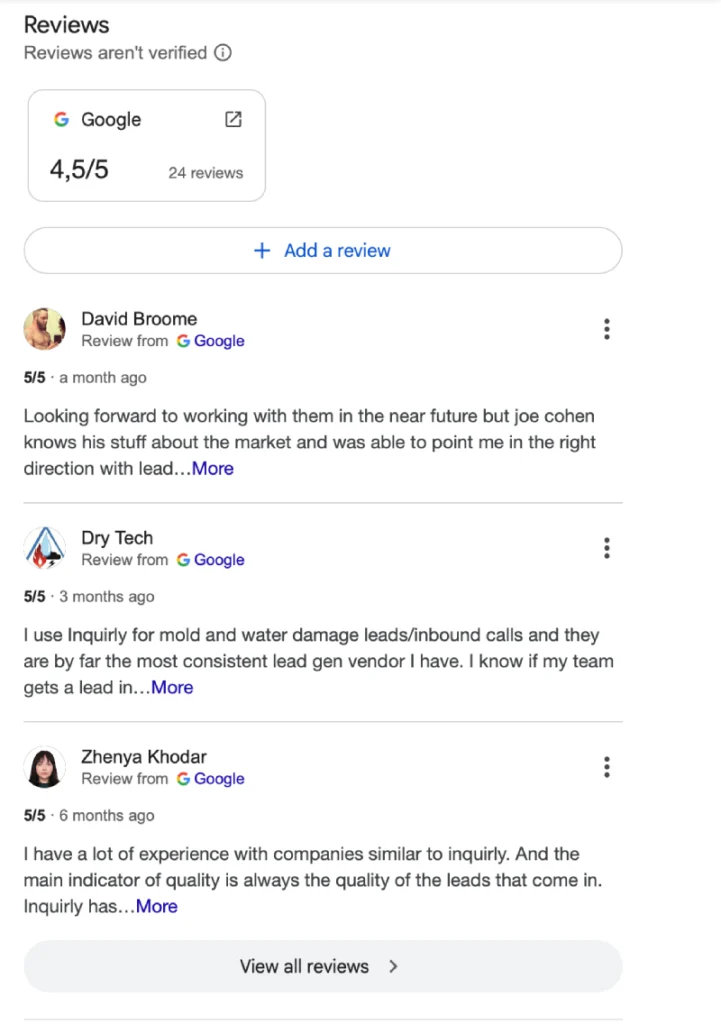
Let’s examine what people are saying about Inquirly 👇

Here’s the real strategy: align your review outreach with seasonal water damage spikes. Set internal reminders after high-volume weeks. Make review requests part of your job closeout process. If you helped 12 homes after a local flood, 8 of those customers should be nudged for a review that week, not later.

By tying your review generation to real, local events, you match Google’s evolving model of “real business activity.” This improves both trust and visibility, especially during periods when your services are in highest demand.

What to Be Careful Of

If you’re serious about long-term visibility on Google Maps, you need to treat your listing like a reputation asset, not a quick lead faucet. The biggest mistake water damage companies make – often unknowingly, is trying to “outsmart” Google’s local algorithm with tactics that used to work but now trigger red flags.

Google’s spam filters have become more aggressive and precise. AI now spots fake listings, keyword-stuffed names, or sudden review surges from distant IPs. Trip these signals, and your listing can be suspended – often without warning. Appeals are slow, frustrating, and costly.

Keyword stuffing your business name – like “Water Damage Cleanup – 24/7 Emergency Response” might give you a short-term boost, but it violates Google’s guidelines. Their algorithm detects and demotes listings that abuse this. When caught, your listing may vanish from the Map Pack entirely.

Review manipulation is even riskier. Buying reviews, offering discounts for feedback, or filtering responses through private gates breaks multiple policies. Google can detect unnatural patterns. One manual review could erase years of work and worse, harm your credibility.

Duplicated content on city landing pages is another common trap. Swapping city names on near-identical pages worked years ago, but not now. Google sees it as thin content. Instead, write unique, useful pages for each area to build real SEO assets Google rewards.

FAQs

How often should I update my Google Business Profile?
At least once a week. Even small updates, like new photos, seasonal service posts, or revised descriptions, show Google that your business is active and trustworthy. Stale profiles tend to drop in rankings, which can impact how to rank higher on Google Maps consistently.

Is it worth investing in Google Ads if I’m focused on Google Maps rankings?
Yes, especially in competitive markets. Paid traffic through local service ads or water damage PPC can increase engagement on your profile (clicks, calls, direction requests) – which indirectly supports your organic Maps visibility.

Can I rank in nearby cities without opening a new office?
Not easily – not anymore. In 2025, Google prioritizes physical proximity. If you want to appear in the local pack for a neighboring city, you’ll need either a staffed location or exceptional local relevance through content, links, and engagement.

How do I know if my listing was penalized or just outperformed?
A sudden drop in calls and visibility may point to a suspension or filter. Check your Google Business Profile dashboard for warnings, and run a local rank tracker to confirm. If everything looks clean, stronger competitors may have overtaken you.

Do Google Posts still matter in 2025?
Absolutely. Google Posts are still crawled and indexed, especially when they include service-specific keywords and location context. They also keep users engaged on your profile – which helps behavioral metrics.

Should I hire a local SEO agency or do it in-house?
That depends on your resources. If you have time and a good grasp of strategy, you can manage it in-house. But if you’re in a crowded metro area or dealing with penalties, a specialized local SEO agency can accelerate results and prevent costly mistakes.

The Real Cost of HVAC Leads in 2025: What You Should Expect to Pay

Understanding the HVAC leads cost in 2025 is crucial for any contractor trying to grow their business without burning through budget. Finding quality HVAC leads isn’t as simple as clicking “buy now” and waiting for your phone to ring. The market’s full of big promises, recycled leads and pricing models that can drain your budget faster than a broken AC in July.

The answer depends on the method you choose, the value you place on ROI, and how wisely you select your lead generation partner. Some companies are charging sky-high rates for cold leads that don’t convert. Others – like Inquirly, are changing the game with smarter systems that deliver results without draining your wallet.

So, what should you be paying for HVAC leads in 2025? Let’s break it down.

What HVAC Leads Actually Are

Let’s rewind for a second. A “lead” is just someone interested in HVAC services, a homeowner needing a furnace repair, a landlord replacing an AC unit, or a property manager planning a full system install. Sounds simple, right?

Well, not all leads are same. Some are ready to book a job today. Others are just “shopping around” and may ghost you after a quote. The difference between these two types is huge, and it’s why understanding the cost per lead(CPL) and what goes into it matters so much.

How HVAC Lead Generation Has Changed in 2025

Five or ten years ago, HVAC companies got most of their leads from referrals, yard signs or local print ads. But in 2025? Most homeowners head straight to Google or AI when any issue occurs. The lead game is now digital, fast and competitive.

This shift is part of the reason why the HVAC leads cost 2025 varies so widely and why lead quality should always come before quantity.

The 3 Most Common HVAC Lead Pricing Models

Let’s talk about how most HVAC leads are priced today, and what each model really costs you.

Pay-Per-Lead (PPL)

With PPL, you pay a set price for each lead you receive, usually ranging from $25 to $90 for residential jobs and $100 to $300+ for commercial.


Cons:

  • You might get low-quality or “tire kicker” leads
  • Shared leads are common
  • No control over targeting unless you ask


Good PPL vendors qualify leads and only send exclusive, high-intent contacts. But bad ones? They’ll sell the same lead to five contractors and wish you luck.

Flat Monthly Fees

Here, you pay a fixed price, say $1,500/month, for a bundle of leads or unlimited access to a network. Sounds appealing at first, right?

Pros:

  • Predictable costs
  • Great for testing volume


Cons:

  • Quality varies wildly
  • You may pay the same regardless of how many leads convert


Flat fee setups work if you’re getting a steady flow of bookable jobs, but if you’re spending $2,000/month and only landing two installs, you’re upside-down fast.

Pay-Per-Click (PPC)

This is the most hands-on model, you run ads (typically on Google or Facebook) and pay per click, not per lead. A good chunk of HVAC companies use PPC for lead generation.

Pros:

  • Full control over targeting and budget
  • Scales easily


Cons:

  • Easy to waste money if not managed well
  • Requires ad expertise or a trusted partner

⚠️ Signs You’re Overpaying for HVAC Leads

💸 Paying over $100 per lead with less than 10% conversion
🔁 Leads are clearly shared or feel recycled
No transparency in reporting or performance metrics
📍You can’t track where your leads are coming from

HVAC Leads Cost 2025: What You Should Really Expect to Pay

Prices vary – a lot. But here’s a general ballpark based on current data and real contractor feedback:

🔥 Lead Type 💵 Low End 🪙 High End
Residential (PPL) $25 $90
Commercial (PPL) $100 $300
Flat Fee (Monthly) $750 $3,500
PPC (Managed) $90 $250+

Of course, these are just averages. A $50 lead might be a total waste or a goldmine, depending on how it was sourced and how hot the buyer is.

Too many contractors get locked into overpriced systems that deliver stale leads, shared five ways and barely interested in booking. Meanwhile, savvy pros are partnering with companies, who focus on real-time, high-intent, exclusive leads at prices that still leave room for profit.

What Makes a Lead Actually Worth Paying For?

The best leads:

  • 🔒 Are exclusive (not shared) – You’re not fighting 4 other contractors to win one job.
  • 🧑‍🔧 Come from people actually ready to hire – No tire kickers, just folks who need service now.
  • 📞 Include full contact info – Real names, numbers and emails. No ghost data.
  • 📍 Are matched to your service area – No wasted calls to customers outside your zone.


💡 Sometimes, it’s better to pay $90 for a booked customer than $30 for a “meh” form fill who never responds. Cheap can get expensive really fast.

HVAC Leads at Inquirly


Ready to grow your HVAC business with real, exclusive leads?
Start today – no contracts, no risk.

👉 Get Started with Inquirly

Inquirly provides exclusive leads – no sharing, no overlap, just high-quality prospects sent directly to your business. Every lead is 100% yours. The company also operates with full transparency, allowing you to see exactly where each lead originates and how it was generated.

There are no long-term contracts required. Businesses continue using Inquirly because the system delivers, not because of restrictive terms. Most importantly, the platform is built with an ROI-first mindset. The goal isn’t just to flood your inbox with contacts, it’s to deliver leads that convert, drive revenue and grow your business efficiently.

Form leads range from $10 – $30, while live call leads cost between $20 – $100, with some high-intent calls priced up to $225. Pricing depends on the type and quality of the lead, so you only pay for what fits your business.

Watch Out for These Lead Scams

Unfortunately, HVAC lead scams are real. Keep your guard up for:

  • Leads with disconnected numbers or fake emails
  • No refunds, no tracking, no transparency
  • Contracts with no exit clause

Stick with vendors that offer clear lead sources, performance tracking and contract flexibility. (Again, Inquirly checks every one of those boxes.)

How to Calculate ROI from Your Leads

Here’s a simple ROI formula to use:

(Revenue – Cost of Leads) ÷ Cost of Leads × 100 = ROI%

Say you spent $1,000 on leads and booked $4,000 in jobs. That’s a 300% ROI. Not bad, right?

With lead platforms like Inquirly, that kind of return is standard, because they focus on quality, not just quantity.

Best Lead Generation Companies for Small Electrician Businesses 

Electrician businesses often find themselves at a crossroads. One road leads to traditional methods of acquiring clients: word of mouth, referrals, the occasional newspaper ad. The other? Digital mastery through targeted lead generation that drives consistent and quality leads. If you run a small electrician business and want to thrive in today’s market, it’s time to plug into what truly works.

In this guide, we’ll unveil the best lead generation companies for small electrician businesses, reveal how to choose the right one and explore strategies to grow your client list faster.

Electrician Business Growth Starts With the Right Leads

Your electrician business thrives on one critical factor, consistent and qualified leads. You can be the most skilled in your trade, but without a reliable pipeline of paying customers, the lights won’t stay on for long. Running a home electrical company or starting a full-scale electrical business means one thing is certain – leads are the driving force behind growth.

Why Lead Generation Is Important for an Electrician Business?

Unlike retail or hospitality, electrical services aren’t something customers need every day. That means timing and visibility are everything. High-quality lead generation bridges the gap between your electrician company and customers in need, offering targeted outreach, enhanced brand presence and real-time inquiries.

The Digital Transformation of the Electrical Service Company

A decade ago, being listed in the Yellow Pages might have been enough to attract customers. Today? If you’re not ranking on Google or being seen on Facebook, your competitors are.

Modern home electrical companies are going digital – applying SEO, PPC ads and lead-generation platforms to get their services in front of high-intent searchers.

Top Lead Generation Companies for Small Electrician Businesses

Right lead generation partner can have a big influence on the trajectory of your electrician business. Let’s take a deeper look at the top-performing platforms.

Inquirly.com

Inquirly.com lead generation company for electrician business

Inquirly is a growth-focused lead generation company tailored to electricians, plumbers, HVAC contractors, and other home service professionals. Focused on transparency and control, Inquirly operates on a no-contract, no-commitment basis, perfect for small electrician businesses that want flexibility.

Prices vary on the type of lead, as form leads cost between $10-30 per lead and calls cost between $20-100 per call.

Offerings:

  • Real-Time Lead Delivery: Leads are delivered as soon as the customer submits a request.
  • Geo-Targeted Leads: You choose your service area and types of jobs.
  • Exclusive Leads: Unlike Angi or other platforms, leads aren’t shared, you’re the only one getting that job request.
  • No Minimums: Start with as few or as many leads as your business can handle.

Thumbtack

Thumbtack lead generation company for electrician business

Thumbtack is a DIY-friendly platform that gives you more control over how you bid for jobs. Customers post specific tasks (e.g., “Install ceiling fan in living room”), and you can respond directly with a quote. You only pay when a customer responds to your bid.

How It Works:

  • Set up a business profile
  • Browse local job requests
  • Submit quotes manually or via auto-quote settings

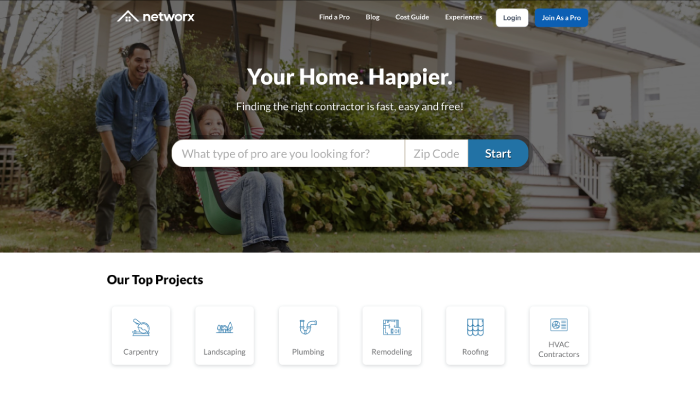
Networx

Network lead generation company for electrician business

Networx is a more premium lead provider, offering exclusive or semi-exclusive leads. They pre-screen users, which increases lead quality, and often deliver leads via live call transfer, a huge advantage when you’re in the field.

How It Works:

  • Sign up and verify your electrical license and insurance
  • Choose service areas and budget
  • Leads are delivered via call, text, or dashboard alerts


Perfect for growing electrical service companies with a marketing budget that can handle higher-quality leads at $70 – $100+ per inquiry.


🔌 Want to Stay Ahead in the Electrician Business?
Discover the Top Electrician Industry Events & Trade Shows in 2025 – network with contractors, learn about the latest tools and gain insider strategies to grow your electrical business faster. Don’t miss out on the biggest opportunities of the year!
Explore the 2025 Electrician Trade Show Calendar


Common Lead Generation Challenges in the Home Electrical Company Industry

Choosing the right lead generation company matters. Here is why:

  • Unqualified leads wasting your time.
  • Overpriced services draining budgets with little ROI.
  • Lead duplication, where multiple companies are sold the same lead.
  • Inconsistent volume, making it hard to forecast business growth.

Local vs National Markets for an Electrician Business

Electrician companies operate in local service areas, which makes geo-targeted marketing essential. National lead-gen agencies often offer scale, but local-focused providers may understand your neighborhood’s unique needs better. Ideally, the company you choose should offer both.

  • National = scalability + tools.
  • Local = personalization + community credibility.

Transparency and Reporting in Services

If a company can’t show you where your money is going, it’s probably going nowhere fast. The best lead generation companies will provide:

  • Detailed analytics dashboards
  • Call tracking and lead sources
  • Performance breakdowns

Pricing Models: Pay-per-Lead vs Subscription

Two main models dominate:

  • Pay-per-lead (PPL): Pay only when you receive a lead.
  • Subscription: Monthly flat fee for a consistent stream of leads.


Which one’s better? It depends on your budget and how much risk you can handle. PPL models reduce waste but might be costlier per lead. Subscriptions may offer volume but lower control.

Track Record and Reputation in the Electrician Business Space

Look for reviews, testimonials and case studies specific to electrician companies. A provider might be excellent in HVAC but clueless in residential wiring. Ask the tough questions, and don’t be afraid to demand proof of past performance.

Setting KPIs and Goals for Your Electrical Business

Before hiring any lead provider, outline goals:

  • How many leads per month?
  • What’s your ideal cost per lead (CPL)?
  • What is your average job value?


Track conversions from lead to estimate to paid job.

Lessons Learned from Failed Lead Generation Campaigns

  • Targeting too broad
  • Using unclear offers
  • No lead nurturing follow-up


Failure isn’t fatal, but it’s expensive. Learn, adjust and retry.

FAQ

How do I know which lead generation company is right for my electrician business? +
What is the average cost per lead in the electrical services industry? +
Should I choose a local or national lead generation company? +
How do I measure the success of a lead generation campaign? +
Can I generate leads myself without hiring a company? +
What mistakes should I avoid when choosing a lead generation partner? +

Top Electrician Industry Events & Trade Shows in 2025

The electrical industry is buzzing with innovation and momentum, and that energy is especially evident at the leading electrical trade shows and expos. From experienced electrical engineers to up-and-coming technicians and forward-thinking contractors, professionals across the field will find 2025 packed with valuable opportunities at electrical trade shows to connect, learn and advance their careers.

As the sector embraces emerging technologies, ranging from smart grid systems to sustainable energy solutions, these events offer a front-row seat to the future. Trade shows bring together insights, tools, and strategies that are actively shaping how we design, power, and innovate in the modern world.

Benefits of Attending Electrical Trade Shows

Why attend electrical conventions? For starters, they offer unrivaled networking opportunities. But that’s not all. Attending electrical conventions provides professionals with far more than just a day out of the office. These events offer valuable opportunities to build meaningful connections with peers, industry leaders, and potential partners. In addition to networking, attendees benefit from hands-on demonstrations of the latest tools and technologies, gaining practical insights that are often difficult to obtain elsewhere.

The conventions also feature training sessions led by respected experts in the field, offering access to knowledge that can directly impact on-the-job performance. Participants have the chance to speak directly with manufacturers and service providers, ask questions, and explore solutions tailored to their specific needs. For those looking to stay current in a rapidly evolving industry, many events include continuing education credits or certification programs. Lastly, these gatherings are some kind of source of inspiration, showcasing innovations that signal where the industry is heading next.

Trends Shaping Electrical Trade Shows 2025

This year, three primary trends are shaping the landscape:

  • Sustainability
  • Digitalization
  • EV Charging Infrastructure

Top Electrical Trade Shows in 2025

Event NameDateFocus
EV Charging Infrastructure SummitMarch 3–4EV growth, infrastructure planning
Polymers in CablesJune 10–11Advanced cable tech
HydroVisionJuly 15–17Hydropower, renewable integration
EASA 2025July 19–22Electric machinery, apparatus service
NECA Show 2025Sept 12–14Electrical contracting, construction

EV Charging Infrastructure Summit 2025

Date: March 3-4, 2025
Location: Anaheim, California (TBC)
Website: https://www.usa.evcharging-infrastructure.com

The EV Charging Infrastructure Summit is focused on accelerating the deployment and efficiency of electric vehicle charging networks. With government policy, utilities, manufacturers, and infrastructure planners involved, this summit is crucial for professionals engaged in sustainable transport, smart grid integration, and energy transition projects. Attendees will benefit from in-depth discussions on funding programs, future-proof system design, and advancements in charging technologies.

Polymers in Cables 2025

Date: June 10-11, 2025
Location: Philadelphia, Pennsylvania
Website: https://www.ami-events.com/event

Organized by AMI Plastics, Polymers in Cables focuses on the development and application of high-performance polymer materials used in cable insulation, sheathing, and fire protection. The conference brings together engineers, material scientists, cable manufacturers, and regulatory experts to discuss market challenges, sustainability trends, and the role of advanced materials in meeting evolving standards across industrial, automotive, and telecommunications applications.

HydroVision International 2025

Date: July 15-17, 2025
Location: Denver, Colorado
Website: https://www.hydroevent.com/

HydroVision International is recognized as the world’s largest hydropower-focused event. It connects hydro professionals, power producers, utility executives, and policy makers to discuss issues such as digital hydro asset management, turbine innovation, environmental compliance, and hybrid integration with solar and storage systems. The event features technical sessions, exhibit halls, and project case studies, offering significant insights for those working in renewable electricity and infrastructure development.

EASA 2025 Annual Convention

Date: July 19-22, 2025
Location: National Harbor, Maryland
Website: https://easa.com/convention

The Electrical Apparatus Service Association (EASA) hosts its annual convention for professionals involved in electric motor service, maintenance, and reliability. EASA 2025 provides a technical deep dive into diagnostic tools, electric motor efficiency, digital transformation in service centers, and evolving standards in apparatus repair. The convention includes educational sessions, hands-on workshops, and an expansive exhibit floor with suppliers and technology providers showcasing the latest innovations in the field.

NECA Show 2025

Date: September 12-14, 2025
Location: Las Vegas Convention Center, Las Vegas, Nevada
Website: https://www.necashow.org

The NECA Show is the most comprehensive convention for the electrical construction industry in the United States. Organized by the National Electrical Contractors Association, this event features more than 300 exhibitors and offers a combination of technical workshops, business seminars, and product demonstrations. NECA 2025 will cover emerging tools, labor-saving technologies, workforce development initiatives, and energy-efficient solutions. Electrical contractors, project managers, apprentices, and tool manufacturers will all find considerable value at this flagship event.

Las Vegas: A Strategic Destination for Electrical Trade Shows

Las Vegas has emerged as a preferred destination for electrical industry expos due to its central location, world-class venues, and accommodation capacity. The Las Vegas Convention Center provides state-of-the-art facilities suitable for large-scale product exhibitions and immersive demonstrations. Beyond logistics, the city offers extensive networking opportunities and after-hours entertainment, enhancing the overall trade show experience.

Useful Planning Resources

10Times

Explore expos by category and region worldwide.

Visit 10Times

Eventbrite

Register and track events including trade shows and conferences.

Visit Eventbrite

NECA Education Portal

Access certifications and training tied to NECA events.

Visit NECA Portal

EASA Resources

Find technical guides, webinars, and tools for electric machinery service.

Visit EASA Resources


Need High-Quality Electrician Leads?
Connect with Inquirly – Get Exclusive Electrician Leads Today!

FAQ

How can I stand out when networking at an electrical trade show? +
Are virtual trade shows worth attending in 2025? +
What should I bring to an electrician expo to be prepared? +
Can I earn certifications or CEUs at electrical conventions? +
What new technologies should electricians look out for in 2025 expos? +
How can a small contractor benefit from attending large trade shows? +

Scaling Your Roofing Business in 2025 

In 2025, growing a roofing business requires more than solid craftsmanship, it also takes strategic marketing, operational systems and a culture built to scale. You might be just getting started or stuck at a revenue plateau – the real question isn’t ‘Can you grow?’ It’s ‘How will you grow without burning out, losing control or damaging your brand?

Let’s be clear: the roofing market is booming. But with growth comes competition. Homeowners are researching online, leaving reviews, comparing service guarantees, and hiring faster than ever. If your roofing company isn’t keeping up with shifting consumer behaviour, digital trends and business structure, your competitors will.

This guide explores how to grow your roofing business from startup to scale-up. From building your first sales system to creating an organizational chart, marketing roadmap and long-term expansion strategy.

Is Owning a Roofing Company Profitable in 2025?

Yes – but only with the right business model.

Roofing continues to be one of the most profitable trades when managed properly. The average net profit margin for residential roofing contractors ranges from 20% to 40%, with commercial roofing often higher due to contract scale and lower customer churn. However, profit isn’t automatic.

Your profitability depends on:

  • Smart cost controls
  • Efficient labor management
  • Reliable material supply chains
  • Repeatable sales processes
  • Branding and trust-building through reviews


The more systems you have, the more scalable and profitable your roofing business becomes.

How to Start a Roofing Business the Right Way

If you’re launching in 2025, you’re in a powerful position to get it right from the start.

To start a roofing company, you’ll need a business license and roofing contractor certification, which vary depending on your state. You’ll also need general liability insurance and worker’s compensation coverage to protect both your business and employees. Basic equipment is essential, including ladders, safety gear, work trucks, and tear-off tools.

In addition to physical tools, modern roofing businesses require estimating and job management software like JobNimbus or AccuLynx to streamline operations. You’ll need a brand identity that includes a professional name and logo, as well as a website optimized for local SEO so potential clients can find you online.

And most importantly, you need a marketing plan, before you ever complete your first job. Marketing sets the foundation for visibility, trust and long-term growth.

How to Market a Roofing Company in a Competitive Market

If you’re not present online and active in your community, you’re invisible.

Roofing marketing plan essentials:

  • Google Business Profile (with photos, hours, service areas)
  • Website with local keywords (e.g. “roof replacement Dallas TX”)
  • Facebook & Nextdoor engagement
  • Email campaigns for seasonal maintenance reminders
  • Paid ads (PPC, retargeting, local print media)
  • Review generation strategy


You must combine short-term lead gen with long-term trust building. That’s how real roofing business marketing works today.

Need help? Check out Roofing Marketing Plan Checklist.

How to Scale a Roofing Business Step-by-Step

1. Build Repeatable Sales and Estimating Systems

You can’t scale chaos. Use digital tools to manage bids, automate follow-ups, and track conversions. Tools like JobProgress or Roofr simplify the process and help close more deals with less labor.

2. Hire for Culture and Train for Skill

Train roofers in safety and process, but hire those who care about service. Your field crew reflects your brand more than any ad ever could.

3. Create an Organizational Chart

Even if you’re a team of 4, define roles: sales, operations, marketing, accounting. As you grow, this will prevent burnout and make handoffs smooth.

4. Measure KPIs and Forecast Cash Flow

Track metrics like:

  • Close rate per lead
  • Revenue per crew
  • Profit margin per project
  • Review rating per technician

5. Automate What Slows You Down

Use CRMs, payroll software, automated review systems and digital scheduling to save hours weekly.

How Do Roofing Companies Make Money?

Roofing companies earn through:

  • Residential re-roofs (high volume)
  • Commercial flat roofs (larger contracts)
  • Roof repairs and seasonal maintenance
  • Insurance work (storm damage, hail restoration)
  • Gutter and solar upsells


Get Exclusive Roofing Leads – Delivered Directly to You.
Join Inquirly

Roofing Company Organizational Chart (Example)

Owner / CEO
Vision, strategy, high-level decisions
Project Manager
Job scheduling, material orders
Sales Manager
Estimates, client communication
Marketing Coordinator
Ad campaigns, reviews, website
Crew Lead / Foreman
On-site supervision
Office Admin
Invoicing, CRM, follow-ups
Field Technicians
Installations and repairs

Advertising for Roofing Business: What Actually Works?

In 2025, effective roofing advertising blends visibility with credibility. Local SEO, especially strong Google Maps rankings, drives high-intent leads when homeowners search for immediate help.

Facebook retargeting ads using before-and-after photos keep your brand in front of potential customers who didn’t convert on the first visit. Direct mail still works, especially in storm-hit areas, if it’s timely and professionally designed.

Yard signs with QR codes that link to reviews add instant social proof. Radio spots on local home improvement shows build familiarity in your community. And don’t underestimate a solid referral program – it’s one of the lowest-cost, highest-trust ways to generate new business.

The goal is to show up wherever your ideal customer is looking when their roof becomes a problem.

Roofing Industry Trends in 2025

📊 AI-Powered Estimating
Roofing companies are streamlining operations with artificial intelligence tools that assist in job tracking, quoting, and customer communications, reducing human error and speeding up workflow.

🚁 Drone Inspections
Drones are now the go-to for initial assessments, offering safer, faster and more accurate roof inspections without sending a tech up the ladder.

♻️ Eco-Friendly Materials
Homeowners are asking for sustainable options. From recycled shingles to energy-efficient coatings, green roofing is growing rapidly across both residential and commercial sectors.

👷 Skilled Labor Gaps
A shortage of experienced roofers continues to pressure companies to invest more in internal training, apprenticeships, and digital learning platforms.

🗣️ Voice Search Optimization
“Hey Siri, find a roofer near me.” Voice search is shaping how customers discover local roofing services, which makes conversational SEO and structured data more crucial than ever.


FAQ

How do I grow a roofing company with no money? +
What is the cost to start a roofing business in 2025? +
Is roofing a good business to start now? +
How do I get more leads for my roofing business? +
How do I market a new roofing company effectively? +
How do roofing companies scale from local to regional? +