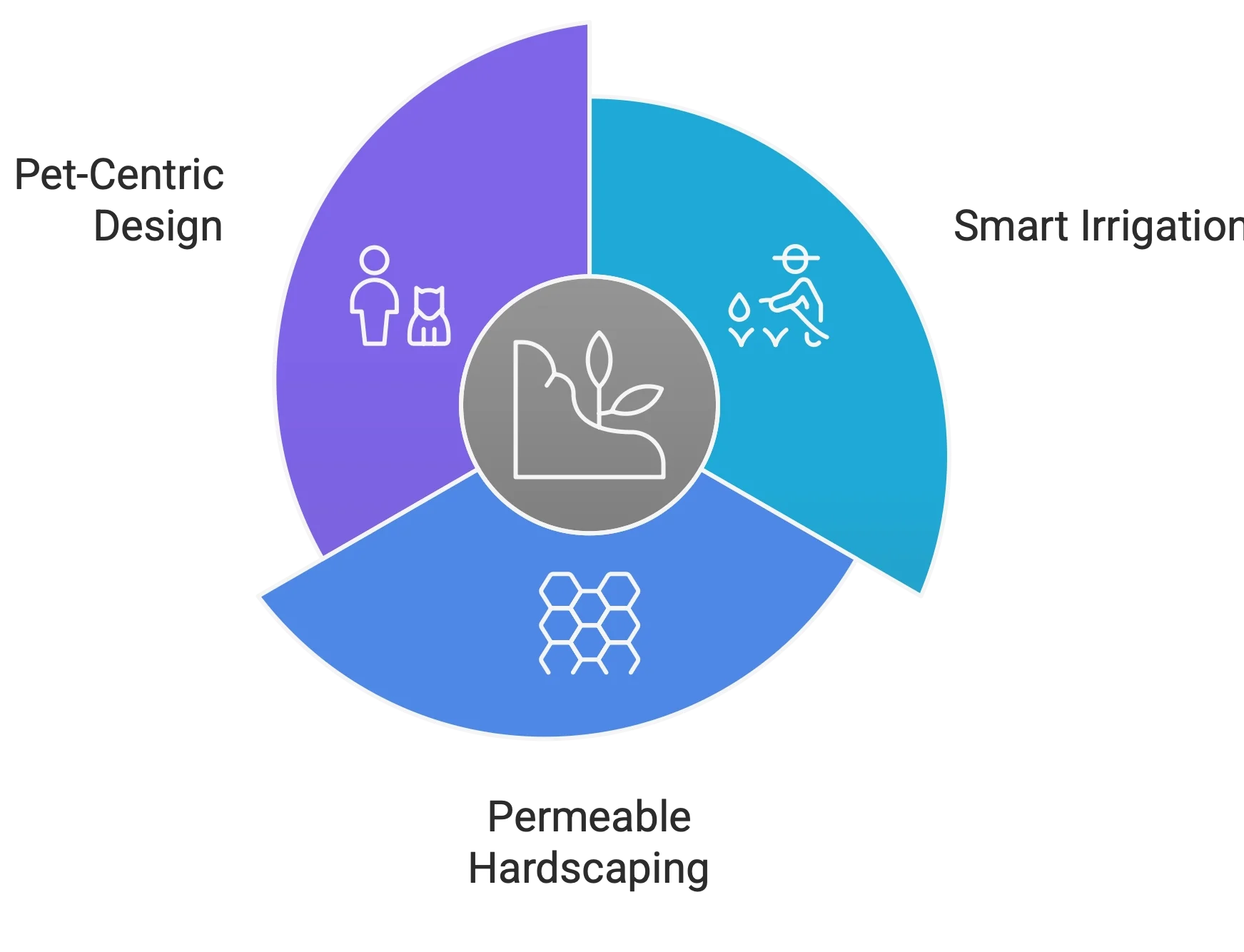
Maintaining a high-end landscape in 2026 has progressed from a labour-intensive hobby to a discipline of environmental engineering. For the modern homeowner, the goal of garden landscaping is no longer simply to dominate the local environment with chemicals, but to manage a “Climate-Adaptive” property that maximises curb appeal while lowering operational expenses.
Achieving a professional-grade exterior this year requires moving beyond basic maintenance and adopting a strategic approach to garden landscaping that prioritizes soil biology, hydrologic efficiency and architectural plant selection.
1. Soil Biology
The Subterranean Engine
Professional landscapers know that the health of the plant is entirely dependent on the health of the soil. In 2026, we are moving away from the “chemical-first” mentality toward a biological one.
Beyond N-P-K
Traditional fertilizers (Nitrogen, Phosphorus, Potassium) provide a quick “green up” but often degrade soil health over time. The professional standard now involves Macro-Inoculation. By introducing mycorrhizal fungi, you create a symbiotic relationship with your grass and plants. These fungi attach to root systems, effectively increasing their surface area by up to 1,000%. This allows your landscape to pull moisture and nutrients from deep within the subsoil that would otherwise be unreachable.
Solving the Compaction Crisis
Most suburban yards suffer from soil compaction, which chokes off oxygen and creates a “plate” that water cannot penetrate. Instead of traditional mechanical aeration, which can be messy and leave cores all over the lawn, 2026 standards favor Liquid Aeration. This uses humic and fulvic acids to break down heavy clay and carbon chains at a molecular level, allowing the soil to “breathe” and encouraging deeper root growth.
2. Advanced Hydrologic Efficiency
Water management is the most critical factor in 2026 landscaping. With rising utility costs and shifting weather patterns, the old-school “set it and forget it” timer is now considered a liability.
Evapotranspiration (ET) Controllers
A high-performance irrigation system now relies on ET data. These smart controllers pull real-time local weather data – measuring wind speed, solar radiation and humidity, to calculate exactly how much water your plants lost that day. The system then replaces only that specific amount. This prevents the “shallow rooting” caused by frequent overwatering and can reduce water waste by nearly 50%.
Precision Nozzle Delivery
Standard spray heads are notorious for losing water to wind drift and evaporation. Professionals are retrofitting systems with High-Efficiency Rotary Nozzles. These deliver water in thick, wind-resistant streams at a lower precipitation rate. This “slow and steady” delivery ensures that water actually soaks into the root zone rather than running off into the street.
3. The “Wild Luxury” Aesthetic
Architectural Naturalism
The over-manicured, “sheared-into-a-ball” look of the 1990s has been replaced by Architectural Naturalism. This design philosophy uses native plants in structured, repeating patterns to create a look that is both sophisticated and ecologically functional.
- Matrix Planting: Rather than mulched islands with a few lonely shrubs, matrix planting involves high-density layers. You have a “groundcover layer” that acts as a living mulch, a “seasonal theme layer” for color, and a “structural layer” of trees and large shrubs. This mimics how plants grow in nature, virtually eliminating the need for weeding and annual mulching.
- Permeable Hardscape Engineering: In 2026, the most valued patios are those built with Permeable Paver Systems. These involve a multi-tiered base of varying stone sizes that act as a massive underground cistern, capturing rainwater on-site and preventing local drainage issues.
5. Sustainable Lighting and Security
Landscape lighting is no longer about flooding the yard with light. It’s about Directional Grazing. In 2026, we follow “Dark Sky” standards:
- Warm Spectrum (2700K): High-efficiency LEDs in warm tones highlight the natural textures of stone and wood without the harsh “blue” tint of cheap solar lights.
- Zoned Control: App-based systems allow you to dim the perimeter for ambiance while keeping pathways bright for security, all while using 75% less energy than older halogen systems.
6. Functional Edibles: “Edimentals”
We are seeing a total merger of the vegetable garden and the ornamental border.
- Structural Edibles: Homeowners are replacing standard privacy hedges (like Privet) with Blueberry or Elderberry hedges. These provide the same screening density while offering a high-yield harvest and superior fall color.
- Pollinator Corridors: Integrating native flowering perennials like Echinacea or Asclepias into your formal garden beds isn’t just an aesthetic choice, it is a pest-management strategy. These plants attract predatory insects that naturally control aphids and mites, reducing your reliance on chemical sprays.
Summary Checklist for the 2026 Homeowner
| Category | High-Performance Action | Strategic Value |
| Soil | Liquid Aeration & Inoculation | Restores biology and deep-root resilience via humic acid and fungi. |
| Irrigation | ET-Controller Calibration | Syncs watering with real-time weather data to stop oversaturation. |
| Planting | Native Matrix Layering | Uses indigenous plants as a “living mulch” to block weeds. |
| Turf Care | Precision Mowing (3.5″+) | Protects root crowns and shades soil to reduce water evaporation. |
| Hydrology | Permeable Path Retrofit | Replaces solid surfaces with aggregates to filter stormwater on-site. |
Are You a Professional Looking for High-Quality Leads?
Delivering the technical standards of 2026 requires a clientele that values expertise over the lowest bid. If your firm specializes in high-performance landscaping, you shouldn’t be forced into “race-to-the-bottom” bidding wars on traditional, shared-lead platforms. Unlike standard directories, Inquirly provides an exclusive-only model, ensuring every inquiry is routed solely to your business.
Optimize your growth with Inquirly Exclusive Landscaping Leads.
Conclusion
The 2026 standard for residential landscaping has moved beyond simple aesthetics toward functional resilience. Today, a successful yard is measured by its biological efficiency. By adopting high-performance soil management, intelligent irrigation, and architectural naturalism, you are doing more than improving curb appeal, you are future-proofing your property against rising maintenance costs and a changing climate.
Ultimately, the most successful landscapes this year will be those that prioritize technical standards over quick fixes. Investing in soil health and smart technology today ensures a vibrant, low-input outdoor space that actually gains value as it matures.