water damage business is unlike most home services: it operates in a world of urgency. Your marketing must be structured so that when someone in your city searches “emergency water damage restoration near me”, your company is the one they see and the one they trust to call.
Local visibility, reputation and quick response times matter more than flashy branding. And in today’s competitive field, companies that invest in restoration marketing, from SEO for water damage restoration to paid ads and local partnerships, consistently outperform those that rely on word of mouth alone.
In this article, we’ll explore how to build a well-rounded strategy for water restoration marketing. You’ll learn how to optimize for local SEO, run paid campaigns that generate calls during emergencies, produce content that builds trust and form partnerships that drive steady referrals.
Table of Contents
- Why Local Marketing Matters
- Foundations: Tracking, Offers, Coverage
- Local SEO That Wins Emergencies
- Paid Acquisition for “Right-Now” Leads
- High-Converting Landing Pages & Calls
- Content That Builds Local Authority
- Reviews, Reputation, and Social Proof
- Partnerships and Referral Networks
- Budgets, KPIs and a 90-Day Plan
- Common Mistakes to Avoid
- FAQ
Local Marketing Matters
The water restoration industry is hyper-local. Homeowners want someone nearby who can arrive in less than two hours. This urgency shapes everything about damage restoration marketing.
Unlike other industries, you can’t rely solely on brand awareness. When water damage strikes, people will not remember the billboard they saw two weeks ago. They’ll pull out their phone, type “water restoration [city],” and call the first trusted provider they see. That’s why investing in restoration company marketing and restoration SEO is essential.
Local marketing ensures your company:
- Shows up in “near me” search results when people need urgent help.
- Builds credibility by featuring real reviews and proof of past jobs.
- Clarifies service coverage so customers know exactly which neighborhoods you serve.
Foundations: Tracking, Offers, Coverage
Before ads or SEO, get the plumbing right.
Tracking & Attribution
- Use call tracking with dynamic numbers (e.g., one for Google Ads, one for SEO).
- Add UTM tags to every ad and profile link.
- Record calls (with consent) to diagnose close-rate issues.
- Route calls to a 24/7 line. Missed calls kill ROI.
Emergency Offer & Proof
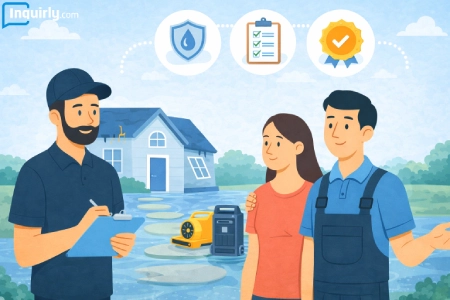
- 24/7 response, on-site ETA, free moisture inspection, IICRC-certified techs.
- Show before/after photos, insurance-ready reports, and clear next steps.
Coverage Map
- Publish a visual service area and a list of zip codes or neighborhoods.
- Promise realistic ETAs by zone. Don’t over-promise.
Strong Local SEO
Search engine optimization is one of the most reliable long-term strategies for water damage restoration marketing. While paid ads bring instant leads, SEO ensures your business becomes a permanent fixture in your local search ecosystem.
Start with your Google Business Profile. This free listing is often the first thing a homeowner sees after searching. Treat it like a storefront: add high-quality photos of completed jobs, upload before-and-after images, keep your hours accurate, and respond promptly to reviews. A well-maintained profile signals credibility both to potential customers and to Google’s ranking algorithm.
On your website, create pages tailored to the exact services people look for. Instead of a single generic services page, build individual sections for emergency water removal, basement flooding, sewage cleanup, and mold prevention. Add local city pages as well. For example, a company in Dallas might publish “Water Damage Restoration in Plano” or “Flood Cleanup in Frisco.” Each page should reference local landmarks or neighborhoods so it feels authentic to the area.
Finally, make sure your business details: name, address and phone number are identical everywhere they appear online. Directories, social profiles, and citations must all match or you risk confusing search engines. Done right, a structured SEO for water damage restoration strategy becomes a steady pipeline of calls that doesn’t disappear the moment you stop paying for ads.
Paid Advertising for Immediate Leads
While SEO compounds over time, paid advertising is the fastest way to capture urgent leads. Internet marketing for restoration companies often relies on two primary platforms: Google Ads and Google Local Services Ads (LSA).
Local Services Ads are particularly effective for restoration companies. They appear at the very top of search results with the “Google Guaranteed” badge, which instantly builds trust. Since LSAs operate on a pay-per-lead model instead of pay-per-click, you only pay when someone actually reaches out. For businesses that handle emergency situations, this can be one of the most cost-effective tools in water damage marketing.
Using Content to Build Local Authority
Most restoration companies treat content as optional, but it’s one of the best ways to stand out in search results and position yourself as a trusted expert. Restoration digital marketing thrives on content that answers real homeowner questions.
Start with bottom-of-funnel topics that address emergencies directly. Articles like “What to Do in the First 24 Hours After Water Damage in [City]” or “Emergency Checklist for Burst Pipes in [Region]” not only rank well but also give customers a reason to trust you before they even call.
From there, build mid-funnel and top-funnel content that educates and prevents future damage. A blog on “5 Common Causes of Basement Flooding in [City]” helps attract people searching for preventive advice, while a seasonal piece like “Hurricane Season Flood Preparedness Guide” builds awareness ahead of storms.
Videos and photos also play a role. Quick before-and-after clips or short explanations of drying equipment can be repurposed on YouTube, Facebook and even your Google Business Profile. This kind of content humanizes your brand, making it clear that you’re not just another contractor but a professional restoration expert.
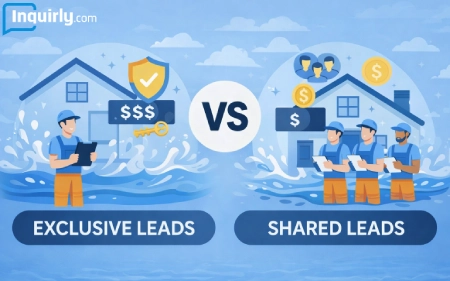
Don’t let another emergency call go to your competitor. Partner with Inquirly and get exclusive water damage leads in your service area
Reviews, Reputation and Social Proof
Reviews drive the Map Pack and conversion. This is a core pillar of water damage marketing and restoration marketing.
Simple SOP
- Tech finishes job → customer walkthrough.
- Tech requests review via QR or text.
- Office sends follow-up link same day and 48 hours later.
- Respond to every review within 24 hours.
Response Template
- Positive: “Thanks, [Name]. Glad we could get you dry fast. We’re here 24/7.”
- Negative: “Sorry for the stress, [Name]. I’m the owner. I’ll call now to make this right.”
Partnerships and Referral Networks
Not every lead comes from the internet. Strong offline partnerships are still a cornerstone of marketing for restoration companies. Plumbers, property managers, real estate agents, and insurance adjusters all encounter water damage problems regularly, and they often recommend trusted providers to their clients.
How to Make It Real
- Create a one-page referral kit: your ETAs, services, three case photos, contact line.
- Offer co-branded magnets, emergency cards, and a partner hotline.
- Run quarterly lunch-and-learns on moisture basics for property managers.
- Publish partner spotlights on your blog (earn reciprocal links).
Budgets, KPIs and a 90-Day Plan
Three phases with clear actions and a single focus for each block
Days 1 to 14
Days 15 to 45
Days 46 to 90
FAQ
How is “water damage restoration marketing” different from general home-services marketing?
Urgency is higher, so you optimize for immediate calls, not form leads next week. You need 24/7 dispatch, call-only ads and fast ETAs.
What channels produce the fastest jobs?
Google LSA and emergency-intent Search campaigns. Retargeting supports trust. Water damage restoration SEO compounds long-term.
What should I measure weekly?
Answered calls, booked jobs, CPL by source, landing page conversion, review velocity.
How long until SEO works?
You can see Map Pack gains in 6-12 weeks with strong GBP and reviews. Organic rankings for competitive terms take longer.