Tag Archives: appliance repair

How do appliance repair companies get local leads?

A steady pipeline of qualified local customers is essential to the long-term success of any appliance repair company. In a market driven by urgent, location-based needs, visibility within the customer’s immediate area determines how often the phone rings and how consistently a business can grow.

Effective appliance repair lead generation combines two key elements: local credibility and strategic exposure. Companies that maintain a strong digital presence through search optimization, verified reviews and community trust outperform those relying on word-of-mouth alone.

This article outlines realistic strategies, some costing little or nothing for generating appliance repair leads, scaling up when you can and trimming what doesn’t work.

1. free strategies:

Content marketing & blog posts

Your website is a place where people come looking for answers. By writing clear, honest, and useful blog posts that solve these small problems, you show that you know your craft, build trust before the customer ever calls and attract visitors through organic search.

how to do it right:

  • start with real questions you hear from customers – those are gold for SEO.
  • write short, easy explanations (300–600 words is enough).
  • at the end, invite them to call if they need professional repair.
    • example: “if these steps don’t work or you’d rather not risk damaging your appliance, give us a call – we handle [appliance type] repairs daily.”


Social media & local community groups

Social media can be one of the most efficient ways to connect with potential customers in your area, if used correctly. In nearly every city, local Facebook and Nextdoor groups are filled with homeowners asking for recommendations.

Becoming a recognized, trusted name in these conversations is one of the most powerful forms of appliance repair lead generation.

Share quick, informative posts such as:

  • Simple ways to clean or maintain common household appliances
  • Short “before and after” photos from recent jobs
  • Short videos explaining when it’s time to call a technician

Scheduling tools like LaterBuffer or Meta Business Suite can help maintain a regular posting schedule. If you prefer to add branding or text overlays to images, Canva is an easy, professional design solution.


Develop a Structured Referral and Word-of-Mouth Program

Referrals remain one of the most trusted and cost-effective sources of leads. A personal recommendation from a satisfied client carries more influence than any advertisement.

Turn this into a repeatable system. After each completed job, politely mention that you appreciate referrals and are happy to reward them. A small incentive, such as 10% off a future service or a modest gift card, can motivate customers to spread the word.

Jobber or SendJim can automate follow-up texts and referral tracking, making this process simple to manage.

Referrals tend to convert quickly because the trust is pre-established. Every happy customer you serve becomes a potential advocate, extending your reach at no additional marketing cost.


Leave Behind Tangible Reminders

Digital visibility is essential, but physical reminders still have a strong impact. A well-designed business card, flyer, or refrigerator magnet keeps your contact information within reach long after the service is complete.

For apartment complexes or high-density neighborhoods, leaving door hangers or small informational cards can also be effective. Include a QR code linking directly to your booking page or Google review profile.

Design services such as CanvaVistaprint and Moo allow you to produce professional, branded materials without hiring a designer. Keep the message simple and focused, something like:

“Reliable Local Appliance Repair – Fast Service, Fair Pricing.”


Reviews and Customer Engagement

Online reviews are today’s version of word-of-mouth—and they play a decisive role in converting searchers into callers. When potential clients look up “appliance repair near me,” they immediately notice two things: how many reviews a company has, and how the owner responds to them.

Encourage feedback after every successful job. The process should be easy for the customer, send a short text or email with a direct link to your Google Business Profile. Automation tools such as PodiumNiceJob or Google Business Messages can handle this for you.

Equally important is responding to every review. A brief, sincere reply like:

“Thank you, Maria. We’re glad we could get your washer running again.”
shows professionalism and care.

More frequent, positive reviews not only build credibility but also improve your visibility in Google’s local search rankings, steadily generating more free appliance repair leads over time.

Paid Methods for Appliance Repair Lead Generation

While organic channels build long-term visibility, paid marketing allows you to accelerate growth and fill your schedule immediately. Strategic spending—especially when tracked and optimized properly—can deliver a consistent stream of qualified leads with measurable returns.

The most effective paid channels for appliance repair companies include Google Ads, Google Local Service Ads and specialized lead generation platforms such as Inquirly.com.

Google Ads

Google Search Ads put your business at the top when someone searches “appliance repair near me.” Target local keywords, limit ads to your service area, and direct users to a landing page with a visible call button or form. Start small, analyze conversions, and adjust bids based on results.

Google Local Service Ads (LSAs)

LSAs appear above regular ads and charge per lead instead of per click. Once verified, you’ll earn the “Google Guaranteed” badge, which builds trust. Leads tend to convert better since customers are ready to book immediately.

Lead Generation Platforms

Platforms like Inquirly.com connect homeowners directly with verified appliance repair professionals. Unlike shared lead sites such as Angi or HomeAdvisor, Inquirly focuses on exclusive leads, sent only to your business, making it easier to close jobs without competition. It’s ideal for companies wanting predictable, high-quality inquiries without managing ads manually.

Social Media Ads

Facebook and Instagram ads are effective for brand visibility. Target homeowners in your area, showcase before-and-after repairs, or promote seasonal discounts. Keep visuals authentic and calls-to-action simple, like “Book a Repair” or “Message for a Quote.”

Measure and Refine

Always track your campaigns. Use Google Analytics or CRM tools to monitor cost per lead, response time, and conversions. Focus your budget on what drives real bookings, not clicks.

Sample Roadmap to Build a Lead System

A clear, mobile‑friendly plan for combining organic and paid strategies.

Stage 1 – Foundation

week 1–2

Set up a professional website, optimize your Google Business Profile, and standardize your contact details across directories.

Stage 2 – Free Leads

weeks 2–6

Use social media, reviews, and partnerships to build credibility and attract organic leads.

Stage 3 – Paid Channels

month 2+

Launch Google Ads or Local Service Ads, then add Inquirly.com for exclusive, ready‑to‑book leads.

Stage 4 – Optimize

ongoing

Track where every lead comes from, automate review requests, and adjust budgets monthly.

Stage 5 – Scale

quarterly

Expand to new service areas, increase ad spend gradually, and maintain consistent follow‑ups.

Conclusion

A successful appliance repair business grows through balance, strong organic visibility supported by targeted paid campaigns. Consistent reviews, community engagement and partnerships build trust, while platforms like Inquirly.com and Google Ads provide scalable, high-quality leads.

By following a clear roadmap and refining performance over time, you create a reliable lead generation system that drives steady growth and long-term market credibility.
How to Build a Local Appliance Repair Brand That Attracts Leads

The most sustainable growth in 2025 is coming from companies that have invested in building a trusted local brand – one that homeowners recognize, recall and prefer when service is needed.

A strong brand does more than look good. It shortens the buying decision, filters out low-intent leads and commands higher-value jobs. Regardless of whether you lead a multi-tech team or work alone, your brand influences how clients find you, what they anticipate and the likelihood to make a booking.

This guide outlines the practical steps to building a local appliance repair brand that earns trust and drives consistent, high-quality leads. From clarifying your service positioning to strengthening your online presence and integrating with platforms like Inquirly, the goal is to help you attract customers who value expertise, not just the lowest quote. If you’re looking to grow without relying on generic ads or competing for the same leads as everyone else, your brand should be your starting point.

What Is a Brand in the Appliance Repair Industry?

A brand in appliance repair isn’t just a name, logo or color scheme – it’s the trust you build. It’s the impression someone forms when they come across your van on the street, your Google listing in a search result or your technician at the door. More than visuals, a brand communicates reliability, professionalism and the expectation that the job will be done right.

Why Local Branding Beats National Ad Spending?

A flashy ad may get a click. But a recognizable name backed by real reviews? That gets a call.

Local branding builds intent-based recognition. When people in your area see your truck often, read your name in reviews, or hear about you through neighbors, they’re primed to trust you. That trust shortens the sales process and reduces the need to “sell” your value.

And… Local branding is cheaper to maintain than constant paid advertising.

Step One: Nail Down Your Niche

Trying to serve everyone leads to being remembered by no one. The strongest appliance repair brands are built around clarity and focus. That means choosing a niche or at least communicating your strengths clearly. Whether it’s high-end refrigerator repairs, rapid same-day service, or working with specific brands, having a defined specialty helps your business stand out in crowded local search results.

Specializing doesn’t limit your market, it sharpens your appeal. A clear value proposition helps customers understand why they should call you first and pay you more.

Understand Who You Want to Work With

Before you advertise or build a website, know exactly who you’re trying to attract. This is your Ideal Customer Profile (ICP). If you could fill your calendar with one kind of customer, what would they look like?

👤 Ideal Customer Profile Template

📊 Workforce

1,500 staff

📍 Headquarters

Main office in New York, with branches worldwide

🏢 Entity Type

Private

💼 Industry Category

B2B SaaS

Privacy concerns after EU data breaches

💰 Yearly Turnover

$800 million

👔 Key Executives

CO, President

CTO, Head of Tech

🔁 Leadership Changes

CFO

💔 Current Challenges

Security concerns post-data breaches

🛠️ Tech Stack

Slack, Google Workspace, Cisco

📝 Additional Details

Expanding to new markets, launching AI-powered platform


Knowing this lets you filter out low-value jobs, price shoppers, or people you simply can’t serve efficiently. Everything: your tone of voice, your ad targeting your website layout – should speak directly to this customer type.

Most appliance repair businesses thrive when working with:

  • Homeowners (not renters)
  • Clients who value quality over price
  • People living in your primary service ZIP codes

Your Visual Identity:

📌 Logo and Typography

Your logo needs to be simple, legible, and visible at any size. Skip complicated fonts. Pick one that matches your tone. Avoid over-designing – if it’s hard to read, it’s not working.

🎨 Color and Consistency

Choose 2-3 brand colors and use them everywhere – uniforms, vehicles, site, invoices. Keep contrast in mind so your info stays readable indoors or outside.

🚐 Fleet and Uniform

A clean, well-marked van builds trust instantly. Make sure your logo, services, and contact info are big and readable. Matching uniforms and name tags add credibility.

📎 Branded Materials

Everything you leave behind – cards, magnets, flyers – should feel like it came from a serious, quality-driven company. Avoid generic templates and flimsy stock.

Branding Tools

Tool Function & Branding Use
MailerLite / ActiveCampaign Automate branded follow-ups, email marketing, appointment reminders and customer nurture flows, all customized with your logo, colors and tone of voice.
Canva Pro Design high-quality marketing materials, social media posts, van decals, and invoices. Keep your brand colors and fonts consistent across assets without hiring a designer.
Nextdoor Ads Run local ad campaigns that appear to homeowners in specific ZIP codes. Excellent for brand recognition within tight geographic neighborhoods.
Podium / NiceJob Request branded Google reviews via SMS, manage customer communication, and respond in real-time. Improves trust and supports SEO rankings.
Brandfolder / Notion Store, organize, and share your visual brand guidelines, logos, tone examples, and team assets. Ideal for multi-location teams or hiring remote designers.

Your Website, SEO and Online Visibility

Once you’ve built the visual foundation of your brand – your logo, vehicles, uniforms and printed materials – your next focus should be digital credibility. 

Yet, too many local service companies treat their website like an afterthought. A dated template with a stock photo of a happy couple and a generic “We Fix Everything” headline won’t convince a homeowner to hand over their kitchen appliances. Real leads come from sites that build trust instantly: with clarity, specificity and responsiveness.

Structure Your Service Pages

One of the most common ways appliance repair businesses lose leads is through poor service page structure. If you’re serving more than one city, a single generic “Services” page won’t cut it. Instead, build targeted, SEO-friendly landing pages for each service area and appliance type.

What that looks like:

✅ Create a separate page for each city or service region (e.g., “Appliance Repair in Austin, TX.”)

✅ Break out appliance types into individual pages (e.g., “Washer Repair,” “Oven Repair,” “Fridge Repair.”)

✅ Write in plain, customer-focused language, the way people search.


Behind the scenes, your site’s structure should make it easy for both Google and visitors to navigate. Use internal links to guide users between related services:

  • Link your “Washer Repair” page to your “Fridge Repair” page
  • Mention “Emergency Appliance Repair” on relevant pages
  • Connect local pages to broader services for better crawlability


Conclusion: 

Building a recognizable brand is only part of the equation, the real advantage comes when that recognition translates into demand. It’s not enough to look credible; you need to show up where high-intent customers are already searching.

Inquirly.com and other similar lead generation companies can help with this. Instead of chasing cold traffic or depending on generic lead systems, Inquirly links you with homeowners looking for appliance repair in your area. When combined with a brand that represents trust and quality, this creates a powerful growth engine: warm leads linked with a company they are already comfortable with.

Angi vs. Inquirly: Which Lead Gen Platform Is Best for Appliance Repair?

In 2025, appliance repair businesses have plenty of options when it comes to buying leads. But more choice doesn’t always mean better results. Today’s lead generation platforms, such as Angi and Inquirly, aim to connect appliance repair businesses with homeowners actively searching for help. In theory, they’re designed to take the marketing burden off your shoulders and fill your schedule with qualified service requests.

Yet, the experience business owners report couldn’t be more different. The actual experience varies widely depending on the platform, the structure of the leads and the goals of the business using them. Some find themselves swamped with leads that go nowhere. Others report high-quality bookings that fill their schedules and fuel growth.

Let’s take a deeper look at Angi vs. Inquirly to help you understand which platform aligns better with how appliance repair marketing works now and what it takes to actually grow.

Why Appliance Repair Marketing Needs Have Changed

In the past, it was enough to run an ad in the paper or set up a Yelp profile. Now? Customers are more skeptical – they are more informed and more cautious, platforms are more crowded and competition is fierce. At the same time, digital platforms have become crowded. Search results are packed with ads, directories, and competitors. Paid advertising costs have risen, SEO takes time and attention spans are shorter than ever. For appliance repair businesses, this means simply being listed online is no longer enough.

Shared vs. Exclusive: The Real Difference

Before diving into each platform, it’s important to understand the most critical difference between lead services: shared leads vs. exclusive leads. This core difference directly impacts conversion rate, pricing strategy, and customer experience.

  • Shared leads (Angi) are sold to multiple businesses, often 4-6 contractors at once. You’re in a race.
  • Exclusive leads (Inquirly) are sent only to your business. You get the call, the message, the opportunity, without competitors breathing down your neck.

Angi: A Quick Refresher

Angi (formerly Angie’s List and merged with HomeAdvisor) is a well-known player in the home service marketplace. It connects users to professionals for all sorts of jobs, from electrical work to appliance repair.

Businesses pay to appear in listings or receive direct leads. You can also use Angi Ads, which work like pay-per-lead campaigns.

Inquirly.com

Inquirly is a modern lead generation platform built specifically for service-based businesses, including appliance repair companies looking for high-quality, exclusive leads without the noise of traditional directories. Unlike platforms that operate on shared leads or general listings, Inquirly focuses on performance-driven, one-to-one lead delivery. 

That means every lead you receive is:

  • Verified: Leads are pre-screened to match your services, availability, and location.
  • Real-time: Delivered the moment the customer submits their inquiry.
  • Exclusive: Sent to only one business – you. No competition, no race to call back first.


How Angi Generates Appliance Repair Leads

Angi captures user interest via organic traffic, SEO, and paid ads. A homeowner submits a request through Angi’s form, which is then sold as a lead to multiple service providers.

You then receive the customer’s information but so do several others.

You must contact the lead quickly, price competitively, and hope your reputation or pitch wins out.

Angi Ads: How It Works and What You Pay For

With Angi Ads, you’re essentially bidding for visibility. You set a budget and pay per lead, but control over the quality or volume can be unpredictable.

Many users report inconsistent results. Some weeks may bring high-volume requests; others may be dry. The Angi ads reviews in 2025 reflect this pattern: useful for some, frustrating for others.

Inquirly’s Lead Matching and Verification Process

Inquirly is intentionally selective. Leads are verified, geo-matched and assigned to you based on your actual service categories and hours of availability.

That means:

  • Leads are exclusive to your business
  • Requests are real-time and pre-screened
  • You’re not competing with other companies over the same job

Angi

Lead Type: Shared with multiple providers
Urgency: Mix of high- and low-intent leads
Local Match: Sometimes outside your service area
Competition: Compete with 4-6 other contractors
Conversion Rate: Lower due to price shopping

Inquirly

Lead Type: Exclusive to your business
Urgency: High-intent, book-now leads
Local Match: Matched by ZIP code and service category
Competition: None – no bidding wars
Conversion Rate: Higher due to pre-qualified matches

Cost Comparison: What Are You Really Paying For?

At first glance, Angi might appear to offer a more affordable entry point into paid lead generation. On paper, the cost per lead can seem low, especially if you’re comparing just the top-line numbers. But here’s where things get more complicated.

Angi typically sells the same lead to multiple contractors at once. That means you’re not just paying for a lead, you’re also paying for a race. In practice, you might end up calling five leads just to book one job. The result? A skyrocketing cost per booked appointment, often without the stability or predictability that growing businesses need.

For example:

  • If you pay $30 per Angi lead, but only 1 in 6 leads convert, your cost per job is closer to $180 – not including the time, follow-up, or discounts you may offer to compete.


Inquirly’s Transparent Pricing Model

Inquirly, on the other hand, offers verified, exclusive leads with pricing based on lead type and urgency, without the competition factor. You’re not just getting contact info; you’re receiving a real-time, direct request from a homeowner in need of appliance repair, matched to your specific service area.

Here’s a general breakdown of Inquirly’s 2025 pricing for appliance repair leads:

Form Leads$10 – $30 per leadHomeowners fill out a request form with specific repair info. Ideal for booking inspection-based or standard jobs.
Phone Calls$20 – $100 per callLive, inbound phone calls. Typically urgent jobs like broken refrigerators, washer leaks, or same-day service needs.


Prices vary based on urgency, appliance type and service location. Inquirly’s model allows you to adjust lead flow and only pay when the right kind of lead is available, so you’re not locked into unnecessary spending during slow weeks or overbooked periods.

Start receiving exclusive appliance repair leads. Complete the Service Form here.

Who Should Use Angi vs. Inquirly?

Your ideal lead generation strategy should match the way you work, your available time, and your long-term goals. Here’s a more detailed breakdown of which platform might be a better fit for different business types:

🔧 Solo Technicians
If you work independently and manage your own scheduling, follow-ups, and service calls, Inquirly is a stronger fit. Since leads are exclusive, you won’t waste time competing with other contractors or chasing down unresponsive customers

🏢 Small Businesses (1-5 Employees)
When you’re trying to grow without sacrificing quality or burning out your staff, Inquirly’s curated approach gives you room to breathe. 

🏗️ Larger Teams (Multi-tech or Multi-location)
For businesses with more staff, trucks or multiple service areas, both Angi and Inquirly can play a role, but in different ways. Angi may help generate volume if your dispatch team can respond rapidly and manage competitive leads. However, larger teams looking to maximize efficiency and avoid time-wasting price battles often find Inquirly’s exclusive lead model better aligned. 

🚀 New Businesses / Startups
If you’re just getting started and want quick exposure, Angi might help get your name out there. However, because those leads are often shared and price-driven, it’s smart to view them as a short-term jumpstart, not a long-term strategy. As your business grows and your schedule tightens, transitioning to a platform like Inquirly, where lead quality and fit are prioritized, can help you convert more jobs and build your reputation faster.

Conclusion

Both Angi and Inquirly serve a purpose but they serve very different goals. In 2025, appliance repair companies that grow aren’t necessarily the loudest. They’re the most strategic. They invest in systems that reduce wasted time and increase booked jobs.

  • If you want volume, visibility, and are ready to hustle for every lead, Angi can work.
  • If you want efficiency, higher booking rates and better-fit customers, Inquirly offers a clearer path.

FAQs

Is Angi good for appliance repair leads?
It can be, but lead quality varies. You may need to contact multiple leads before booking just one.

What’s the biggest advantage of Inquirly?
Leads are exclusive, localized, and matched to your service type – no competition or undercutting.

Which is cheaper: Angi or Inquirly?
Angi may be cheaper per lead, but Inquirly often wins on cost per booked job due to better conversion.

Do I need to use both?
Some businesses do. But many drop Angi once they see consistent results from Inquirly.

Can I pause leads from Inquirly?
Yes, their system allows you to pause or adjust flow instantly.

Does Inquirly require a contract?
No. You can scale or pause any time, ideal for businesses with seasonal demand.

How to Attract the Best Appliance Repair Leads in 2025

Ask any appliance repair business owner what they need more of, and the answer is usually the same: better leads. Not just more phone calls or clicks, but actual, bookable jobs with homeowners who are ready to move forward.

The truth is, the way appliance repair companies attract customers has changed dramatically in just the past few years. Search engines are more competitive. Paid ads are more expensive. And many lead providers are still selling the same contact info to five or six contractors at once, turning what should be a simple service call into a race to the bottom.

In 2025, successful appliance repair businesses aren’t relying on volume. They’re focused on lead quality – connecting with people who are already motivated to book, already trust their reputation, and already know what they need. That kind of lead isn’t easy to come by, but with the right tools, platform and marketing foundation, it’s absolutely achievable.

In this guide, we’ll break down where the best appliance repair leads are coming from today, how to avoid typical errors and how to create a lead generating strategy that truly promotes development rather than draining time and money.

Quality of the Appliance Repair Leads

In any service business, leads are the front door to new revenue. But in appliance repair, time is your most limited resource and not all leads are worth opening the door for.

  • A customer who lives outside your service radius.
  • A caller who just wants a “rough idea of cost.”
  • A name and number that’s been passed around to five other companies.


All of these eat up time without delivering work. And over the course of a week, they can drain your schedule, your team’s energy, and your marketing budget.

The difference between a profitable appliance repair company and one constantly scrambling for work often comes down to one thing: lead quality. Not just how many people contact you, but who they are, what they need, and how close they are to booking.

What Makes a High-Quality Appliance Repair Lead?

A high-quality lead is local, specific, urgent and intentional:

How to Get High-Quality Appliance Repair Lead

Now that we’ve defined what a good lead looks like and why so many don’t convert, let’s focus on what works. In 2025, getting appliance repair leads that actually result in booked jobs requires a smarter, more structured approach than in years past.

Businesses experiencing continuous growth today are not speculating. They use targeted tools, smart platforms and localised marketing to reach customers at the right moment in time.

Here’s how to do the same.

1. Use Lead Platforms That Offer Exclusivity

Leads can be either shared or exclusive. Many lead generation platforms sell the same inquiry to multiple contractors. You end up competing for attention and often lose out to whoever offers the lowest quote.

Instead, invest in platforms that provide exclusive leads – leads that go only to you.

Inquirly.com is a standout in 2025 for this reason. It delivers real-time, verified leads matched to your service area and repair categories. Simply by removing competition, exclusive leads increase your conversion rate and reduce how much time you waste on callbacks and quotes that go nowhere.

2. Run Google Local Services Ads (LSAs)

If you want to reach homeowners who are actively looking for help right now, Google LSAs are one of the best tools available.

These ads appear at the top of Google Search, often above regular pay-per-click ads. When someone types service related keywords, LSAs deliver your business listing, along with a “Google Guaranteed” badge that boosts trust instantly.

You’re only charged when a potential customer contacts you, not for views or clicks. Many businesses using LSAs report a higher ROI compared to traditional advertising because the leads are so intent-driven.

To get the most out of LSAs:

  • Keep your Google Business Profile updated and active
  • Respond to calls or messages as quickly as possible
  • Maintain a strong review average (4.5 stars or above)

3. Use Local SEO

Local SEO remains one of the most reliable ways to bring in steady, high-quality appliance repair leads – especially for service areas where trust and visibility matter most. The first step is your Google Business Profile. This listing should be fully optimized: include your correct address, business hours, and contact info, but also real photos of your team, your truck, completed jobs, and a short, well-written business description that mentions your city and key services.

Your review strategy matters too. Actively ask satisfied customers to leave a Google review, especially if they mention the specific appliance you fixed. That keyword-rich feedback helps boost your ranking in local search.

Next, make sure your website has dedicated service pages. A single page called “Appliance Repair” won’t cut it. Instead, create separate pages for things like “Washer Repair,” “Refrigerator Repair,” and “Oven Repair,” each optimized with local keywords like your city or neighborhood. These pages should be detailed but simple, including FAQs, service checklists, and a clear call-to-action to schedule a visit.

Take a look at the example:

Inquirly.com service page


Don’t forget about consistency across the web. Your business name, address, and phone number, called NAP info – should match exactly everywhere it’s listed: Yelp, BBB, Nextdoor, Facebook and so on. Google cross-checks this data. Even small inconsistencies (like “St.” vs. “Street”) can reduce your trust score.

Finally, stay active. Post regular updates, such as seasonal maintenance tips, recent jobs completed, or customer testimonials. This ongoing activity signals to search engines that your business is open, engaged and relevant.

Free vs. Paid vs. Exclusive Appliance Repair Leads

Free Leads: Great for Visibility, Not Consistency

Many new appliance repair companies start here – Facebook groups, Craigslist, community forums or neighborhood platforms like Nextdoor. These channels can deliver the occasional solid job, especially if you’re building your reputation or offering limited-time deals.

But these leads aren’t predictable. You can post for days without results, or get messages from people who are just looking for free advice. The time cost can outweigh the benefit if you’re relying on free leads to fill your calendar.

Use free channels for brand awareness and to build trust in your neighborhood. But for long-term growth? You’ll need more consistency.

Paid Leads: Faster but Competitive

Platforms like Angi, and HomeAdvisor deliver a steady stream of lead inquiries, but often at a price. Not just financially, but strategically.

The main issue? Shared leads. These platforms frequently send the same customer request to 3-6 businesses. That creates a race: whoever responds fastest or quotes the cheapest often wins. It’s stressful, and more often than not, you’re competing on price instead of value.

That’s not to say paid lead gen can’t work. Many appliance repair pros do use it, especially during slow seasons or while scaling up. But to make it profitable, you need to:

  • Respond to leads instantly (within 1-2 minutes)
  • Qualify customers on the first call
  • Track ROI carefully (Cost Per Booked Job, not just Cost Per Lead)

Exclusive Leads: Less Noise, Higher Conversion

If you’re tired of chasing cold or oversold leads, exclusive appliance repair leads are worth serious consideration. With platforms like Inquirly.com, you receive verified, localized leads that are sent only to your business, no bidding wars, no price cutting and no callbacks from disinterested homeowners.

The cost per lead may be higher upfront, but the conversion rate and customer quality often make up for it. You save time, you sound more professional, and you’re more likely to secure repeat or referral business because the customer had a better first experience.

Simple Tools That Help You Close More Appliance Leads

If you want to increase your close rate, you don’t just need more leads – you need better systems. Here are a few tools top-performing appliance repair pros are using in 2025:

Conclusion

The most successful appliance repair companies in 2025 aren’t necessarily doing something revolutionary, they’re just doing the fundamentals better and more consistently than others.

They respond quickly. They show up where customers are searching. They don’t waste time chasing leads that were never likely to convert in the first place.

If you want better appliance repair leads, focus less on finding “tricks” and more on building a predictable system. That means using platforms that filter out noise, investing in tools that help you stay organized, and making sure your online presence reflects the kind of service you actually provide.

You just need to be in the right place, at the right time, for the right customer.

FAQs

What are the best ways to get appliance repair leads in 2025?
Use a mix of Google LSAs, Local SEO, and exclusive lead platforms like Inquirly for best results.

Are exclusive leads worth paying more for?
Yes! conversion rates are higher, customer trust is stronger, and competition is eliminated.

How can I tell if a lead is high quality?
Look for clear intent, specific problem details, local address, and urgency in timing.

Is Google Ads or Local Services better for appliance repair?
Local Services Ads are better for lead quality because they’re pay-per-lead, not per click, and include trust badges.

How do I automate my appliance repair leads process?
Use tools like Calendly for booking, CallRail for tracking, and SMS for follow-up reviews.

Should I still use Yelp or Angi?
They can work, but expect shared leads and price competition. Use them strategically alongside other methods.

Local SEO For Your Appliance Repair Business – Rank First and Win More Clients

Looking to grow your appliance repair business and attract more customers? That’s where SEO, or Search Engine Optimization, comes in. These days, people are short on time — when they need appliance repairs, they’ll quickly look through Google’s local listings or even ask ChatGPT. That’s why showing up first in local search results is key to winning the call.

Local SEO doesn’t just drive traffic — it drives real results. About 76% of people who search for a local service on their smartphone visit a business within a day, and 28% of those searches lead to a purchase. Therefore, if growth is your goal, local SEO should be your starting point.

This guide covers step-by-step local SEO tips that actually work for appliance repair companies in 2025.

Get Exclusive Appliance Repair Leads

1. Start With Local Keywords: What Your Appliance Repair Customers Are Actually Searching

Keywords are the words and phrases people type into Google when they’re looking for something, like “washer repair near me” or “fridge technician in Chicago.” If you include the right keywords on your website, you’re more likely to show up in those searches. That’s why finding the right local keywords is one of the first and most important steps in local SEO.

To find the best keywords, try the free version of Ahrefs’ Keyword Explorer or use Semrush’s 7-day trial to see what people in your area are actually searching for. Google Keyword Planner is another great (and free) option, though it does require signing up for a Google Ads account. All of these tools offer valuable insights into the real search terms your future customers are using.

Start by typing in topics related to the services you offer — like “dryer repair” or “oven not heating.” The tools will generate a list of keywords that people are actually searching for. You’ll want to focus on two types of keywords: those with commercial intent and those with informational intent.

appliance repair keywords list
  • Commercial intent keywords are used by people ready to hire or book a service — for example, “appliance repair near me” or “same day fridge repair.”
  • Informational intent keywords are searched by people looking for advice or answers, like “why is my dishwasher leaking” or “how to fix a noisy dryer.”

2. Use the Local Keywords You Found to Optimize Your Website

Now that you’ve gathered a list of commercial and informational keywords, the next step is putting them to use. By strategically adding these keywords to your appliance repair website, you can boost your chances of showing up in local search results. Here’s how to do it effectively:

Home page and Service Pages

Start by optimizing your homepage and main service pages with commercial intent keywords — the ones people search for when they’re ready to hire.

For example, if “emergency appliance repair near me” is a common search in your area, make sure it appears naturally in your homepage title tag, meta description, and page content.

Title tag, Heading and Subheadings

Add your target keywords to key places on each page — especially the title tag, main heading (H1), subheadings (H2s and H3s), and body content. This helps search engines understand what your page is about and improves your chances of ranking for those terms.

Blog Posts and FAQs

Use your informational keywords in blog posts, FAQs, and other helpful content on your site. These terms attract people who are looking for advice or troubleshooting help, and they’re a great way to bring in traffic before someone is ready to book.

URLs, SEO Titles and Meta Description

Make sure your target keywords also appear in your page URLs, meta descriptions, and SEO titles. These elements help search engines understand your content and can improve your click-through rate when people see your site in search results.

Remember:

  • Always make sure your keywords appear naturally.
  • Avoid keyword stuffing — forcing keywords in too often can actually hurt your rankings and make your site harder to read.
  • Aim for clarity and flow first, and let the keywords support your message.

3. Set-Up Google Business Profile for Your Appliance Repair Business

If you want to show up on Google Maps or in the local pack (the map and listings at the top of search results), creating a Google Business Profile is a must. It’s free, easy to set up, and a powerful way to attract local customers — even if you don’t have a physical storefront. Here’s how to do it:

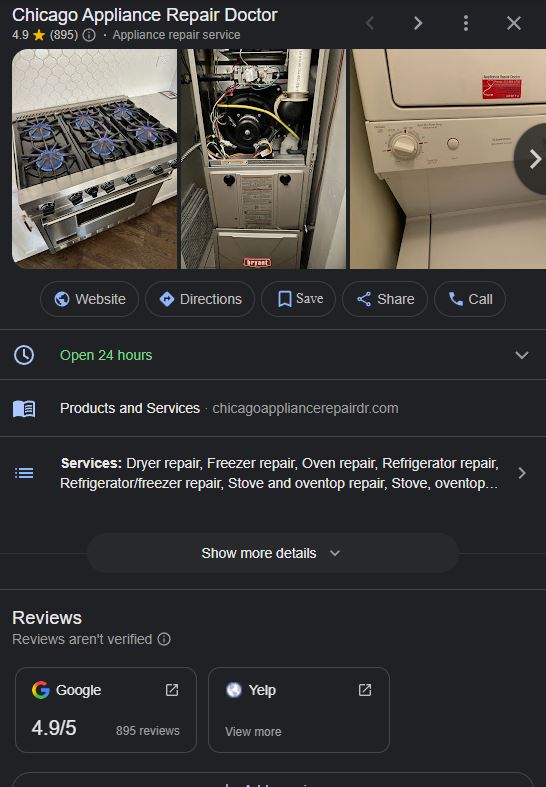
chicago appliance repair listing
  • Go to google.com/business and sign in with your Google account.
  • Enter your business name exactly as you want it to appear.
  • Choose your primary category — select “Appliance Repair Service” to make sure you show up for the right searches.
  • Add your service areas, phone number, and website (if you have one).
  • Set your business hours and make sure they reflect when people can reach you.
  • Write a short business description that clearly explains what you offer.
  • Upload clear photos of your work, team, tools, or vehicle — real photos help build trust.
  • Verify your business — Google will mail you a postcard with a code, or in some cases, allow phone or email verification.

4. List Your Appliance Repair Business on Trusted Local Platforms

Getting listed on local directories helps boost your visibility, build trust, and improve your local SEO. Think of these platforms as extra paths that lead customers straight to your business.

Start by submitting your business to:

  • Yelp
  • Better Business Bureau (BBB)
  • Angi (formerly Angie’s List)
  • YellowPages
  • Local Chamber of Commerce directories
  • Neighborhood-specific platforms like Nextdoor
  • City or region-specific directories (search for “[Your City] + business directory”)

Tips for better results:

  • Use the same business name, address, and phone number (NAP) on every listing.
  • Write a short, consistent business description across all platforms.
  • Add photos when possible — they increase trust and engagement.
  • Keep your listings up to date — update hours, services, or contact info if anything changes.

The more accurate and consistent your listings are, the more likely you are to appear in local search results.

Local Directory Listing Checklist

  • List your business on Yelp, BBB, Angi, and YellowPages
  • Find and submit to local or regional directories
  • Use consistent business name, address, and phone number (NAP)
  • Add a clear, professional business description
  • Upload high-quality photos (team, tools, service in action)
  • Double-check hours and contact details
  • Revisit listings every few months to keep them updated

5. Collect and Manage Online Reviews

Online reviews are one of the biggest trust signals for local customers. When someone searches for “appliance repair near me,” they’re not just looking at who shows up — they’re checking ratings, reading reviews, and deciding who feels the most trustworthy.

That’s why collecting and managing reviews is a critical part of local SEO. The more positive, recent reviews you have, the more likely people are to choose your business, and the more likely Google is to rank you higher.

How to Collect and Manage Reviews:

  • Ask every happy customer for a review
    After completing a job, send a quick text or email with a polite request and a direct link to your Google Business Profile.
  • Make it easy
    The fewer steps it takes, the more likely people are to leave a review. Use a short, direct link and simple instructions.
  • Don’t wait too long
    Ask while the experience is still fresh. If possible, bring it up right after the service or during follow-up communication.
  • Respond to all reviews — even the bad ones
    Thank people for positive feedback, and reply professionally to negative reviews. Showing that you care makes a difference.
  • Avoid fake or incentivized reviews
    Google may remove suspicious reviews, and it can hurt your credibility. Focus on earning real reviews through good service.
  • Keep the momentum going
    Make reviews a regular part of your process, not just a one-time effort.

Review Request Template:

Hi [Customer Name],
Thanks again for choosing [Your Business Name]! If you were happy with the service, we’d really appreciate it if you could take a moment to leave us a Google review. It helps other people find us — and lets us keep improving.

👉 [Insert your Google review link here]

Thanks again, and let us know if you ever need anything!

— [Your Name / Business Name]

6. Add Local-Focused Content to Help Your Website Rank Higher

Creating helpful content for your appliance repair website is one of the best ways to rank for informational keywords. When you publish blog posts that answer common repair questions or explain how appliances work, you naturally bring in more traffic. More local users will find your business while searching for advice, and some of them will turn into paying customers. Content builds trust, boosts visibility, and drives leads over time.

Best Practices for Creating Local-Focused Content:

  • Answer real customer questions
    Use questions you often hear from customers as blog topics — they’re likely being Googled, too.
  • Mention your service areas naturally
    Don’t just stuff city names. Write about real problems in real places (e.g., “dishwasher issues in Chicago apartments”).
  • Target long-tail keywords
    Focus on phrases like “why is my dryer making a thumping noise” or “how to reset a GE washing machine.”
  • Keep it simple and helpful
    Avoid jargon. Your content should feel like advice from a pro, not an instruction manual.
  • Add internal links
    Link blog posts to your service pages or contact page to guide readers toward booking.
  • Use clear headings and images
    Break content into sections with H2s and use photos or diagrams where helpful.
  • Publish consistently
    Even one new post per month helps Google see your site as active and relevant.

Content Ideas for Your Appliance Repair Website:

  • How to Troubleshoot a [Brand] Dishwasher That Won’t Start
  • 5 Common Appliance Problems in [City Name] Homes
  • When to Repair vs. Replace Your Washing Machine

7. Build Local Backlinks

Backlinks — links from other websites to yours — are one of the strongest signals Google uses to rank websites. When trusted, local, or industry-related websites link to your appliance repair site, it shows Google that your business is reputable and worth ranking.

The more high-quality backlinks you earn, the more likely your site is to appear higher in local search results. But not all backlinks are equal — focus on getting links from websites that are relevant to your business and your service area.

How to Earn Local and Relevant Backlinks:

  • Join local business directories and associations
    Get listed on your Chamber of Commerce website or local business networks — many of them link back to member sites.
  • Partner with local service providers
    Connect with plumbers, electricians, or real estate agents — offer to refer each other and link between websites.
  • Sponsor a local event or team
    Small sponsorships often come with a logo placement and backlink from the event’s website.
  • Write guest posts for home improvement blogs
    Reach out to local bloggers or websites in related industries and offer helpful articles in exchange for a backlink.
  • Get featured in local media
    If you have a unique story, offer seasonal tips, or launch a new service, pitch it to local news outlets.
  • Ask suppliers or manufacturers for a link
    If you’re a certified repair provider or partner with a brand, they might be willing to link to your site.

Avoid spammy backlinks at all costs.
Not all links are good links. Buying links or getting listed on unrelated, low-quality websites can actually hurt your rankings. Focus on building genuine, relevant connections with trusted local or industry sites — quality always beats quantity in local SEO.

8. Analytics – Track Your Local SEO Performance

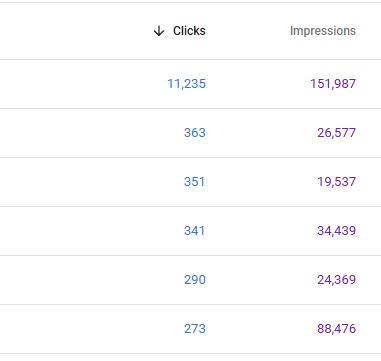
Once you’ve put in the work to improve your local SEO, it’s important to track what’s actually working. Using tools like Google Analytics and Google Search Console, you can monitor how people are finding your website, what pages they visit, and which keywords are driving traffic.

Pay special attention to metrics like local impressions, clicks, and calls from your Google Business Profile. These insights help you understand what to improve — and where you’re already winning.

click and impressions

What to Track:

  • Website traffic from local searches
    In Google Analytics, look at traffic sources and see how many users come from organic search — especially in your service area.
  • Top-performing pages
    Track which service or blog pages bring in the most local traffic and leads. Double down on what’s working.
  • Search impressions and clicks
    In Google Search Console, check your keyword performance — see how often your site appears and how often people click.
  • Google Business Profile insights
    Track how many people view your profile, request directions, click your website, or call your business directly from search.
  • Call volume and form submissions
    Use call tracking tools or form analytics to measure how many real leads you’re getting from your SEO efforts.

9. Competitor Analysis – Learn, Adapt, and Be Better

One of the easiest ways to improve your local SEO is by studying what’s already working for other appliance repair businesses in your area. Search for the services you offer and take note of who shows up first — then look closely at their websites, content, reviews, and Google Business Profiles.

What keywords are they using?

How many reviews do they have?

Which pages seem to rank the best?

You don’t need to copy them — but you can absolutely learn from them. Use those insights to improve your own site, offer more value, and outrank the competition over time.

How to Analyze Local Competitors:

  • Google your top services + location
    Search for terms like “dryer repair [your city]” or “emergency appliance service near me.” See who’s showing up at the top.
  • Study their websites
    Look at how their pages are structured, which keywords they’re using, and what kinds of content they publish.
  • Check their Google Business Profiles
    Review their business categories, service areas, photos, and number of reviews.
  • Use free SEO tools
    Tools like Ubersuggest, Semrush (7-day trial), or Ahrefs (free version) can show which keywords and pages drive traffic to their sites.
  • Compare their reviews
    Are they getting more feedback? Are they replying? Use this as motivation to improve your own review strategy.

Final Tips & Summary

Local SEO isn’t a one-time task — it’s an ongoing effort that pays off over time. From choosing the right keywords to getting reviews, building backlinks, and creating helpful content, every step helps your appliance repair business show up where it matters most: in front of local customers.

Stay consistent, track your progress, and keep an eye on what your competitors are doing. The businesses that win local search aren’t always the biggest — they’re the ones who show up, stay active, and keep improving.

Want more appliance repair leads — without doing the SEO work yourself?


Inquirly delivers ready-to-book leads straight to your business.

Get in touch with us today and start growing.

No-Ads Strategy: How to Attract Appliance Repair Leads

Generating high-quality appliance repair leads without spending a fortune on advertising has become both a challenge and a strategic advantage. As digital ad costs rise and consumers become more picky, businesses that can get leads naturally not only save money, but also become more stable in the long run.

In short, leads don’t always require ad spend. In fact, some of the most qualified, profitable customers come from organic sources, it can be through search engines, referrals, or community exposure.

Establishing the Foundation

Before deploying any marketing tactics, it is essential to understand the market in which your appliance repair business operates. Your success depends not only on the services you offer but also on your ability to match those services with the right audience.

Start by mapping out your local geography, define your primary service areas by zip code, neighborhood, or city radius. Focus your outreach efforts where competition is manageable, and demand for repair services is consistent. Research local demographics to determine the appliance types and brands most commonly used. Older neighborhoods may have a higher concentration of repair opportunities due to aging appliances, while newer developments may not yet require significant servicing.

Most appliance repair businesses that struggle with leads are either (a) relying too much on lead platforms like Angie’s List or Yelp, or (b) doing nothing at all and waiting for referrals. The problem with both: you’re not in control.

To generate leads without paying for ads, you need three things:

  1. A way for people to find you (visibility)
  2. A way for people to trust you (credibility)
  3. A system that turns their interest into appointments (conversion)

Step 1: You need to be found

Start with your Google Business Profile.

This is the listing that appears in Google Maps and local search results. It’s free. And it can bring in dozens of calls per month.

Here’s what matters most:

  • Accuracy. Make sure your name, address, and phone number (NAP) match everywhere online. If Google sees inconsistency, it drops you.
  • Photos. Upload real ones. A job in progress. A finished install. Your van. No logos. No stock images.
  • Categories. Your main one should be Appliance Repair Service. Add others based on what you actually do: Washer RepairRefrigerator Repair, etc.
  • Service areas. Don’t just say “serving metro Atlanta.” List the cities or ZIPs you’re willing to drive to.
  • Reviews. Ask after every job. You don’t need 200. You need 15 with detail and keywords. “He fixed our Samsung dryer in 30 minutes” is worth gold.

Step 2: Your website

Here’s where a lot of small repair companies get it wrong. They either don’t have a website, or they have one that’s all fluff: generic taglines, long paragraphs, and zero information that actually answers what the customer needs to know. You don’t need a slick website. You need a high-trust, action-focused website.

Some example and checklist:

  • ✅ Tell the visitor what you fix
  • 📞 Let them book or call immediately
  • 📷 Show proof that you’re real and reliable
Brands you specialize in: LG, Whirlpool, Samsung, Frigidaire, GE, Bosch
Service Areas: All of Brooklyn, Queens, Staten Island, and ZIPs …
  • One dedicated page per service (washer, fridge, oven, etc.)
  • Mention of every brand we repair
  • Specific ZIPs and neighborhoods clearly listed
  • Prominent call-to-action on every page

Step 3: Local SEO

Local SEO for an appliance repair business is about one thing: showing up when someone in your area searches for the exact problem you solve. When implemented correctly, it creates a durable source of inbound leads from prospective customers who are already searching for what you do.

The goal is simple: when someone types appliance related phrases into Google, your business needs to be among the top results.

Here’s how to ensure that happens:

Develop Targeted, Individual Service Pages

One generic “Appliance Repair” page won’t cut it. Each appliance category should have a dedicated landing page. For example:

  • /dryer-repair-in-baltimore-md
  • /dishwasher-repair-san-antonio
  • /frigidaire-fridge-service-houston


Each page should cover:

  • The specific appliance types you service
  • The brands you specialize in
  • The common issues you fix
  • The cities, neighborhoods, or ZIP codes you serve


This creates hyper-relevant content that matches what real customers are searching for – giving you a better chance of appearing in search results and increasing your chances of conversion.

Use Schema Markup 

Schema markup is code added to your website that helps search engines understand your business more clearly. For appliance repair businesses, this means your site can show enhanced search results, like star ratings, service areas, business hours, and reviews, right inside Google, increasing visibility and click-through rates.

Search listings with rich data (like FAQs, star ratings, etc.) attract more attention and more clicks, even if you’re not ranked first. You can outperform better-ranked competitors just by having more informative listings.

How to implement it:

LocalBusiness Schema (Homepage)
  • Business name
  • Address & ZIP
  • Phone number
  • Hours of operation
  • Service area
Service Schema (Per Service Page)
  • DryerRepair
  • WasherRepair
  • RefrigeratorRepair
  • OvenRepair
  • MicrowaveRepair
FAQ Schema (Brand & Blog Pages)
  • “How to fix LG OE error?”
  • “GE fridge not cooling?”
  • “Whirlpool F21 meaning?”
  • “Dishwasher won’t drain?”

Ps* You don’t need to code this manually. Tools like Google’s Structured Data Markup Helper or plugins like Yoast SEO (for WordPress) make this manageable.

Strengthen Internal Link Structure

Within your website, connect your pages with clear internal links. If a visitor is on your dishwasher repair page, give them easy access to your “brands serviced” or “service area” pages. This improves navigation for users and also tells Google which pages are important, supporting overall site performance in local search.

Step 4: Install Call Tracking 

Call tracking tools assign unique phone numbers to different marketing sources (Google Business, your website, directory listings). Calls are routed back to your main line, but now you know exactly where each lead came from.

If you’re investing time into SEO or referrals, you want to quantify your results. Tracking calls shows:

  • Which pages convert the most traffic
  • Whether your Google Business profile is the lead driver
  • Which directories are worth keeping

How to implement:

  • Choose a tool like CallRail, Twilio, or CallTrackingMetrics
  • Assign a unique tracking number to each lead source:
    • Google Business Profile
    • Your website
    • Directory listings (e.g., Yelp, Angi)
  • Route all numbers to your main business line for seamless customer experience
  • Enable whisper messages to identify the source of the call before answering
  • Use caller ID tags to label inbound calls by source (e.g., “Yelp Lead”)

Step 5: Your past customers are your cheapest lead source

Repeat customers and referrals are two of the most cost-effective sources of qualified leads in the appliance repair industry. Unlike paid advertising or lead marketplaces, these leads are warm, familiar with your work, and far more likely to convert.

However, most repair professionals unintentionally neglect this channel. The job gets done, the invoice is paid, and the customer is never contacted again. That’s a missed opportunity.

Here’s how to transform one-time jobs into long-term value:

1. Follow-Up System

Within 48 to 72 hours of service completion, a standardized message should be sent to confirm that the appliance is functioning properly and to reinforce the service relationship. This can be done via SMS, email, or automated CRM tools, depending on the scale of your operation.

Example (professional tone):

“Hello Mr. Lewis, this is David from Apex Appliance Repair. I wanted to ensure everything is working as expected with the Whirlpool dryer we serviced on Tuesday. If you have any follow-up questions or if the issue returns, please don’t hesitate to contact us directly. Thank you again for choosing Apex.”

It should not be improvised. It should be part of a documented customer service process, ideally handled by your office manager or automated using a CRM platform like Jobber, Housecall Pro or Zoho.

2. Referral Incentive System

Referral marketing remains one of the highest-converting and lowest-cost methods of customer acquisition. However, it only works when structured and communicated clearly.

Develop a simple, standardized referral program and integrate it into every customer interaction. The terms should be predictable, easy to communicate, and easy to redeem.

Example structure:

  • Incentive: $25 off future service for every referred client who books a completed job
  • Eligibility: Available to all past clients with verified services
  • Redemption: Referral must mention the existing client at time of booking; credit is issued upon invoice payment


This referral program should be included in your follow-up communication, printed on receipts, and added as a footnote in your email signature. When properly implemented, it can account for 10–20% of lead flow over time.

Important: Treat referrals as business development, not just a passive bonus. Track them. Log them. Thank the clients who send them.

Step 6: Strategic Visibility

While digital platforms are often prioritized for lead generation, hyperlocal visibility still plays a vital role—especially for service providers like appliance repair professionals whose value is built on regional trust and quick response times.

Instead of “posting everywhere,” the goal here is to position your business in digital spaces where local homeowners naturally communicate, ask for service recommendations, or research providers before booking.

Local Facebook Groups and Neighborhood Pages

Private community groups on Facebook function much like modern-day neighborhood bulletin boards. In nearly every city, suburb, and HOA-managed community, residents regularly post home-related questions, including requests for trusted service providers, troubleshooting advice or referrals for appliance repairs.

To use these spaces properly:

  • Join all relevant local groups
  • Add value before promoting – comment on repair-related posts, answer questions and offer diagnostic suggestions without a sales pitch


Looking for Exclusive Appliance Repair Leads? Contact Inquirly Today.

FAQ

What’s the first system I should automate to save time with lead handling?
Start with your intake and follow-up. Use call tracking with text-back automation or a tool like Jobber or Housecall Pro to instantly confirm appointments, request reviews, and send reminders. You don’t need full automation, just enough to prevent leads from falling through the cracks.

How can I test if my service pages are actually working?
Install Google Search Console and check if those pages are getting impressions. If they’re not, the content probably isn’t aligned with what people are searching in your area. If they are, but you’re not getting clicks, your page titles and meta descriptions need work.

What if I serve multiple cities, should I create a different site for each?
No—use one strong domain, and build city-specific landing pages instead. For example:
/dryer-repair-charlotte
/fridge-repair-hickory
Each page should include content specific to that location, like neighborhoods served, common appliance brands in the area, and ZIP codes. Spreading across multiple domains weakens your SEO and makes management harder.