Author Archives: Autumn Andel

How to Get More Snow Removal Jobs Before the Season Ends

As winter approaches its end, snow removal companies face a unique challenge: maximizing revenue before the season tapers off. Competition increases, budgets tighten and many potential customers delay hiring until the last minute. To stay ahead, you need a strategic approach that attracts high-quality leads, converts prospects and builds long-term customer relationships.

This article walks you through actionable strategies to get more snow removal jobs before the season ends, combining practical marketing techniques, operational best practices and smart lead generation.

1. Understand Your Target Market

Before executing a marketing plan, you must clearly define who your ideal customers are. Common segments in snow removal include:

  • Residential homeowners
  • Commercial property owners (offices, retail, warehouses)
  • HOAs and apartment complexes
  • Municipal or government contracts

Each of these segments has different needs, decision timelines, and sales cycles. For example, residential homeowners may respond well to localized advertising and referral discounts, while commercial clients may require formal proposals and service contracts.

Developing buyer personas helps you tailor messaging that resonates with each group, ensuring your offers address their specific pain points, like safety, convenience or liability reduction.

2. Optimize Your Website for Local SEO

Optimising your website for search engines is crucial for capturing organic traffic. Here’s what to focus on:

a. Keyword Research

Use keywords that potential customers are searching for, such as:

  • “snow removal services near me”
  • “best snow plowing company”
  • “commercial snow removal [your city]”
  • “emergency snow removal services”

Incorporate these keywords naturally into your titles, headings, meta descriptions and content.

b. Local SEO Signals

Make sure your business appears in local search results. To optimize:

  • List your business on Google Business Profile
  • Ensure your NAP (Name, Address, Phone) is consistent across directories
  • Encourage customers to leave positive reviews
  • Include localized content on your website (e.g., service pages like “Snow Removal in [City, Region]”)


Local SEO boosts visibility on search engine results pages (SERPs) and attracts customers actively searching for snow removal assistance now.

3. Produce High-Value Content

Content marketing helps attract prospects while establishing your authority in the snow removal niche. Consider:

Blog Topics

  • “5 Tips for Choosing the Best Snow Removal Service”
  • “How to Prepare Your Property for Winter Storms”
  • “Understanding Snow Removal Contracts”
  • “Why Early Season Snow Removal Booking Saves You Money”

Use internal links between your blog posts and service pages to help search engines crawl your site and keep users engaged longer.

FAQs and Service Guides

Answer common questions about pricing, service areas, equipment used, and snow removal timing. These pages can rank well for long-tail queries and position your company as a reliable resource.

4. Use Dedicated Lead Generation Companies

To scale your outreach and secure more jobs quickly, leverage premium lead services such as Inquirly’s Exclusive Snow Removal Leads. Inquirly provides real-time, exclusive leads from customers actively searching for snow removal services, meaning you’re the first and only contractor to receive their inquiry. This exclusivity increases your chances of conversion and reduces wasted time competing over shared leads.

By integrating Inquirly leads into your sales workflow, you can rapidly connect with motivated customers, respond faster than competitors and ultimately book more jobs before the season ends. If you’re looking to boost your prospect pipeline and reach customers ready to hire now, consider the benefits of exclusive snow removal leads from Inquirly: Contact us today

5. Implement Email Marketing Campaigns

If you’ve collected email addresses from prospects or previous customers, email marketing can help convert leads and encourage repeat business.

Campaign Ideas
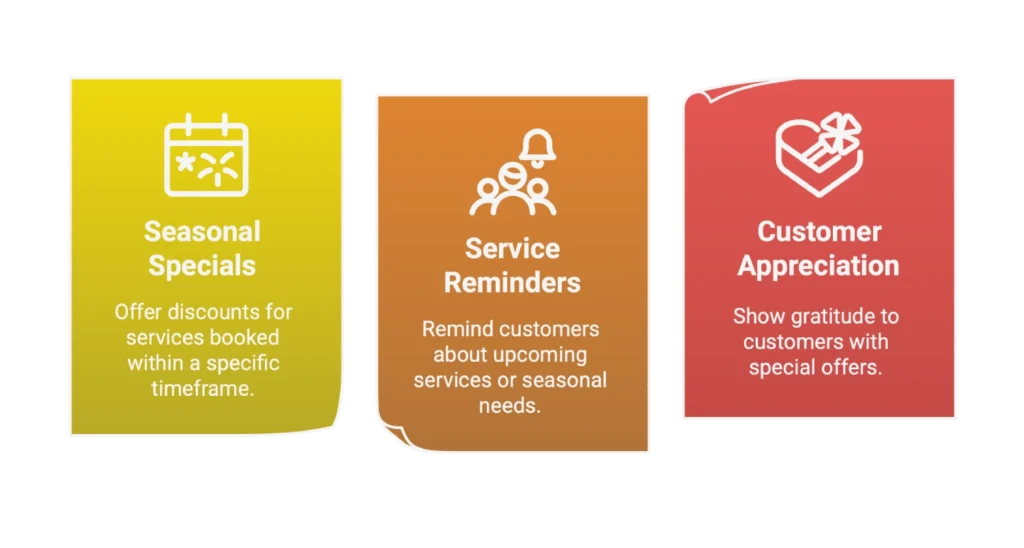
  • Seasonal specials (“10% off any service booked before January 31st”)
  • Service reminders (“Next Snowstorm? We’re Ready!”)
  • Customer appreciation offers


Use segmented lists (e.g., residential vs. commercial) to tailor your messaging. Email automation tools can help streamline follow-ups and ensure timely outreach.

Top Email Marketing & Automation Tools

1. MailerLite
Great for beginners and small businesses just getting started with email campaigns. It’s easy to use, includes automation features and has a drag-and-drop builder, plus a generous free tier. 

2. Mailchimp
One of the most popular options for small to medium businesses. It offers templates, automation, audience segmentation and analytics, making it a solid all-around choice. 

3. ActiveCampaign
Known for some of the most powerful automation workflows, including behavior-based triggers and CRM integration – ideal if you want to automate follow-ups and nurture leads with complex sequences.

6. Offer Incentives and Promotions

Discounts and value-added offers can tip the scale for undecided prospects. Ideas include:

  • Early-season booking discounts
  • Referral bonuses for existing customers
  • Package deals (e.g., driveway + sidewalk clearing)
  • Priority response for contract clients

Make sure these promotions are prominent on your website, social media, and PPC ads to attract immediate attention.

Conclusion

Ending the snow removal season strong requires a mix of strategic marketing, operational efficiency, and proactive outreach. From optimizing your website for local search to integrating exclusive lead services like Inquirly’s snow removal leads, every step enhances your visibility and increases your chances of securing new business.

Start with clear goals, tailor your efforts to your target customers and measure your results as you go. With the right combination of SEO, advertising, lead generation and customer engagement, you can maximize bookings and revenue before the snow melts away.
Top Lawn Care and Garden Landscaping Tips for Homeowners in 2026

Maintaining a high-end landscape in 2026 has progressed from a labour-intensive hobby to a discipline of environmental engineering. For the modern homeowner, the goal of garden landscaping is no longer simply to dominate the local environment with chemicals, but to manage a “Climate-Adaptive” property that maximises curb appeal while lowering operational expenses.

Achieving a professional-grade exterior this year requires moving beyond basic maintenance and adopting a strategic approach to garden landscaping that prioritizes soil biology, hydrologic efficiency and architectural plant selection.

1. Soil Biology

The Subterranean Engine

Professional landscapers know that the health of the plant is entirely dependent on the health of the soil. In 2026, we are moving away from the “chemical-first” mentality toward a biological one.

Beyond N-P-K

Traditional fertilizers (Nitrogen, Phosphorus, Potassium) provide a quick “green up” but often degrade soil health over time. The professional standard now involves Macro-Inoculation. By introducing mycorrhizal fungi, you create a symbiotic relationship with your grass and plants. These fungi attach to root systems, effectively increasing their surface area by up to 1,000%. This allows your landscape to pull moisture and nutrients from deep within the subsoil that would otherwise be unreachable.

Solving the Compaction Crisis

Most suburban yards suffer from soil compaction, which chokes off oxygen and creates a “plate” that water cannot penetrate. Instead of traditional mechanical aeration, which can be messy and leave cores all over the lawn, 2026 standards favor Liquid Aeration. This uses humic and fulvic acids to break down heavy clay and carbon chains at a molecular level, allowing the soil to “breathe” and encouraging deeper root growth.

2. Advanced Hydrologic Efficiency

Water management is the most critical factor in 2026 landscaping. With rising utility costs and shifting weather patterns, the old-school “set it and forget it” timer is now considered a liability.

Evapotranspiration (ET) Controllers

A high-performance irrigation system now relies on ET data. These smart controllers pull real-time local weather data – measuring wind speed, solar radiation and humidity, to calculate exactly how much water your plants lost that day. The system then replaces only that specific amount. This prevents the “shallow rooting” caused by frequent overwatering and can reduce water waste by nearly 50%.

Precision Nozzle Delivery

Standard spray heads are notorious for losing water to wind drift and evaporation. Professionals are retrofitting systems with High-Efficiency Rotary Nozzles. These deliver water in thick, wind-resistant streams at a lower precipitation rate. This “slow and steady” delivery ensures that water actually soaks into the root zone rather than running off into the street.

3. The “Wild Luxury” Aesthetic

Architectural Naturalism

The over-manicured, “sheared-into-a-ball” look of the 1990s has been replaced by Architectural Naturalism. This design philosophy uses native plants in structured, repeating patterns to create a look that is both sophisticated and ecologically functional.

  • Matrix Planting: Rather than mulched islands with a few lonely shrubs, matrix planting involves high-density layers. You have a “groundcover layer” that acts as a living mulch, a “seasonal theme layer” for color, and a “structural layer” of trees and large shrubs. This mimics how plants grow in nature, virtually eliminating the need for weeding and annual mulching.
  • Permeable Hardscape Engineering: In 2026, the most valued patios are those built with Permeable Paver Systems. These involve a multi-tiered base of varying stone sizes that act as a massive underground cistern, capturing rainwater on-site and preventing local drainage issues.

5. Sustainable Lighting and Security

Landscape lighting is no longer about flooding the yard with light. It’s about Directional Grazing. In 2026, we follow “Dark Sky” standards:

  • Warm Spectrum (2700K): High-efficiency LEDs in warm tones highlight the natural textures of stone and wood without the harsh “blue” tint of cheap solar lights.
  • Zoned Control: App-based systems allow you to dim the perimeter for ambiance while keeping pathways bright for security, all while using 75% less energy than older halogen systems.

6. Functional Edibles: “Edimentals”

We are seeing a total merger of the vegetable garden and the ornamental border.

  • Structural Edibles: Homeowners are replacing standard privacy hedges (like Privet) with Blueberry or Elderberry hedges. These provide the same screening density while offering a high-yield harvest and superior fall color.
  • Pollinator Corridors: Integrating native flowering perennials like Echinacea or Asclepias into your formal garden beds isn’t just an aesthetic choice, it is a pest-management strategy. These plants attract predatory insects that naturally control aphids and mites, reducing your reliance on chemical sprays.

Summary Checklist for the 2026 Homeowner

CategoryHigh-Performance ActionStrategic Value
SoilLiquid Aeration & InoculationRestores biology and deep-root resilience via humic acid and fungi.
IrrigationET-Controller CalibrationSyncs watering with real-time weather data to stop oversaturation.
PlantingNative Matrix LayeringUses indigenous plants as a “living mulch” to block weeds.
Turf CarePrecision Mowing (3.5″+)Protects root crowns and shades soil to reduce water evaporation.
HydrologyPermeable Path RetrofitReplaces solid surfaces with aggregates to filter stormwater on-site.


Are You a Professional Looking for High-Quality Leads?

Delivering the technical standards of 2026 requires a clientele that values expertise over the lowest bid. If your firm specializes in high-performance landscaping, you shouldn’t be forced into “race-to-the-bottom” bidding wars on traditional, shared-lead platforms. Unlike standard directories, Inquirly provides an exclusive-only model, ensuring every inquiry is routed solely to your business. 

Optimize your growth with Inquirly Exclusive Landscaping Leads.

Conclusion

The 2026 standard for residential landscaping has moved beyond simple aesthetics toward functional resilience. Today, a successful yard is measured by its biological efficiency. By adopting high-performance soil management, intelligent irrigation, and architectural naturalism, you are doing more than improving curb appeal, you are future-proofing your property against rising maintenance costs and a changing climate.

Ultimately, the most successful landscapes this year will be those that prioritize technical standards over quick fixes. Investing in soil health and smart technology today ensures a vibrant, low-input outdoor space that actually gains value as it matures.

Why Contractors Are Switching to Inquirly for Appliance Repair Leads in 2026? 

In 2026, the home services market has moved beyond the “volume-at-all-costs” era. For appliance repair contractors, the cost of customer acquisition (CAC) is now the primary metric that determines whether a business scales or stagnates.

The following analysis explores the strategic shift toward Inquirly and why the “exclusive lead” model is replacing traditional shared-lead platforms and unmanaged PPC (Pay-Per-Click) campaigns.

1. The Economic Shift

Fixed Cost vs. Variable Risk

Most appliance repair businesses operate on tight margins where fuel, parts, and labor are constantly fluctuating. Relying on traditional Google Ads or SEO provides no guarantee of a lead-only a guarantee of a bill.

Inquirly has disrupted this by offering an Incoming Lead average of $30.

  • The Problem with PPC: In many metropolitan areas, the cost-per-click (CPC) for “refrigerator repair” can exceed $15. If your website doesn’t convert at a high rate, you could spend $150 before a single person calls.
  • The Inquirly Solution: By shifting the financial risk of the “click” to the lead generator, contractors move to a Fixed Cost Acquisition model. You only pay when a lead is verified and delivered, making your monthly ROI calculations predictable.

2. Technical Exclusivity and Conversion

In sales, the “Lead Response Time” is the strongest predictor of a closed job. However, on shared-lead platforms, the consumer is often bombarded by 3 to 5 contractors simultaneously. This creates a “price-shopping” environment where the contractor with the lowest bid wins, rather than the most qualified professional.

Exclusivity as a Retention Tool: Inquirly’s model is built on 100% exclusivity. When a homeowner in your targeted zone submits a request for a washing machine or oven repair, that data is routed solely to your dashboard.

  • Higher Closing Ratios: Without the interference of competitors, your “Lead-to-Job” conversion rate naturally increases.
  • Lower Sales Friction: The customer is expecting your call, not a barrage of calls from unknown numbers.

3. The Three-Phase Verification Protocol

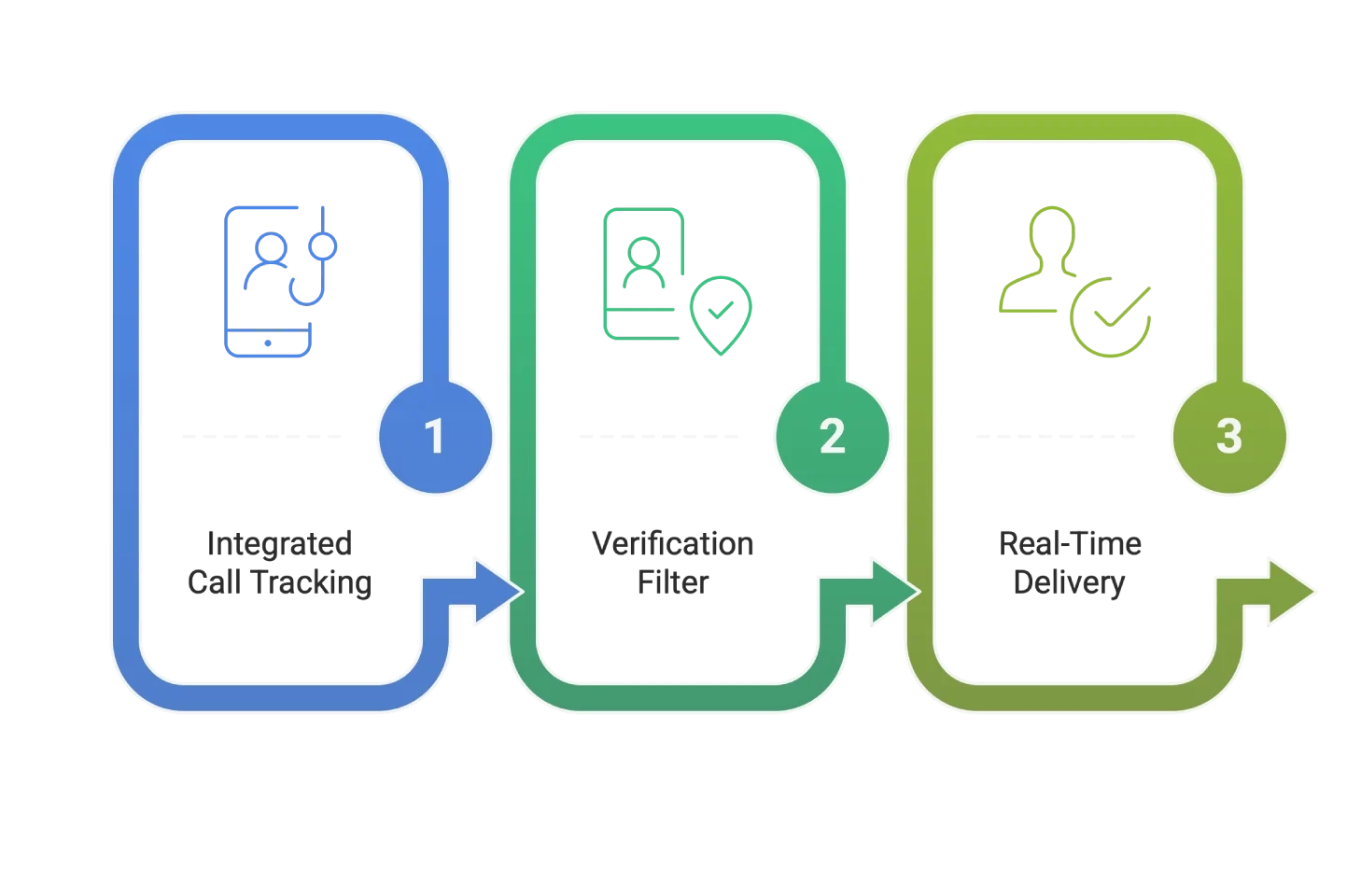
The greatest drain on a technician’s time is the “junk lead” – wrong numbers, tenants with no authority to authorize repairs, or inquiries outside of the service area. Inquirly mitigates this through a structured three-step process:

Step 1: Integrated Call Tracking

Utilizing high-level tracking, the system identifies the specific intent of the caller. This allows for data-driven adjustments to ensure leads are coming from high-value search terms (e.g., “emergency freezer repair”) rather than low-value “how-to” searches.

Step 2: Verification Filter

Before a lead is “billed,” it undergoes a verification process. This ensures that the contact information is valid and the intent matches your business profile. This prevents the “billing disputes” common with other lead aggregators.

Step 3: Real-Time Delivery

In appliance repair, “speed-to-lead” is critical, especially for emergency repairs like leaking washing machines or non-cooling freezers. Inquirly delivers leads the moment they are verified, giving you immediate access to potential opportunities.

4. Geographic Precision

Profitability in appliance repair is often won or lost on the road. High “windshield time” (time spent driving between jobs) eats into the number of billable service calls a technician can perform in a day.

Inquirly’s Customizable Location Targeting allows you to discover and contact 100% relevant leads from your specific service area.

  • Route Density: By targeting leads closer to your home base or existing routes, you can increase the number of calls a technician completes in a single day.
  • Local Dominance: You can choose to own specific zip codes where you know the demographics match your target ticket price.

5. Eliminating the “Contract Trap”

A major reason for the 2026 contractor migration is the demand for Fair Billing. Traditional marketing agencies often require 6-to-12-month commitments to “optimize” a campaign.

Inquirly operates on a No Monthly Commitment basis. This forces the lead provider to remain accountable for quality every single day. If the lead quality drops, the contractor has the professional freedom to pause the flow. This creates a performance-based partnership rather than a restrictive legal one.

6. Real-World Unit Economics

To understand why contractors are switching, we have to look at the unit economics of an appliance repair lead:

Lead TypeCost RangeBest For
Form Leads$10 – $30Standard maintenance, non-emergency quotes
Live Calls$20 – $100Emergency repairs (fridge, leak, HVAC cross-over)


If your average repair ticket is $280 (labor + parts margin) and you close 50% of your $30 leads, your total marketing cost per job is $60. This leaves a healthy margin for labor and overhead, a ratio that is becoming harder to achieve through traditional “Big Tech” advertising.

7. Professional Reliability and Support

At the core of Inquirly’s value proposition is a dedicated support team. In the fast-paced world of home services, a technical issue with a lead flow can mean a quiet day for your staff. Inquirly prioritizes exceptional customer service, ensuring that your inquiries are addressed promptly so your business never misses a beat.


Conclusion

The transition to Inquirly represents a maturation of the appliance repair industry. Contractors are moving away from the “gambler’s mindset” of traditional advertising and moving toward a systematized, exclusive and verifiable lead generation model.

By prioritizing exclusivity, geographic density and fair billing, Inquirly allows repair businesses to focus on what they do best: fixing machines and serving their local communities.

Water Damage Restoration in Your Area: How to Choose a Reliable Company

Experiencing a flooded basement or a burst pipe is one of the most significant crises a property owner can encounter. From the moment water breaches the building envelope, a critical countdown begins. The decisions made during these first few hours determine whether the property will undergo a successful mitigation or devolve into a protracted struggle with structural degradation and hazardous microbial growth.

In this window, your choice of a restoration company is the single biggest factor in whether your home is saved or gutted. Here is the professional framework for vetting a company in real-time.

1. The “Golden Hour” of Mitigation

n a water emergency, time is critical. Porous materials like drywall and softwood absorb water through capillary action. When response is delayed, damage spreads fast. That said, “24/7 service” doesn’t always mean a company is ready to work.

What to look for:

  • The 90-Minute Rule – A reliable local company should get a lead technician on site within 60-90 minutes.
  • Equipment Ownership – Ask if they own their drying equipment. Some companies rent dehumidifiers and air movers only when needed. During storms or large-scale events, those rentals disappear fast. Established firms maintain large, in-house inventories of industrial-grade equipment.

2. Technical Credibility and IICRC Standards

Water restoration is a science. Specifically, it’s based on psychrometry – the study of air, temperature, and moisture. If someone says they can dry your home by opening windows and running fans, they’re likely creating conditions for mold growth.

The industry standard is set by the IICRC (Institute of Inspection, Cleaning and Restoration Certification).

Before signing anything, confirm:

  • Certified Firm Status – The company should be an IICRC Certified Firm and follow the S500 Standard for water damage restoration.
  • Certified Technicians – The lead technician should be a WRT (Water Damage Restoration Technician). This ensures they know how to calculate proper dehumidifier load and actually remove moisture, not just move damp air around.

3. Moisture Detection

The most dangerous water damage is often hidden under floors, behind baseboards or inside wall cavities. If a company shows up without diagnostic tools, they’re guessing.

A professional team will create a detailed moisture map using:

  • Thermal Imaging (Infrared Cameras)
    These cameras detect temperature differences. Wet materials are usually cooler, revealing water paths behind walls without demolition.
  • Moisture Meters
    • Non-penetrating meters detect moisture under floors or behind tile.
    • Penetrating meters use pins to measure moisture levels inside wood and framing.
  • Hygrometers
    These measure moisture in the air using Grains Per Pound (GPP). This proves whether the dehumidifiers are actually pulling moisture out of the structure.

4. Water Categories and Health Risk

Not all water damage is the same. Proper classification determines what can be saved and what must be removed.

  • Category 1 – Clean Water
    From supply lines or faucets. Initially safe, but degrades quickly.
  • Category 2 – Gray Water
    From dishwashers, washing machines, or sump pump failures. Contains contaminants and can cause illness.
  • Category 3 – Black Water
    From sewage backups, seawater, or flooding. Highly contaminated.


Why this matters:
In Category 3 losses, porous materials like drywall and carpet must be removed, not dried. This work must be done under containment using plastic barriers and HEPA filtration.
Any company offering to “clean” sewage-soaked carpet is ignoring basic safety standards.

5. Working With Insurance the Right Way

Most policies cover sudden and accidental water damage. A good restoration company helps manage the claim, not complicate it.

Key practices to expect:

  • Xactimate Estimating
    Most insurance adjusters use Xactimate. Your restoration company should too. This keeps pricing consistent and speeds approvals.
  • Clear Documentation
    Professional firms provide daily moisture logs, often through platforms like Encircle. These logs prove the structure is drying properly and justify equipment costs.
  • Avoid “Direction to Pay” Pressure
    Direct billing can help, but be cautious of companies that demand full control of your claim before work begins. You should always retain final approval.

6. Red Flags to Watch For

Be cautious if you notice any of the following:

  • Immediate Push to Rebuild
    Some companies prioritize reconstruction profits and remove items that could have been saved.
  • Vague Pricing
    Drying should be billed using clear, per-unit daily rates. Flat “lump sum” drying charges often mean overbilling or insufficient equipment.
  • No Pollution or Mold Insurance
    General liability policies often exclude mold. Reputable restorers carry Pollution or Mold CPL coverage to protect homeowners if issues arise.

Protection: Preventing the Next Loss

Modern smart water shut-off valves go far beyond basic leak alarms. Systems like Moen Flo or Phyn Plus monitor water flow using ultrasonic sensors.
If a pipe bursts while you’re away, the system detects abnormal usage and shuts off the main line automatically, turning a potential $50,000 loss into a minor repair.

Water Damage Restoration Quick Check

Must-HaveRequirement
Fast ResponseOn-site within 90 minutes
CertificationIICRC Certified Firm
Lead TechWRT certified
EquipmentOwns industrial drying equipment
Moisture DetectionThermal imaging + moisture meters
Drying ProofDaily moisture logs / GPP readings
Contamination SafetyHEPA filtration when needed
Insurance FitUses Xactimate
PricingClear per-day equipment rates
CoverageMold / Pollution insurance


Scale Your Restoration Volume with Exclusive, Verified Leads Eliminate the uncertainty of shared lead platforms. Inquirly provides high-intent water damage leads delivered in real-time through a transparent three-step process: Track, Verify, and Deliver. With no monthly commitments and no minimum spend, you maintain full control over your ROI.

Conclusion

Water damage decisions are often made under pressure, but the wrong choice can create long-term structural and health problems. A qualified restoration company doesn’t rely on promises or speed alone, it proves results through certifications, verified drying data, and proper safety controls. Use the checklist above to quickly separate true professionals from high-risk operators and ensure your home is dried correctly, not just quickly.

The Ultimate Guide to Landscaping Services Near You: What to Expect and How to Choose

In 2026, the exterior of a house is no longer merely a patch of grass; it’s instead a high-performance extension of the living space. Whether you are looking to install a climate-resilient garden, build a professional-grade outdoor kitchen, or simply find a reliable crew for weekly upkeep, the landscaping industry has fundamentally shifted.

Homeowners today care most about “Speed to Lead,” which means they want rapid digital replies, and “Sustainable Precision,” where every plant and stone serves a specific environmental purpose.

This guide provides a professional assessment of modern landscaping services, current market costs, and the specific standards you should look for when hiring a provider.

1. Defining Your Project: Service Categories

Before you search for a “landscaper near me,” it is critical to understand which type of professional you actually need. Hiring a basic maintenance crew for a complex construction project is a common mistake that leads to poor drainage and wasted investment.

  • Landscape Maintenance: This involves the routine “upkeep” required to keep a property healthy. Modern maintenance goes beyond mowing; it includes precision fertilization, soil pH monitoring, and seasonal debris removal. Many top-tier crews now use robotic mowers for “low-noise” service in residential areas.
  • Design & Softscaping: This focuses on the living elements – the plants, trees and turf. In recent years, designers prioritize Native Planting and Biophilic Design, choosing species that thrive in your specific micro-climate with minimal irrigation.
  • Hardscaping & Outdoor Living: This covers non-living features like paver patios, retaining walls, fire pits, and pergolas. These are structural projects that require knowledge of soil grading and drainage to protect your home’s foundation.

2. Pricing and Timelines

Landscaping costs have evolved with the rise of material prices and the integration of smart technology. On average, residential projects now fall into the following price brackets:

Service TypeTypical Price RangeKey Cost Drivers
Full Landscape Design$2,200 – $6,500Complexity of 3D models and site surveys.
Standard Maintenance$150 – $450 / monthFrequency, acreage, and specialized care.
Hardscape Installation$15 – $40 / sq. ft.Material choice (natural stone vs. porcelain).
Retaining Walls$3,500 – $9,500Height, drainage needs, and structural permits.
Outdoor Kitchens$5,000 – $18,000+Appliances, utility lines, and stone finish.

*Keep in mind the numbers listed above are estimates.

Timeline Realities: A simple garden refresh (softscaping) usually takes 3-5 days. However, complex hardscaping or a full backyard overhaul can span 3-6 weeks depending on local permit approvals and site preparation.

3. How to Choose the Right Landscaping Partner

The barrier to entry in landscaping remains low, which means the burden of vetting falls on the homeowner. To ensure a professional result, look for these three markers of a high-quality operation:

Demand Operational Transparency

Professional companies no longer work off hand-written notes. They utilize Field Service Management (FSM) tools like Jobber or Aspire to provide digital estimates, GPS-tracked arrival times, and clear photo documentation of completed work. If a contractor cannot provide a clear, digital scope of work, they likely lack the organization to handle your project.


Check for “Proof of Work” in Your Niche

A company that excels at “mow and blow” maintenance may struggle with a $20,000 paver patio. Review their portfolio specifically for projects that match your vision. In 2026, many contractors use 3D design software like Vectorworks to show you a “digital twin” of your yard before a single shovel hits the dirt.


Verify Licensing and Insurance

This is non-negotiable. Ask for a Certificate of Insurance (COI) that includes general liability and workers’ compensation. Without this, any injury on your property or damage to your home’s foundation could become your financial responsibility.

4. “Smart” and Sustainable Landscapes

The most significant trend is the “Intelligent Yard.” Homeowners are moving away from sprawling, high-water lawns and toward sustainable alternatives:

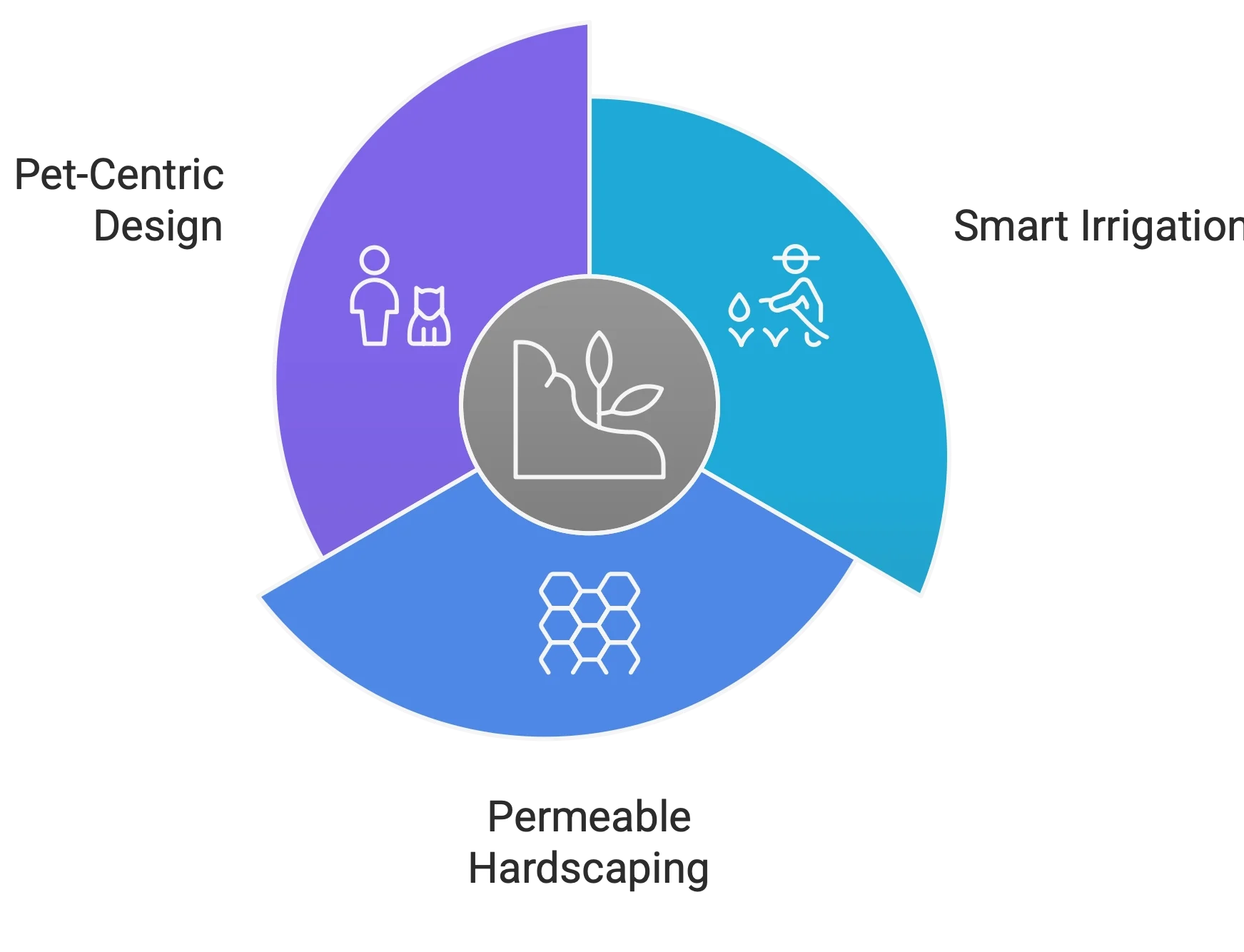
  • Smart Irrigation: Systems like Rachio or Hydrawise connect to local weather stations to skip watering cycles when rain is forecast, reducing water waste by up to 50%.
  • Permeable Hardscaping: Instead of solid concrete, professionals now recommend permeable pavers that allow rainwater to soak back into the ground, preventing local runoff and protecting your plants.
  • Pet-Centric Design: Often called “Barkitecture,” this involves using paw-friendly turf and non-toxic native plants specifically for households with dogs.

5. Exclusive Landscaping Leads

For business owners in the landscaping space, the biggest challenge is no longer the work itself, but finding high-intent customers. To scale effectively, many contractors are moving away from shared lead platforms and moving toward exclusive, high-value opportunities.

Through Inquirly, landscaping professionals can secure exclusive landscaping leads, meaning the lead is never shared with competitors. Contractors can access incoming leads with an average winning cost of roughly $350 per lead. This model focuses on high-ticket contracts, such as full redesigns or commercial maintenance, ensuring that your marketing spend translates directly into significant, profitable revenue rather than just “clicks.”

Final Thoughts

Choosing a landscaper in 2026 requires a balance of assessing their physical craft and their digital professionalism. When you find a partner who employs smart technology, respects local ecology and delivers clear data, you aren’t simply hiring a gardener, you are hiring a manager for your home’s most important outdoor asset.

Top Ai Tools for Your Plumbing Business 

In 2026, the plumbing industry has moved beyond traditional marketing. For a modern plumbing business, success is defined by “Speed to Lead” and operational precision. As Google’s search algorithms increasingly prioritize businesses that demonstrate real-world reliability, AI has become the essential bridge between a homeowner’s emergency and a technician’s arrival.

Today, “Generative Engine Optimization” (GEO) has replaced traditional keyword stuffing, meaning your plumbing business must provide structured, real-time data to be recommended by AI assistants. Because homeowners now ask specific questions like, “Find a plumber who can be here within the hour,” your profile must prove immediate capacity and expertise. Furthermore, AI-driven “Predictive Dispatching” has become the standard for maintaining this reliability by analyzing variables like traffic and technician certifications to optimize schedules automatically. Consequently, this operational intelligence ensures your response times are data-backed, which directly strengthens the “trust” signals Google uses to rank your business at the top.

1. Operations

Traditional dispatching is reactive, you wait for a call and find the closest truck. In 2026, Predictive Dispatching uses AI to look at traffic patterns, technician skill sets and even the historical “job length” of specific plumbers to build a schedule that maximizes profit per hour.

Housecall Pro (AI Team): This platform has moved beyond simple scheduling. Their CSR AI assistant listens to your office calls and instantly suggests “Upsell Opportunities” based on the age of the customer’s equipment. Meanwhile, Analyst AI allows owners to ask questions about data within their reporting dashboard in Housecall Pro.

FieldEdge (Smart Dispatch): FieldEdge uses AI to provide “Dynamic Routing.” It finds the tech who has the right parts currently on their van and the specific certifications needed for that job (e.g., Gas Safe or Backflow Testing).

2. Customer Intake

A plumbing emergency doesn’t wait for business hours. An AI Receptionist can be helpful during off-work hours. It is a conversational agent that can diagnose the severity of a leak, capture lead details and book the job directly into your CRM.

Whippy.ai: Whippy is the 2026 leader in “Speed to Lead.” Their AI can distinguish between a “leaky faucet” (routine) and a “burst pipe” (emergency). It prioritizes the emergency, alerts your on-call tech via SMS, and gives the customer an immediate booking window, ensuring they don’t call the next plumber on Google.

Voiceflow (Custom AI Agents): For shops that want a personalized touch, Voiceflow allows you to build a custom AI voice agent that knows your specific pricing and service area. It acts as a 24/7 filter, handling common questions so your human staff only deals with “ready-to-buy” customers.

3. Estimating

For commercial jobs or whole-home repipes, manual “takeoffs” (counting every fixture and measuring every foot of pipe from a blueprint) can take days. AI Takeoff software uses computer vision to “read” your PDF plans and generate a material list in minutes.

  • Beam AI: Beam is built specifically for plumbing and mechanical estimators. You drag and drop your PDF drawings, and the AI extracts quantity counts for pipes, valves, and fixtures with 98% accuracy. This allows you to bid on 2x more jobs without hiring more office staff.
  • Togal.AI: Togal is a broader construction tool that excels at identifying plumbing fixtures across massive plan sets. It’s perfect for multi-family residential projects where you need to calculate thousands of identical bathroom layouts instantly.

4. Marketing

In 2026, AI assistants (like Gemini) are becoming even more useful to “find a plumber who can fix a tankless water heater today.” AI SEO (Artificial Intelligence Search Engine Optimization) ensures your business data is formatted so these AI assistants recommend you.

  • Scorpion: Scorpion uses AI to monitor your local competitors’ pricing and ad spend. It automatically adjusts your Google Ads bids in real-time to ensure you are always the #1 choice for high-profit keywords like “sewer line replacement.”
  • Skout (by City Ranked): This tool mines your existing customer database to find “leaking” revenue. Skout’s AI automatically sends a personalized text reminder, filling your schedule with recurring work during “slow” seasons.

2026 AI Plumbing Stack

CategoryWhy You Need ItRecommended Tool
OperationsMaximize profit per tech hour.Housecall Pro / FieldEdge
IntakeNever miss a 3:00 AM emergency call.Whippy.ai / Voiceflow
BiddingBid 5x faster on large projects.Beam AI / Togal.AI
MarketingDominate AI-driven search results.Scorpion / Skout


30-Day Implementation Roadmap

  • Days 1-10 (The Foundation): Connect Whippy.ai to your phone lines to capture every lead.
  • Days 11-20 (Efficiency): Enable Predictive Dispatching in your CRM to optimize routes.
  • Days 21-30 (Growth): Launch Skout to reactivate old customers and use Scorpion for AI-targeted ads.

Conclusion

The most successful plumbing businesses in 2026 aren’t just using tools, they are building an AI Ecosystem. By connecting a 24/7 intake tool like Whippy to an operational hub like Housecall Pro, you create a business that responds to customers in seconds and dispatches techs in minutes.